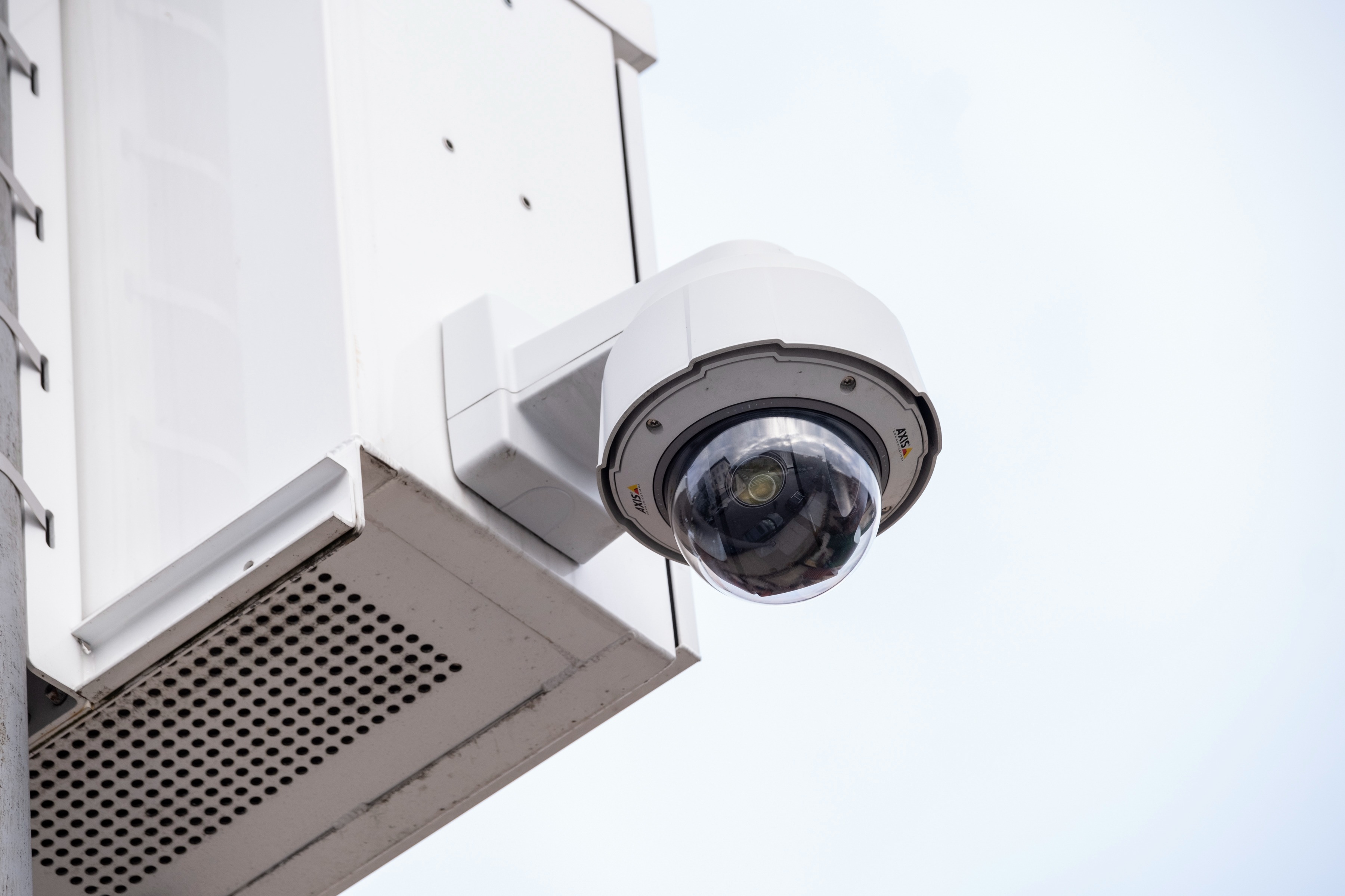
Your location is recorded wherever you go -- by phone technology, license-plate readers, Uber transactions and cameras everywhere. Gabriella Bass “Big Brother is watching you” is no longer a fictional admonition.
Your location is recorded wherever you go — by phone technology, license-plate readers, Uber transactions and cameras everywhere.
That puts evidence of your personal movements in the hands of tech companies you may never even have heard of.
Can the police and other government agencies force those companies to share that information?
That was the question before the US Supreme Court this week, in a case that could impact your privacy.
If your location history puts you in the vicinity of a crime, for example, you may become a suspect, swept up in the wide net cast to find the perpetrator.
Law enforcement is increasingly using this tech, called geofencing, to pursue crimes that could otherwise go unsolved.
During Monday’s oral arguments in Chatrie v. United States, the justices tackled the competing interests of privacy and crime-fighting, and wrestled with how a US Constitution written two centuries ago can safeguard your rights in a very different age.
In 2019, a gunman robbed the Call Federal Credit Union in Midlothian, Va.
Police, lacking clues to the thief’s identity, served Google with a “geofence warrant” that produced location-history records for every digital device within a 17.5-acre circle around the bank at the time of the robbery.
The warrant led them to the man ultimately charged with the crime, Okello Chatrie.
Now, Chatrie claims investigators’ geofence warrant violated the Fourth Amendment’s protections against “unreasonable” government searches.
The case is making for strange bedfellows, bringing together the left-leaning American Civil Liberties Union and more right-leaning groups like the Institute for Justice and Cato Institute.
They all argue that when a judge issues a warrant allowing law enforcement to pore over location records implicating hundreds or thousands of people to narrow down a list of suspects, it’s the modern version of something the Constitution’s framers aimed specifically to prohibit.
In the colonial era, 250 years ago, British customs officials could use a “general warrant” to burst into every home in a town, looking for smuggled goods.
The Fourth Amendment was written to ban such generalized searches — and, according to Chatrie’s supporters, a geofence warrant is much the same.
But that argument made little headway among the justices, who cited law enforcement comments on geofencing’s usefulness and seemed likely to uphold the bank robber’s conviction.
Instead, the justices focused on whether the standards for granting geofencing warrants need to be tightened to prevent government abuse.
“What’s to prevent the government from using this to find out the identities of everybody at a particular church, a particular political organization?” Chief Justice John Roberts asked counsel.
For most Americans, who don’t knock off banks and aren’t worried about eluding the police, that’s the real import of this case.
Just this week a Department of Justice task force slammed former FBI Director Christopher Wray and the Biden administration for wrongly targeting Catholics holding “traditional biblical views,” falsely claiming they were prone to violent extremism.
New technologies make it easy for a corrupted FBI to identify who goes to which church.
And while Google no longer stores location data and says it won’t comply with future geo-warrants, many other tech companies collect the type of data that’s at issue in the case.
Flock Safety, a license-plate reading company, has cameras in more than 5,000 communities and provides reports to 4,800 law-enforcement agencies in 49 states.
Here in New York, Staten Island District Attorney Michael McMahon has said those cameras allow for fast arrests of car thieves and more successful prosecutions in court.
But critics object that these cameras’ extensive tracking of every person’s whereabouts amounts to an invasion of privacy.
The ACLU is calling for “clear regulations to keep the government from tracking our movements on a massive scale.”
As usual in politics, there’s a fair share of hypocrisy.
Several Democratic-led cities in New York, Colorado, Illinois, Massachusetts and elsewhere are terminating their contracts with Flock Safety because it has cooperated with federal Immigration and Customs Enforcement.
They apparently think it’s OK to arrest American-born criminals using geo-searches, but not illegal immigrants — ridiculous.
The Supreme Court won’t hand down its ruling until June, but Monday’s hearing made one thing clear: Wherever you go, assume you’re creating a digital and photographic record of your activities and movements.
And while these technologies are a crime-fighting boon, in the wrong hands they could cost all of us our freedoms.
James Madison noted that “if angels were to govern” us, we wouldn’t need limits on government’s power.
Betsy McCaughey is a former lieutenant governor of New York.