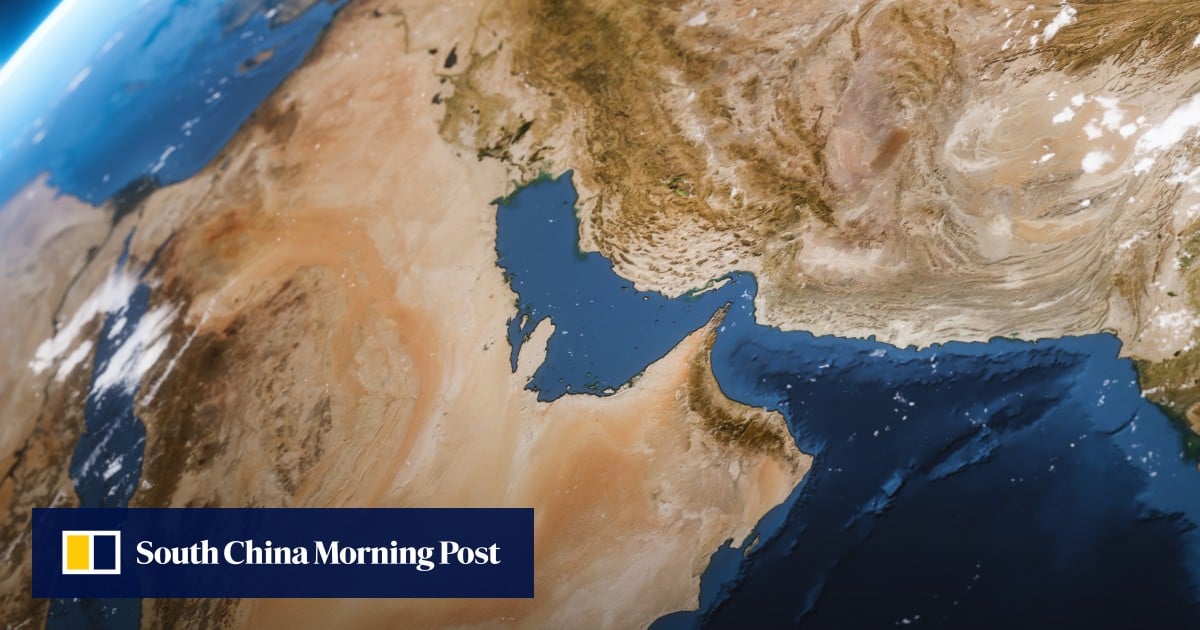
While countries grapple with the perils of a continuing oil shock, essential internet cables are also at risk
4-MIN READ4-MIN ListenAlyssa ChenPublished: 4:30pm, 1 May 2026The world’s eyes have been fixed on the oil tankers clogging the Strait of Hormuz. But the US-Israel war on Iran has exposed a quieter vulnerability: the undersea cables that form the digital backbone of the Middle East.Last week, a media outlet affiliated with Iran’s Islamic Revolutionary Guard Corps highlighted that the strait functioned not only as a crucial chokepoint for oil and gas shipments but also as an essential corridor for internet communications. 02:45
Indonesian seafarer among 20,000 stranded for months as Strait of Hormuz remains blocked
Indonesian seafarer among 20,000 stranded for months as Strait of Hormuz remains blockedThe outlet warned that damage to multiple cable systems would trigger a “digital catastrophe” and inflict multibillion-dollar losses on southern Persian Gulf countries which rely on undersea cables for more than 90 per cent of their connectivity.
The report emphasised that Gulf nations would suffer more severe consequences from any cable damage than Iran, given Tehran’s greater reliance on terrestrial routes for internet traffic.
Beyond the Strait of Hormuz, the Red Sea hosts a dense network of undersea cables. Various estimations point to around 15 to 17 major submarine cables passing through the waterway, carrying more than 90 per cent of data traffic between Europe and Asia.