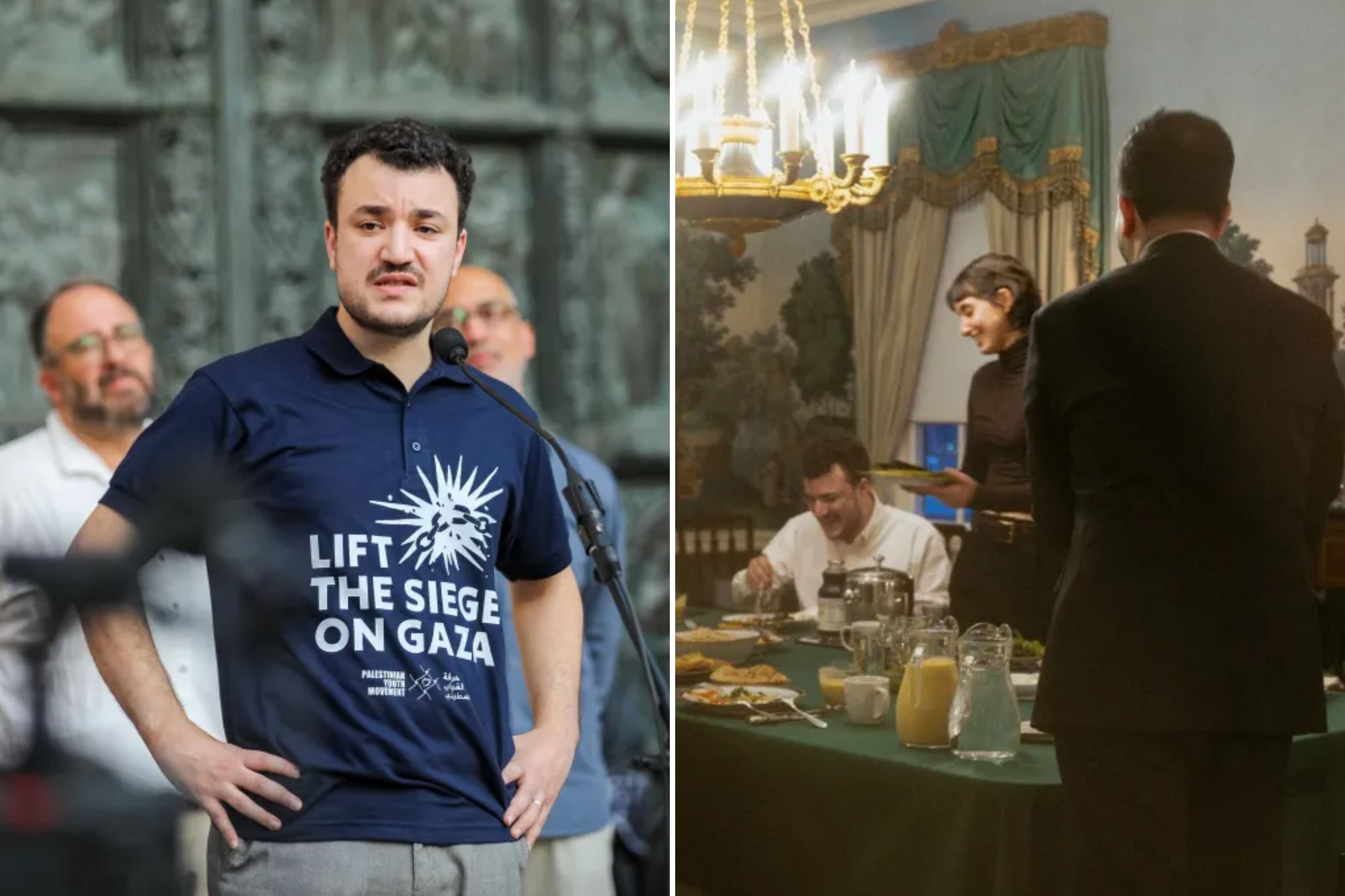
A lead organizer of the 2024 anti-Isreal tentifada at Columbia University — which included the storming of Hamilton Hall — he is featured in the current issue of New York Magazine with an essay entitled, “I Miss My Old Life.“
In it, Khalil delivers a masterclass in self-pity while detailing the plight of merely existing in the Big Apple.
It should only be read to the strains of the world’s tiniest violin.
“One year after my abduction by ICE, I still watch my back every day,” he writes.
Khalil, a Syrian national born to Palestinian parents, was a graduate student at Columbia where he led the school’s Apartheid Divest group, which explicitly called for the “total eradication of Western civilization”
As part of President Trump’s executive orders “combating anti-Semitism” Khalil was arrested by ICE in March 2025 and detained for 104 days. But he was freed last June after, he writes, “an army of lawyers sued the administration.” It was only a temporary win. Earlier this month, an immigration board denied his latest appeal to dismiss his case.
He is also accused of committing fraud on his greencard application.
Thanks to New York Magazine, though, Khalil has been able to earn the superlative of most oppressed man in the free world. Even after all that due process.
In his account, he is both victim and center of the universe. Everyone is looking at him — he just can’t tell if they love him or loathe him.
He whines that he’s “been made into a symbol against my will.”
Khalil’s notoriety has gained him a certain political celebrity. He’s been a guest of our socialist Mayor Mamdani at Gracie Mansion during Ramadan. Admiring baristas quietly slip him free pastries. Even a waitress at Olive Garden “insisted on covering the bill out of her own pocket.” Seems he’s accepted.
But because not all New Yorkers are praising him, he is now more guarded. He no longer take carefree strolls through Times Square or Washington Square Park. Even getting around is harrowing.
He rides the subways daily because, sadly, he cannot afford a cab every day. While on the train, he conceals himself behind sunglasses and a baseball cap — a different one every day. He buries his face in a book so no one can recognize him.
Khalil finds it distressing that Columbia has refused him entry to the campus and “seeks to erase” the voices of Palestinian students. “I miss attending events at Columbia or meeting friends on Low Steps,” the 31-year-old writes.
At his age, he shouldn’t be trying to hang out at a college. He should be out there getting a job. Like the rest of us.
Please don’t call him an “activist.” He writes that “nothing angers me more. The word flattens me.”
And don’t even get the guy started on dining out. He regrets eating at a restaurant that he did not first Google to get a “sense of the political temperament of the space.”
“We were almost finished with our meal when a group of customers who had been watching us stood to leave,” he writes. “On their way out, they stopped across from our table and began singing ‘Am Yisrael Chai’ over our heads for two minutes — an Israeli nationalist anthem often chanted by racist mobs while harassing Palestinians.”
In reality, “Am Yisrael Chai” is a declaration of pride in Israel.
I would assume that a man so desiring normalcy wouldn’t obstruct other students from moving about Columbia campus freely. Surely he’d be a vocal opponent of the many protesters who harass diners, disrupt commutes and heckle people just trying to make it through their day. Like the protesters from Wthin Our Lifetime who recently targeted people eating at Jewish-owned Mediterranean restaurant Motek, screaming “bomb Israel” and calling them “pedophiles.”
But this type of perpetual victimhood tracks with the entitlement of a grown man who believes it’s his right to rabble rouse in a country where he does not enjoy citizenship. It’s also a reflection of how asleep we’ve been when it comes to letting in people who seek to destroy our way of life.
The line to get into the USA is a long one, and we have the discretion to decide who gets past that velvet rope.
But Khalil still doesn’t understand that. Instead, he whines: “Why did this happen to me? What comes next? Will I be detained again? Or deported?“
“I remain in New York to fight this unjust system that treats Palestinian speech as a threat,” he writes.
Let’s hope he can enjoy free speech back home in Syria.