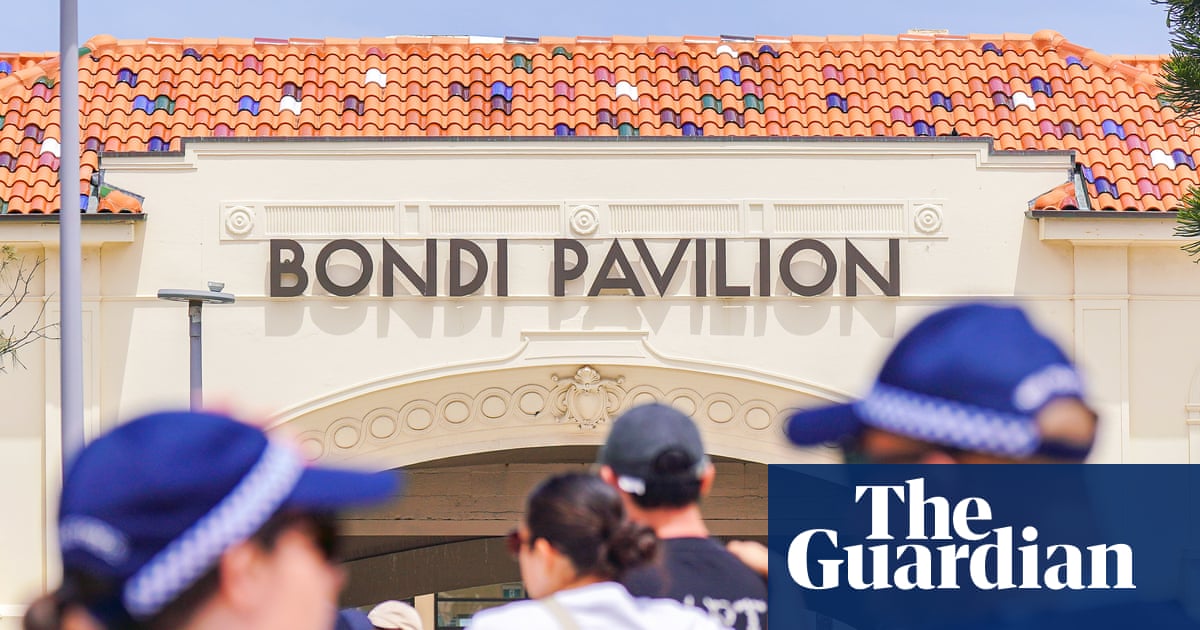
More than a third of the royal commission’s report into antisemitism and social cohesion recommendations are confidential. Photograph: Anadolu/Getty ImagesView image in fullscreenMore than a third of the royal commission’s report into antisemitism and social cohesion recommendations are confidential. Photograph: Anadolu/Getty ImagesAnalysisOne thing is clear after the release of the interim Bondi terror report – we don’t have the answers. But we now know the questionsNino Bucci Justice and courts reporterThe 155-page interim report released on Thursday shows how little is known – and can be shared – about the 14 December shooting
Get our breaking news email, free app or daily news podcast
If there’s one thing that’s clear from the royal commission on antisemitism and social cohesion’s 155-page interim report, it’s how much about the Bondi massacre remains unknown – and how little of what is known can be shared with the public.
More than a third of the recommendations from the report – which was released on Thursday – were confidential, although the Albanese government plans to implement all of them.
But while the report lacked answers, it gave far greater shape to the questions.
Understanding why and how alleged terrorists Naveed and Sajid Akram allegedly targeted Jews at the Chanukah by the Sea festival on 14 December will be a matter of threading together a thicket of disparate strands. Fifteen people were killed in the attack.
One of those strands is that Naveed had allegedly been linked to Islamic extremism as far back as 2019. Sajid obtained a gun licence and six legal firearms after this, and the pair travelled to a region in the southern Philippines known for Islamic extremism the month before the attack.
In October 2025, according to police, the pair travelled to a farm in regional NSW for combat training, and filmed videos on their phones proclaiming allegiance to Islamic State.
Only two days before the attack, the pair travelled in their own car to Archer Park at Bondi. CCTV footage is said to have captured them walking along the footbridge in an alleged “reconnaissance” visit.
The commissioner, Virginia Bell, added weight to some of these strands in the report and seemed to discard others.
The entirety of chapter five, which is “concerned with Commonwealth and state intelligence and law enforcement agency activities in relation to the Bondi attack” is confidential – and will remain so until the finalisation of any criminal proceedings.
“Thereafter a public version of the chapter should be released. At that time there is a public interest in as much of the chapter being made public as is consistent with the requirements of national security”, the report notes.
Read moreNo agency told the commission it was prevented from acting on the attack by the existing legal framework. The possibility of a failure to identify or act on intelligence, however, could not be discounted, though Bell also noted any attempt to answer these questions was likely to occur behind closed doors.
There were questions about whether the national intelligence agencies had been properly funded, and specifically whether Asio had been adequately resourced to deal with a terror threat level that had been raised to probable after the Hamas attacks on Israel in October 2023.
Bell said national intelligence funding for counter-terrorism “significantly declined” from 2020 to 2025, though this was not at issue for the Australian federal police or the NSW police.
Local police did, however, appear to have questions to answer about communications with the Jewish community security group (CSG), which was repeatedly in contact about antisemitic threats during Hanukah celebrations in 2025.
Bell found NSW police did not appear to have completed a “comprehensive written risk assessment” for the Chanukah by the Sea event, despite the CSG telling them it was high risk.
The rambling path to a national firearms registry did not appear to be getting any shorter. Bell described it as “unduly leisurely”.
1:23Albanese announces passing of 'strongest hate laws' in Australian history – videoThere were four confidential recommendations made about two central questions: the travel alert systems used by the Australian Border Force – which could, for example, have flagged the Akrams as travelling to a known terror hotspot – and the sharing and securing of classified information.
Amid the deeper questions about how the attack occurred was something else too, an illumination of small details that capture such gargantuan horror.
North Bondi Surf Life Saving Club and Bondi Surf Bathers Life Saving Club were separately hosting end of year celebrations when the gunfire started.
They dropped what they were doing and rushed to help. All told, there were 85 volunteer life-savers on the scene.
Bell noted they went through 1,000 gauze swabs; 300 bandages; six tourniquets; 60 inhalers of emergency pain relief; and 40 oxygen masks – 30 for adults and 10 for children.
The first block of the commission’s public hearings, focusing on experiences of antisemitism, will start on Monday.
Nino Bucci is Guardian Australia’s justice and courts reporter