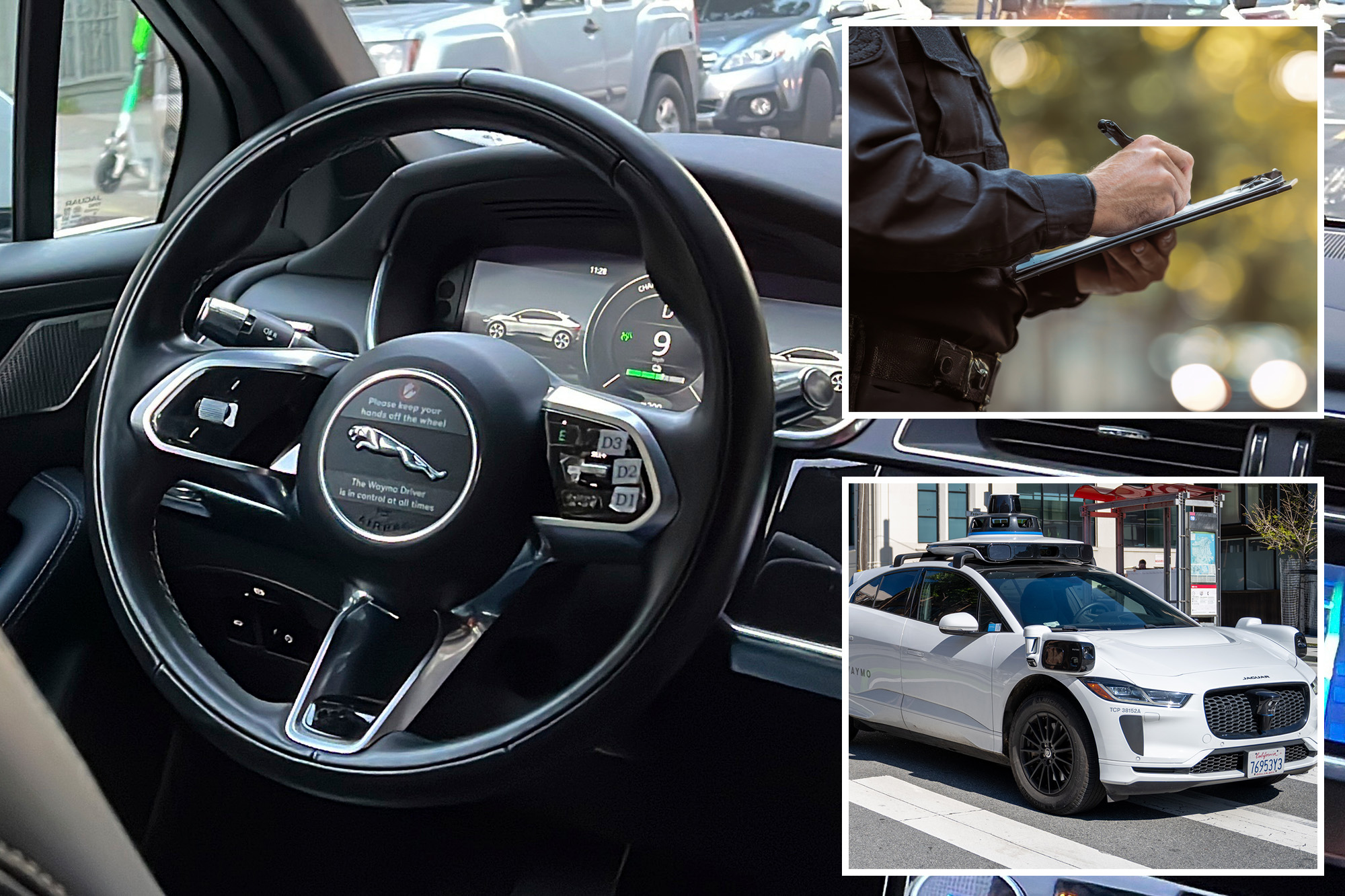
California’s robotaxi rollout is finally getting flagged by lawmakers who are promising to bring harsher penalties to the masters of the automated machines for violated road rules.
In San Francisco, driverless cars operated by Waymo have racked up hundreds of citations, mostly for parking violations like blocking traffic during pickups, stopping in restricted zones and ignoring street-cleaning rules.
Those tickets added up to more than $65,000 in fines in 2024 alone, according to Automotive News, based on data reviewed by the San Francisco Chronicle.
But here’s the catch: when it comes to moving violations, like running a red light or speeding, police are stuck.
California law is built around human drivers — and without one behind the wheel, there’s no one to blame.
Even when driverless vehicles are stopped for illegal maneuvers, officers often can’t write a traditional ticket and instead send reports to regulators.
That leaves parking enforcement as one of the only tools available, since those citations are tied to the vehicle or its owner, not a driver.
State lawmakers have moved to close the gap, passing legislation that will finally allow autonomous vehicles to be cited for moving violations.
Tuesday, regulators at the California Department of Motor Vehicles signed off on a plan to hold autonomous car companies responsible when their driverless rides break the rules.
But the change won’t take effect until later in 2026, leaving a long window where enforcement remains limited as robotaxi fleets expand.
The delay puts California behind places like Arizona and Texas, where authorities already treat the operating company as the legal driver and can issue tickets directly.
Over a two month period in late 2024, when Waymo began operating in Los Angeles, the city issued 75 tickets to self-driving vehicles.
Starting July 1, California’s Assembly Bill 1777 allows law enforcement to issue notices of noncompliance to driverless car manufacturers for moving violations, effectively closing a “robot loophole.”
Starting July 1, law enforcement across the state can hit companies with what the DMV calls “notices of noncompliance” — even if there’s no human behind the wheel.