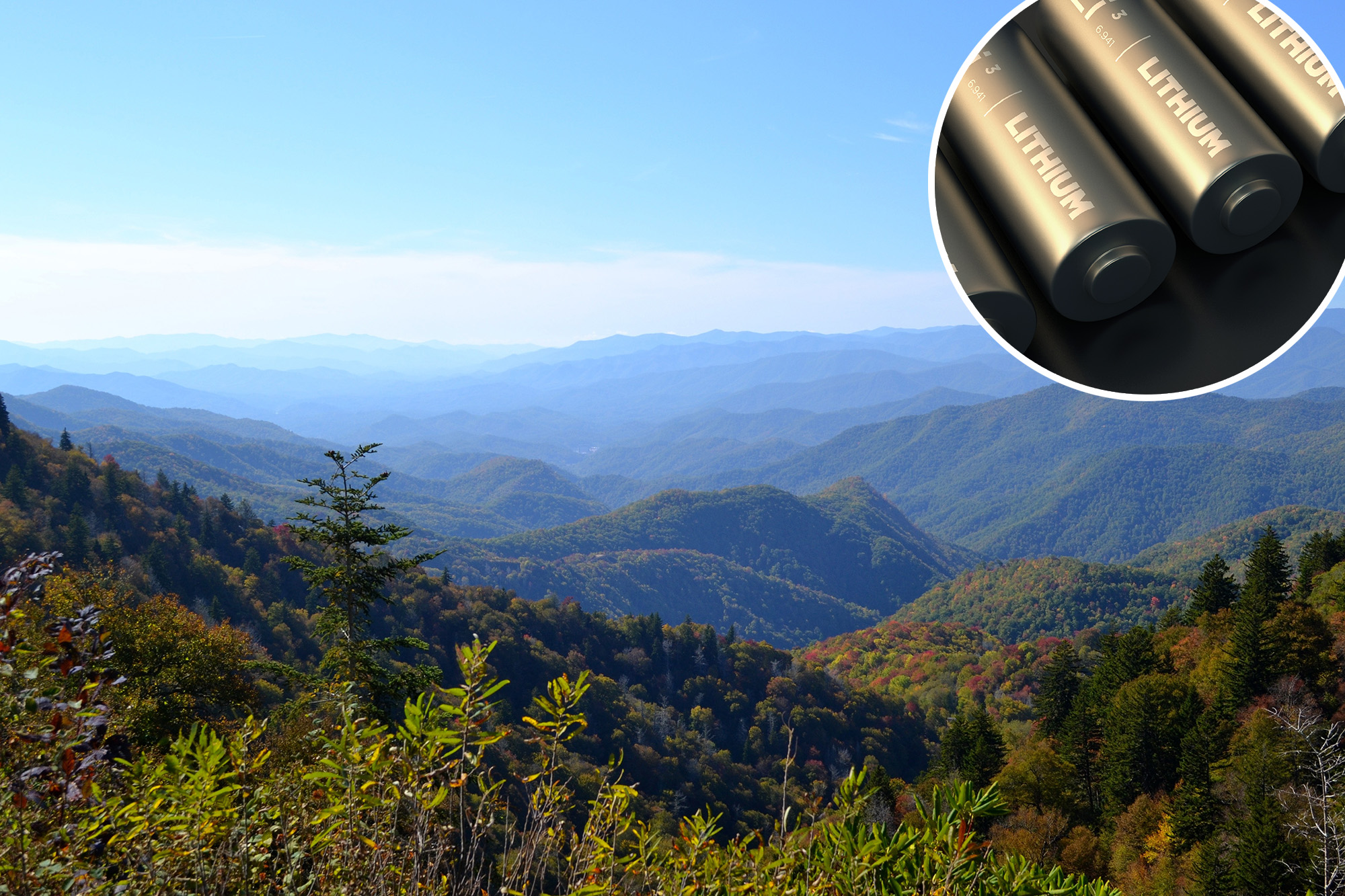
A recent study found that the Appalachian Mountains could be home to a $65 billion dollar cache of lithium that could power our devices for 328 years. fowler5338 - stock.adobe.com They’ve hit the mother lode.
We may no longer need to rely on foreign batteries to power our electronics. Geologists have announced that the Appalachian Mountains could be hiding a sprawling multi-billion-dollar cache of lithium that could last the US hundreds of years.
“This research shows that the Appalachians contain enough lithium to help meet the nation’s growing needs,” declared US Geological Survey Director Ned Mamula in a statement.
According to a map by the institution, this East Coast mountain range houses around 2.5 metric tons of this battery precursor, most of which is concentrated in the Carolinas, Maine and New Hampshire. Total value: around $64.4 dollars.
“The high heat and pressure during the mountain-building caused some of the deeper crustal rocks to melt, and some of these magmas were rich in lithium,” explained USGS while explaining why the region is so rich in the resource. Tuna salmon – stock.adobe.com Per Bloomberg, the US imports nearly half of its consumption of lithium, which powers lithium-ion batteries that are used for everything from iPhones to vehicles and even aerospace alloys.
With this recent mineral motherlode, USGS officials estimate that we could supply 1.6 million grid-scale batteries — enough to power 130 million electric vehicles or supply 180 billion laptops for a collective thousands of years of global use.
It could also fuel 500 billion cellphones, the equivalent of 60 devices for every person on Earth.
All told, this haul is enough to replace 328 years of imports at least year’s level, providing “a major contribution to U.S. mineral security, at a time when global lithium demand is rising rapidly,” said Mamula.
The amount of lithium under the mountains could last us for over 300 years, per the study. USGS To determine the amount of lithium in the hills, the USGS scientists employed “geologic maps, tectonic history, geochemical sampling, geophysical surveys, and records of mineral occurrences,” per the release.
By conducting simulations using a global dataset for lithium pegmatites (a highly valuable coarse igneous rock), they were able to estimate how many untapped lithium deposits there were in the study area.
This allowed them to extrapolate how much of the mineral resource they held. In total, the team identified 18 different lithium-rich districts across the region.
Why do the Appalachians harbor such a treasure trove of this invaluable mineral?
The USGS explained that these pegmatites in the northern Appalachians formed from the same geologic forces that “built the mountains more than 250 million years ago.”
“The high heat and pressure during the mountain-building caused some of the deeper crustal rocks to melt, and some of these magmas were rich in lithium,” they explained. “Because of their immense age, lithium-rich rocks formed during ancient tectonic collisions, when continents slammed together to create the supercontinent Pangea.”
This gold, er, lithium mine is crucial given that the world production “capacity for lithium will double by 2029, driven by increasing demand,” per the statement.
Australia currently leads the charge when it comes to lithium production, supplying nearly half the global supply in 2024.
Following close behind is China, which also accounts for the majority of lithium refining and consumption.
This latest discovery has the potential to reshuffle the list. “The US was the dominant world producer of lithium three decades ago, and this research highlights the abundant potential to reclaim our mineral independence,”