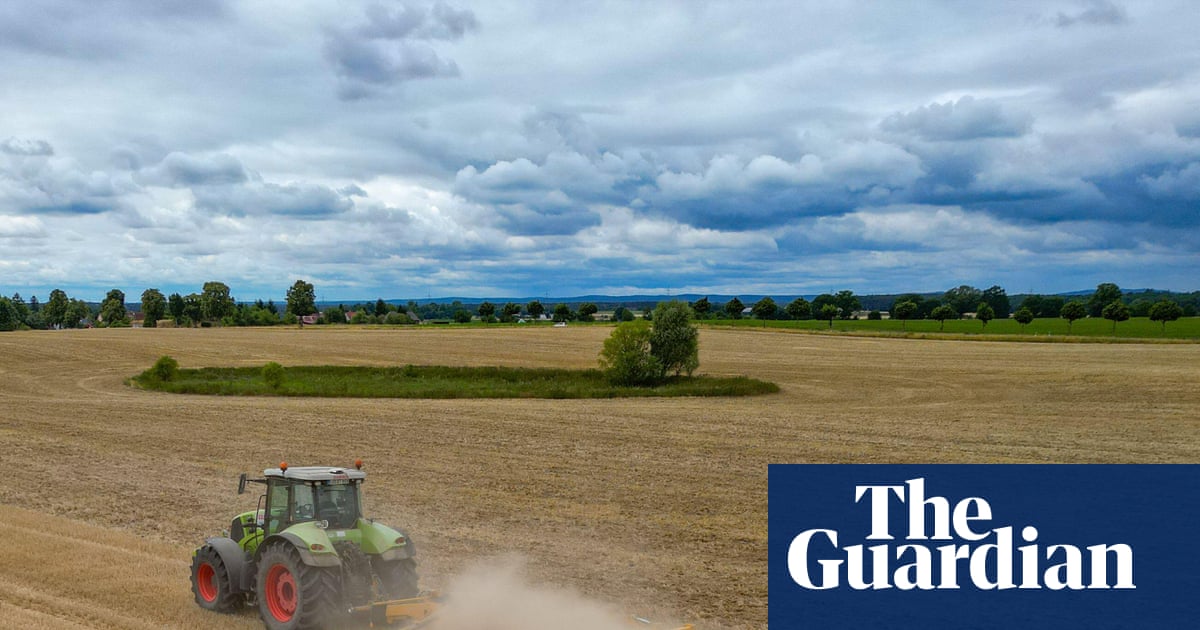
A farm in Brandenburg, Germany. The EU hopes the measure will remove what it sees as an existential threat to farmers and hauliers. Photograph: DPA Picture Alliance/AlamyView image in fullscreenA farm in Brandenburg, Germany. The EU hopes the measure will remove what it sees as an existential threat to farmers and hauliers. Photograph: DPA Picture Alliance/AlamyEU farmers and hauliers to get up to €50,000 to cover extra costs of Iran warFishing companies can also access subsidies in loosening of state aid rules to cover fuel and fertiliser price rises
The EU is to subsidise up to 70% of the extra cost of fuel and fertilisers caused by the Iran war for farmers, fishing businesses and road hauliers as part of a package of emergency measures unveiled on Wednesday.
Individual companies can claim up to €50,000 each between now and the end of the year with minimum paperwork, a measure the EU hopes will remove what it sees as an existential threat to hauliers and farmers.
Energy-intensive industries will be able to claim up to 70% of the extra electricity cost of eligible consumption.
The EU said the loosening of state aid rules was an emergency measure aimed at helping those in agriculture and fisheries, including aquaculture, as well as transport – covering road, rail and inland waterways, plus intra-EU short sea shipping.
The sectors were specifically impacted because of the rising fuel and fertiliser prices, it said.
No relief has been offered to airlines and airports regarding jet fuel, but potential future intervention has not been ruled out.
Individual member states can configure the state aid they offer businesses according to local conditions, but small hauliers, farmers and fishers will be able to claim the fixed amount of up to €50,000 with minimal fuss.
They will not, for example, need to provide receipts for fuel at petrol pumps.
Although the scheme raises the risk of fraud, the EU has said it believes the problems facing small- and medium-sized businesses after the sharp rise in costs since the US and Israel launched their war on Iran mean a light-touch approach is necessary.
The €50,000 available to small businesses will be based on aggregates of extra fuel costs between March and the end of the year.
The European Commission said the Middle East crisis temporary state aid framework (METSAF) would be a “targeted and temporary framework to address the crisis in some of the most exposed sectors in the economy”.
It will be in place until 31 December, underlining assessments made in Brussels that even if the US and Iran struck a peace deal today, oil and gas prices would remain high for many months.
Last week, the energy commissioner Dan Jørgensen said the crisis could last up to two years; the time it would take Qatar, for example to rebuild bombed gas plants.
Some concerns have been raised that the subsidies in the form of grant aid could increase the demand for fossil fuels and compromise the EU’s target to transition to renewables.
Teresa Ribera, the executive vice-president for clean, just and competitive transition, defended the move.
“Achieving a clean economy is what will shield us from the energy crises of the future. The energy transition remains the most effective strategy for Europe’s autonomy, growth and resilience,” she said.
“Nevertheless, the recent spikes in energy prices require an immediate response. The METSAF allows for easily applicable solutions that will sustain the continuous development of core EU sectors such as agriculture, fishery and transport, by cushioning the effects of the crisis.”