The United Arab Emirates is leaving OPEC to pump more oil on its own terms. The break strips Saudi Arabia of a key partner and adds to growing uncertainty over the cartel’s future.
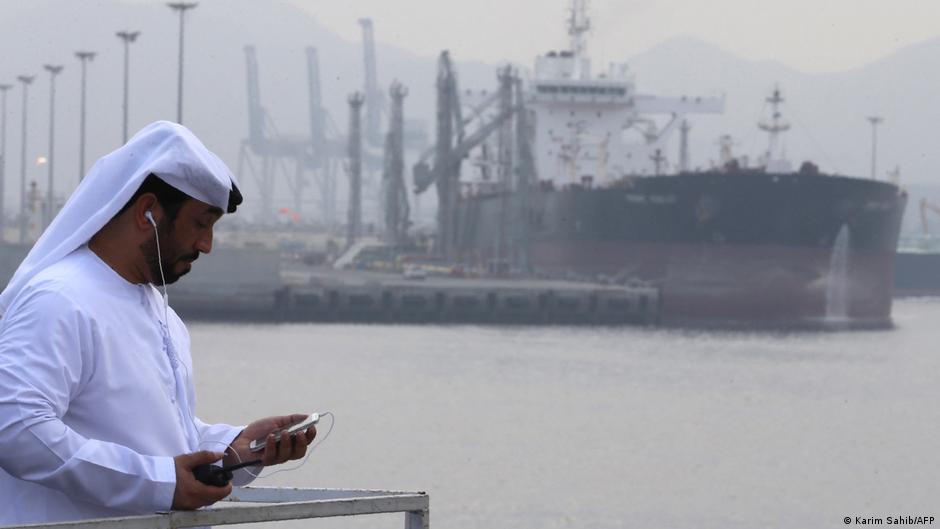
https://p.dw.com/p/5CynyThe UAE, then part of the Trucial States, joined the OPEC oil cartel in 1967Image: Karim Sahib/AFPAdvertisementWhy has the UAE decided to quit OPEC now? OPEC, the global cartel of oil-producing nations, operates a quota system that limits how much oil each member can produce.
For years, the United Arab Emirates (UAE) has clashed with Saudi Arabia, OPEC’s most powerful member, over these quotas. The UAE has invested heavily to expand its oil industry and grow its market share, but OPEC limits have repeatedly held it back.
Energy Minister Suhail Al Mazrouei told the New York Times on Tuesday: "The world needs more energy. The world needs more resources and [the] UAE wanted to be unconstrained by any groups."
The UAE is now betting it can sell more oil once the Iran war and Strait of Hormuz crisis ends, both in the medium and the longer term. Analysts, meanwhile, see the move as a calculated step by a producer ready to act independently.
"Losing a member with 4.8 million barrels per day of capacity, and the ambition to produce more, takes a real tool out of the group's [OPEC] hands," said Jorge Leon, head of geopolitical analysis at research consultancy Rystad Energy.
"With demand nearing a peak, the calculation for producers with low-cost barrels is changing fast, and waiting your turn inside a quota system starts to look like leaving money on the table."
The UAE, which joined OPEC in 1967 through Abu Dhabi, will leave both OPEC and the wider OPEC+ alliance, which includes Russia, on May 1.
The UAE currently produces roughly 3.2 to 3.6 million barrels per day (bpd) under quotas but holds spare capacity of nearly 4.8 million bpd, Reuters news agency reported. Plans call for a hike in output toward 5 million bpd by next year.
The UAE's exit removes one of the few OPEC members with meaningful spare oil capacity, leaving Saudi Arabia unable to share the burden of output adjustments easily.
The Gulf Kingdom has traditionally managed oil prices by cutting its own production and enforcing discipline across the group. With the UAE gone, Saudi Arabia will have to rely much more on its own oil production cuts to stabilize prices.
This will make defending oil prices more expensive and less effective for Riyadh. It also weakens the Kingdom's ability to manage and discipline the wider OPEC group.
David Oxley, Chief Climate and Commodities Economist at the London-based Capital Economics research house, called the move "the thin end of the wedge," warning that "the ties binding OPEC members together have loosened."
Saudi Arabia needs high oil prices — around $90 (€77) per barrel — to fund government spending and its ambitious Vision 2030, a set of huge infrastructure projects to cut the Kingdom's reliance on fossil fuels. These include a $500 billion futuristic city named NEOM.
Every extra barrel the country holds back means lost revenue, which hurts the country's ability to grow its economy.
The exit also exposes long‑standing tensions inside OPEC, especially the perception that Saudi Arabia dominates decision-making.
The move also comes at a time when OPEC's overall influence has been shrinking. The cartel once controlled more than half of global supply; today it commands less than a third.
US, Iran peace talks stall as Hormuz shipping backlog widensTo view this video please enable JavaScript, and consider upgrading to a web browser that supports HTML5 video
The UAE’s departure is unlikely to cause major immediate swings in global oil prices, largely because the ongoing disruption in Hormuz already dominates the market.
Much of the region's oil exports remain blocked, so any additional production the UAE plans to bring online cannot reach markets right away.
As a result, the announcement had little immediate effect on prices, with Brent crude largely unchanged on Tuesday.
Jeff Colgan, an expert on OPEC at Brown University, told DW: "In the short term, I don't expect it [the exit] to have major impacts because what's happening in the Strait of Hormuz dominates the whole global oil picture in a way that renders this news from OPEC as kind of a minor thing."
Once the Hormuz situation normalizes, the UAE could add several hundred thousand extra barrels per day to the market. In the longer term, the exit points to modestly lower and more volatile oil prices.
Some oil industry analysts say the UAE's exit adds to longer-running doubts about OPEC's future cohesion.
"It is possible that we could see the whole organization fall apart," Colgan told DW, adding that he believes Saudi Arabia will likely try to keep the group together as "the key anchor to the whole organization."
The UAE's exit does, however, highlight growing frustrations with OPEC's quota system and exposes rifts, especially with Riyadh.
OPEC has already been under strain from repeated quota breaches by members such as Iraq and Nigeria, and from Russia's inconsistent compliance within OPEC+. The UAE's departure adds to that sense of fragmentation.
Over the medium term, Oxley from Capital Economics warned that if other producers with spare capacity "see the UAE successfully gaining flexibility and market share" outside OPEC, "others may follow."
For now, most members lack the UAE's production capacity or economic diversification, so a mass exodus is unlikely.
The UAE is not the first OPEC member to leave. Qatar exited in 2019, while Angola, Ecuador, Gabon and Indonesia have also departed in recent years, often due to disagreements over quotas.