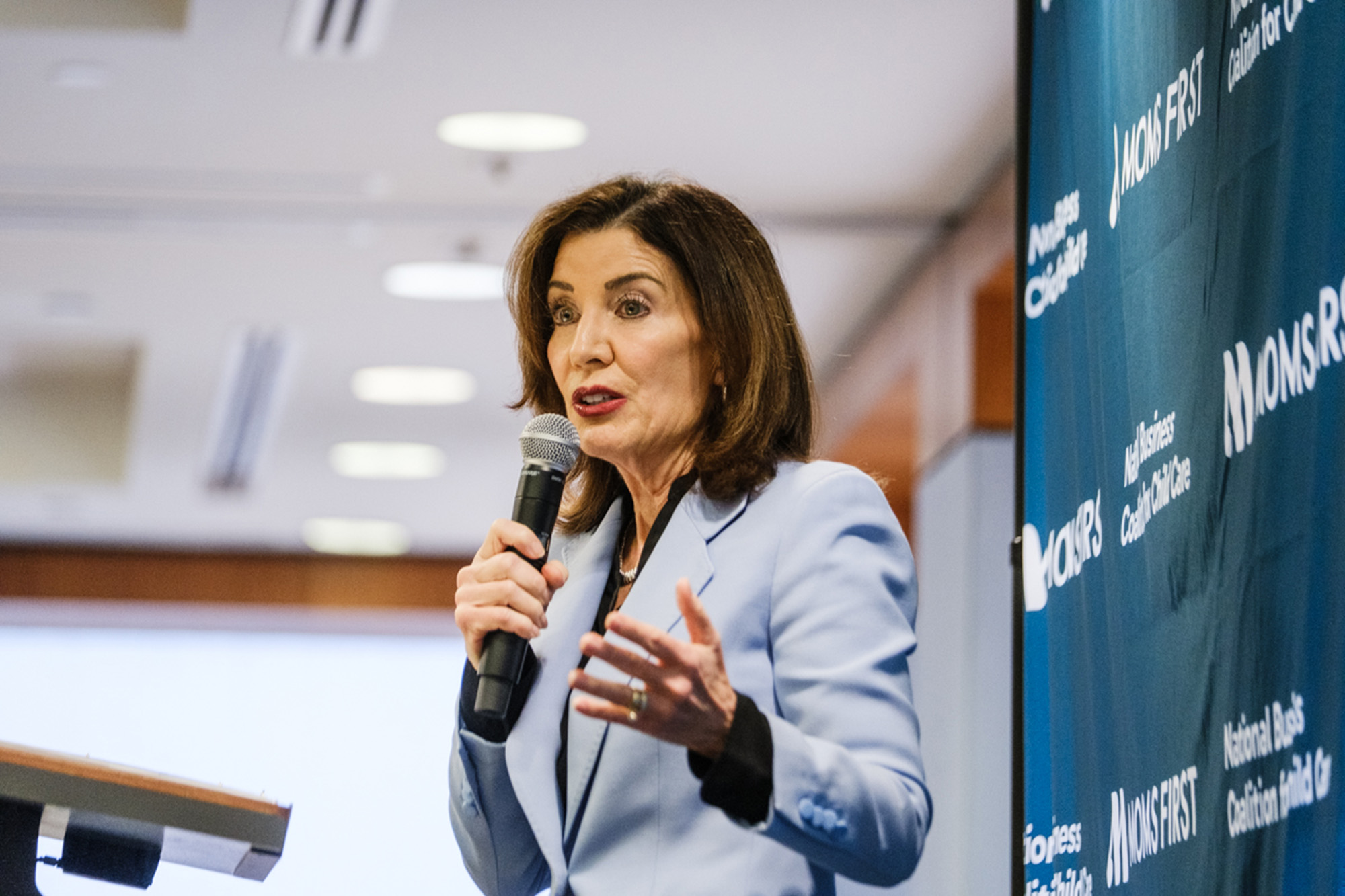
Gov. Kathy Hochul speaks at an office in midtown Manhattan. Stephen Yang for NY Post Gov. Kathy Hochul’s bid to delay some climate-law deadlines, which has helped hold up the now-one-month-late state budget deal, might make it seem like she cares about “affordability.”
But proof keeps popping up that the gov has every intention of letting that law hit New Yorkers deep in their pocketbooks — after she’s safely re-elected.
Hochul hopes to keep it all quiet, because the truth would expose her “affordability” promise as a big lie.
Under the 2019 climate law, the gov was supposed to release a “cap and trade” plan by 2024 to slash private-sector greenhouse-gas emissions.
But she knows that having any such program spelled out will make the ginormous costs to average New Yorkers impossible to hide — so she let the 2024 deadline pass without the plan
But greens sued, and a judge found her in violation of the law, so now she wants the Legislature to move the deadline to 2028 (a retreat from her original ask, 2030).
She also wants to ignore a 2030 deadline to cut greenhouse-gas emissions 40% in favor of a goal of 60% by 2040 (when the insane standard will be some future governor’s problem).
She also wants emissions calculated on a 100-year timeframe, as is done almost everywhere else, rather than the 20-year period the New York law now requires.
These changes would delay the worst pain for a few years, but add up to little more than moving deck chairs on the Titanic.
New Yorkers can’t “afford” this draconian climate insanity by 2030, 2040 — or ever.
(In any event, it’s near-certain the goals will never be met.)
Meanwhile, New Yorkers will be getting zapped: The law will cost every household an additional $4,000 a year as soon as 2031.
A gallon of gas at the pump would spike by $2.23; businesses’ utility costs could rise 46%, truck-delivery expenses over 60%.
Consumers would face soaring prices on just about everything.
The Co-Op City general counsel, Jeffrey Buss, now warns that these mandates may well quadruple monthly maintenance charges for the Bronx complex’s 50,000 residents — from $950 for a one-bedroom to more than $4,000.
“We cannot meet the Climate Act’s 2030 targets without imposing new and additional crushing costs,” Hochul admits.
Yet she only means to delay the nightmare: “All I need is a longer runway,” she pleads to the climate law’s supporters.
Sorry, Gov, but New Yorkers don’t want to be socked with higher costs now or in a few years.
If Hochul truly cared about “affordability,” she’d insist on scrapping this needless climate lunacy completely — but she’s afraid to cross the green ideologues who insist on New York’s economic suicide.