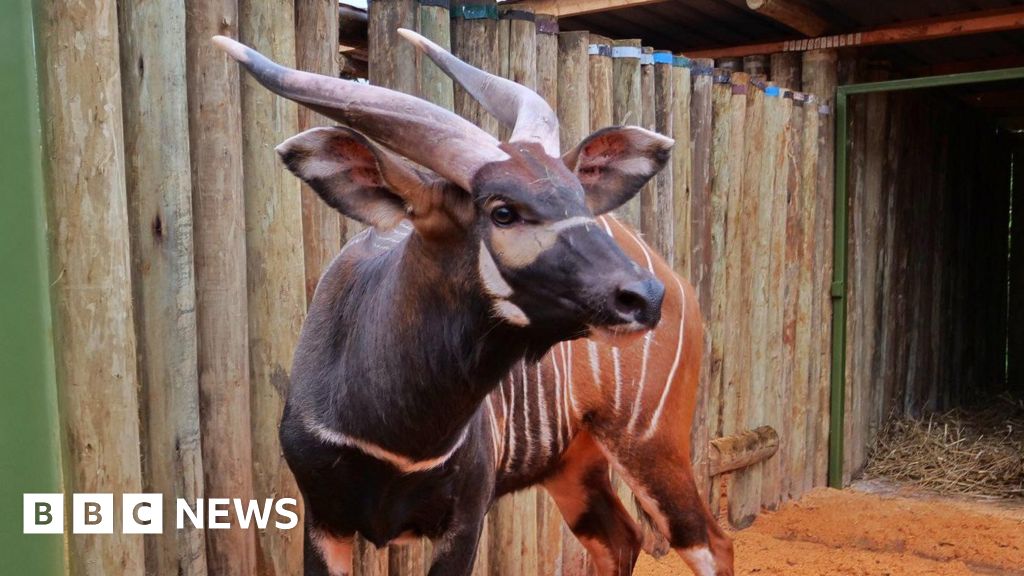
ShareSaveAdd as preferred on GoogleKWS/XThe mountain bongos sent from the Czech Republic are expected to help strengthen the genetic diversity of the animals in the wildFour mountain bongos, a rare type of antelope native to Kenya's highland forests, have arrived in Kenya after being sent from a zoo in the Czech Republic.
The male antelopes arrived in the country on Tuesday night and were welcomed at Nairobi's main airport by Kenya's foreign and tourism ministers, along with other officials. They have since been moved to a private wildlife reserve in central Kenya.
The Kenya Wildlife Service (KWS) hailed the "historic homecoming" of the antelopes as a "meaningful step" to their recovery in the wild.
From about 500 in the 1970s, less than 100 are estimated to remain in the wild – fewer than live in zoos around the world, according to KWS.
KWS director-general Erustus Kanga described Tuesday's arrival of the bongos as a "moment of hope, responsibility, and renewed commitment to securing the future of one of the world's rarest large mammals".
KWS noted that the four male bongos would "play an important role in strengthening the gene pool" of the endangered animals by breeding with the existing population of 102 mountain bongos at the Mount Kenya Wildlife Conservancy (MKWC).
The mountain bongo is a large, chestnut-red antelope with narrow white vertical stripes and long spiral horns.
The KWS and conservation partners have been working to breed the animals and introduce them into the wild in a bid to restore the populations.
Last year, about 17 mountain bongos were repatriated from the Rare Species Conservation Foundation in Florida. The first repatriation to Kenya was in 2004 when 18 mountain bongos were flown into the country.
According to the foundation, about 400 mountain bongos live in captivity in North America. Others are held in European zoos.
Before being introduced to the wild from captivity, the bongos go through a series of adaptation phases for them to build the immunity needed to survive.
Ahead of their repatriation to Kenya, Prague Zoo said each animal would undergo "acclimatisation and detailed monitoring before being gradually integrated" at the MKWC's breeding programme.
It said they would help strengthen the population's genetic value and are expected to help produce viable offspring to be introduced into the wild in future.
On Wednesday morning, KWS posted images of the antelopes, saying they had arrived safely at the conservancy at the foot of Mount Kenya, and were "now settling in under close care".
"This marks a quiet but vital step in strengthening their population and securing their future," it added.
In 2022, the conservancy told local media that some mountain bongos previously repatriated had successfully been integrated into the wild and started breeding. Others, however, had died from tick-borne diseases.
Kenya aims to raise the mountain bongo's wild population to about 700 by 2050, through a national recovery plan led by the KWS.
Go to BBCAfrica.com for more news from the African continent.
Follow us on Twitter @BBCAfrica, on Facebook at BBC Africa or on Instagram at bbcafrica