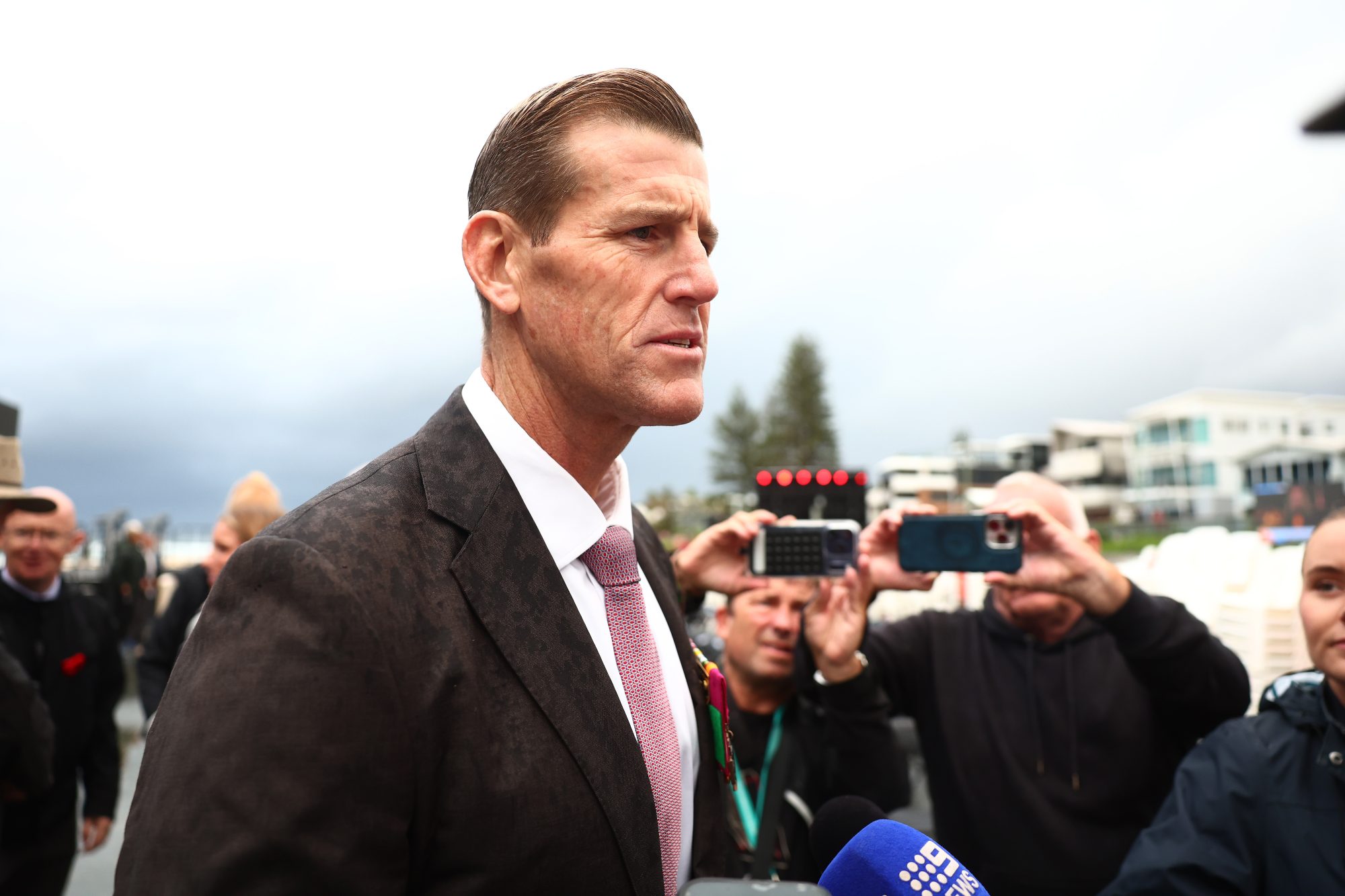
Ben Roberts-Smith attends the ANZAC dawn service on April 25, 2026 in Currumbin, Australia. Getty Images Australian authorities this month arrested Ben Roberts-Smith, the most decorated soldier in his country’s history.
They accused him of war crimes tied to special operations he conducted in Afghanistan 15 or more years ago — charges he has repeatedly, consistently denied.
Meanwhile, Britain’s elite Special Air Service is being dragged through a parallel process of government-commissioned inquiries and retrospective legal proceedings that its members never could have imagined when they volunteered to serve.
Together, these cases reveal a pattern that’s spreading through the special operations forces of America’s closest allies.
It’s hollowing out the very units that fought beside ours for more than two decades — and Washington has been far too quiet about it.
We have both served in combat, and we understand the importance of special operations forces, elite units trained and equipped to execute the toughest missions on our nation’s behalf.
That’s why we’re calling on Congress to acknowledge that what’s now happening to our allied warriors is as much a concern to the United States as protecting soldiers’ lives on an active battlefield.
The United Kingdom lost 457 personnel in Afghanistan, while Australia lost 41.
The special forces of both nations executed the hardest missions of that war at America’s request — under shared doctrine, against shared enemies.
Of necessity, they often operated in conditions where the margin between a lawful kill and a catastrophic mistake came down to incomplete intelligence and a fraction of a second.
What those men could not have anticipated is that their governments would later construct elaborate legal architectures to second-guess those decisions, with the benefit of years of hindsight and in the comfort of a hearing room.
We wouldn’t stand for this kind of weaponization against our own forces, so we shouldn’t stand mute as our allies prosecute the warriors who had our soldiers’ backs on the battlefield.
There’s an important distinction to draw here, and we want to draw it carefully: Accountability matters, and no uniform places a soldier above the law.
But what we’re seeing today in both the United Kingdom and Australia is retroactive prosecution driven by domestic political pressure rather than by evidence, applied to men who acted in good faith under the rules their own governments established.
These politicized legal proceedings risk corroding something that takes generations to build, and the confidence of allied forces that their countries will stand behind them.
Now that confidence can be destroyed in a single political cycle.
That corrosion is already showing up in the ranks.
Elite units in both countries are quietly losing experienced operators who have weighed their options and decided the system will not protect them.
Every departure sends the same message to whoever is still considering service: Your government will send you into the hardest fights, place you in legal grey zones of its own design, but abandon you to shifting political winds a decade down the line.
Recruitment suffers, retention suffers, and so does the willingness to make the hard calls that difficult operations demand.
Our resolution asks Congress to go on the record, formally, and declare that politically motivated and retrospective prosecutions of allied special operators damage the trust and interoperability that coalition warfare depends on.
It also urges the Departments of Defense and State to engage London and Canberra directly to protect these processes from political interference.
Alongside it, we are pursuing legislation to ensure American special operators cannot be subjected to the same treatment — because nothing in current US law forecloses it.
King Charles III is visiting the United States this week to help celebrate our nation’s 250th birthday, demonstrating to the world that alliances are strongest when they’re based on a shared understanding that runs deeper than any treaty.
Part of this understanding recognizes that when soldiers fight side by side, their countries continue to support them long after the shooting stops.
Our allies’ warriors have earned that from us — and, on behalf of the men and women who have backed our own soldiers on the battlefield, we owe them more than silence.
Joni Ernst represents Iowa in the US Senate. Pat Harrigan is a US congressman from North Carolina.