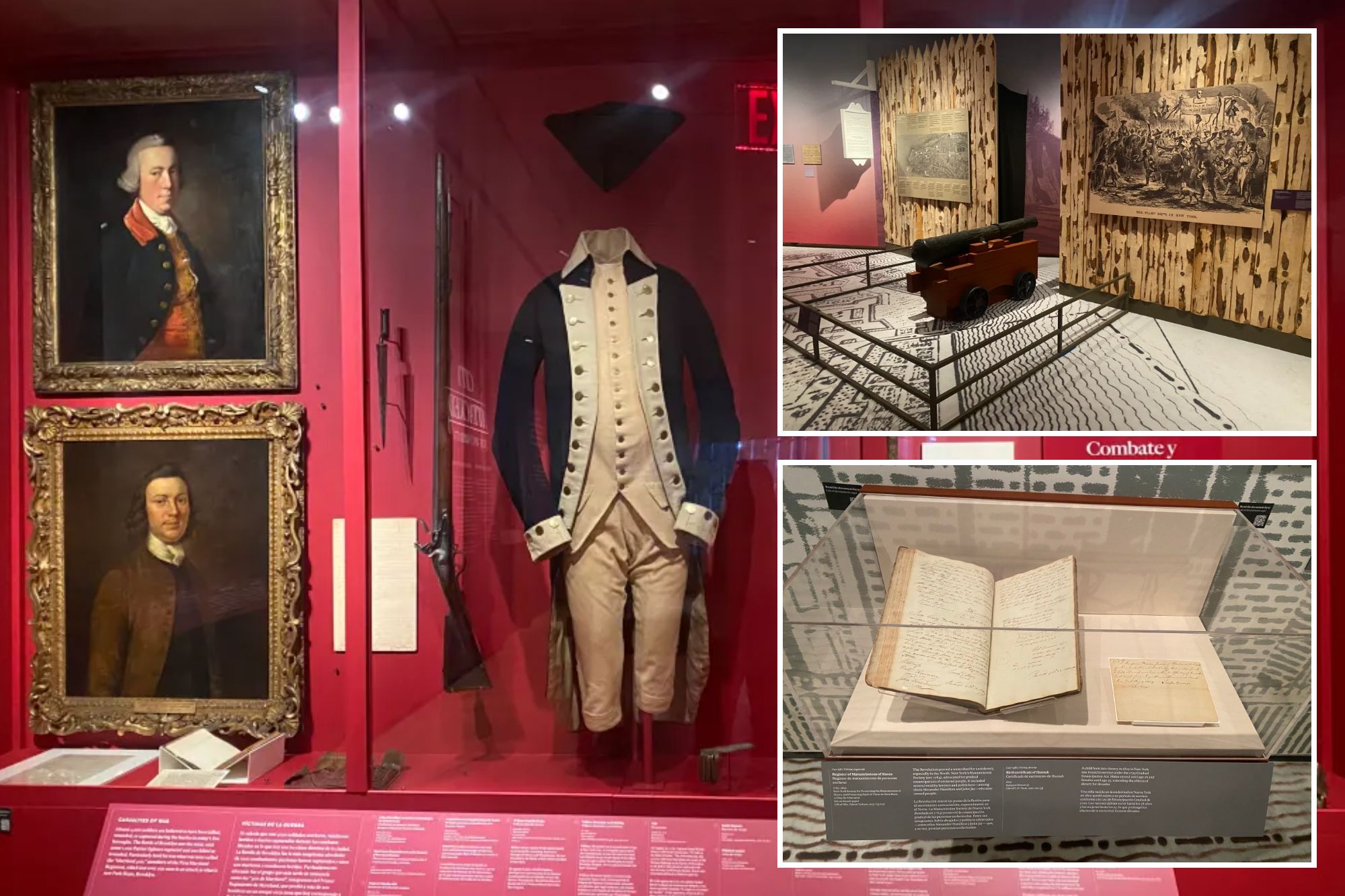
A new exhibit celebrating New York City’s “pivotal” role in turning the tide of the American Revolution is set to open this week.
“The Occupied City” will take over the Museum of the City of New York and offer an immersive glimpse into how the Big Apple transformed into the country’s economic and cultural epicenter, which continues today.
“New York was not just a backdrop for the American Revolution,” said Stephanie Hill Wilchfort, the Ronay Menschel director and president of the MCNY — calling the Big Apple’s role “pivotal.”
“It really was at the very center of it. It is a city shaped by conflict, debates and the lived experiences of a diverse population navigating an uncertain future at this time.”
The sprawling exhibit — which will open May 1 as a lead-up to the US’s 250th birthday this summer — will take over the entire 7,000 feet that make up the MCNY’s third floor.
The project, which was two years in the making, includes hundreds of artifacts ranging from Union soldiers’ uniforms and cannons to registries of slaves across the city.
There’s even a section of the wrought iron fence that protected the 4,000-pound statue of King George III at Bowling Green — which Americans famously toppled on July 9, 1776 after the Declaration of Independence was read to Gen. George Washington’s troops.
Many of the artifacts have been arranged to recreate taverns, coffeehouses and more to provide an immersive experience for visitors.
“The Occupied City” follows New York City’s journey from the early days of the revolution through Evacuation Day in 1783 — when the last of the British troops fled the US — and into the Big Apple’s emergence as the capital of the new nation.
But the exhibit doesn’t just regurgitate stories repeatedly told in textbooks — the museum paid homage to several “forgotten and overlooked” New Yorkers who ushered in the new age.
“Stories like that of Charity Clark, who along with other women engaged in home spinning, making their own cloth to resist dependence on British imports, or Haim Solomon, a Jewish immigrant from Poland who joined the Sons of Liberty and advocated for the Patriot cause throughout the war,” said Elisabeth Sherman, the Robert A. and Elizabeth Rohn Jeffe chief curator and deputy director. “Or Harry Washington, who was born in West Africa and enslaved by George Washington, then escaped to fight for the British. His journey ultimately took him from the same streets we walked today, north to Nova Scotia and on to Sierra Leone.
“What struck me most encountering these stories is that the people whose lives unfold in this exhibition, whether their names are familiar to us or brand new, were living through their own contemporary moment. It was as urgent and immediate as our moment is to us today.”
“The Occupied City” will be paired with a series of historical lectures, including one that focuses on Washington.
The MCNY expects the exhibit to remain on view for the next year.