A majority of New York State voters say their electricity bills are unreasonable — and nearly 70% fear controversial green energy mandates will send prices even higher, a new poll found.
The poll, conducted for The Business Council of New York State, found 80% worry their utility bills could become unaffordable within the next year.
The state climate change laws set goals and deadlines to replace fossil fuel power sources with clean energy such as solar and wind, but critics call the timelines unrealistic and say the requirements are sending prices soaring.
When voters were prompted that more than $20 of every $100 of their bill goes to taxes and government-mandated policies rather than the energy itself, 53% said they understood rising costs are largely driven by factors outside a utility’s control, according to the poll, which was obtained by The Post Tuesday.
Voters in the survey were asked, “Generally speaking, do you think your electricity bills are reasonable or unreasonable?”
Some 52% percent said their electric bills were somewhat or very unreasonable, while 44% said reasonable and the remaining 4% of respondents had no opinion.
Meanwhile, 40% of voters also said their gas bills were unreasonable.
State regulators in January allowed Con Edison to hike electric bills by 10.4% and inflate gas bill 15.8% – costing the average Big Apple resident an eye-watering $600 more per year by 2028.
“New Yorkers struggling with the increasingly high cost of power want clarity, fairness, and accountability when it comes to their monthly energy bills,” Heather Mulligan, the Business Counci’s president and CEO, said of the poll’s findings.
“They deserve nothing less – consumers should be able to clearly see and understand what they are paying for, including taxes and state mandates that quickly add up. This is not a partisan issue it’s about honesty in billing and policies that protect consumers and preserve reliability while the state pursues its climate goals.”
Voters were also asked, “Do you support or oppose New York re-examining the [Climate Leadership and Community Protection Act]’s goals and timelines to determine whether any timelines or requirements should be adjusted?”
In response, 69% of respondents said Albany should re-examine the law to relax the deadlines, while only 13% were opposed and 17% unsure.
They were also asked whether policymakers should keep the law’s goals and timelines as written, keep the goals but adjust the timelines as needed or repeal the goals entirely.
Two-thirds — 65% of voters — said either the deadlines for compliance should be adjusted or delayed (45%) or repealed entirely (20%). Only 14% of respondents said they adhere to the goals with 21% unsure.
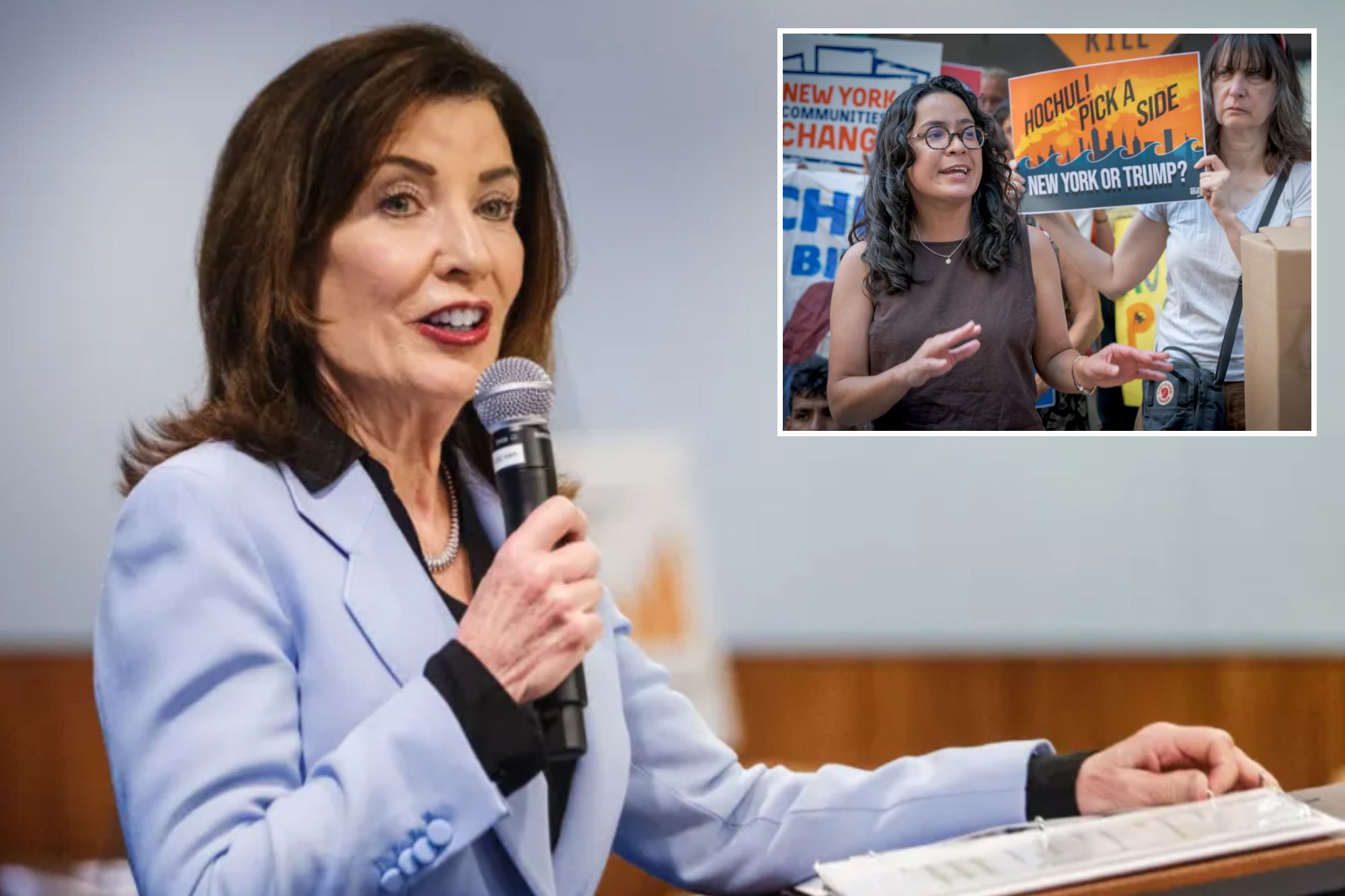
Gov. Kathy Hochul, a Democrat, seeking re-election to a second, four-year term, is negotiating with the legislature to push back the deadlines of the Climate Leadership and Community Protection Act to avoid socking New Yorkers with higher utility costs during the transition from fossil fuels to cleaner renewable energy.
The law requires New York to reduce carbon emissions by 40% by 2030 and by 85% by 2050.
Seventy percent of the state’s electricity must come from renewable sources by 2030 and achieve net-zero emissions by 2040.
Hochul proposes pushing back some of the deadlines.
She also would change the accounting method determining the impact on carbon emissions by entities from a stricter 20-year period to 100 years, putting New York in line with other states.
During a press event on Tuesday, Hochul refused to commit to releasing a revised cost for gasoline and natural gas prices following her proposed delay of state climate targets.
Start your day with all you need to know Morning Report delivers the latest news, videos, photos and more.
“It will all be public when we know. We just don’t know right now,” she said.
Hochul previously said gas could go up an additional $2.30 by 2030 if changes aren’t made.
The data firm Tunnl conducted the Business Council survey online among 2,058 registered New York voters from March 11-15 . It has a margin of error of plus or minus 2.2 percentage points.