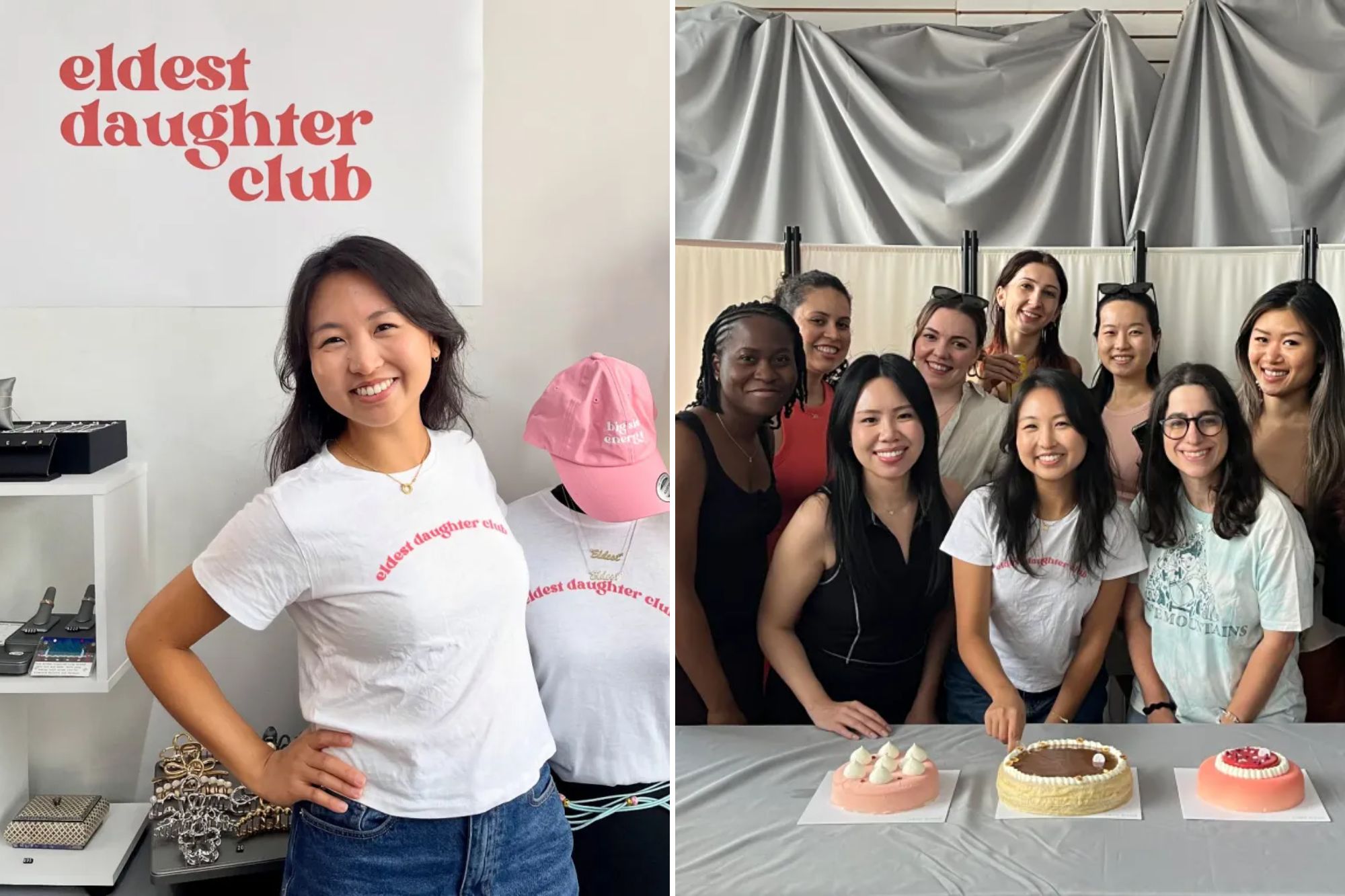
Across NYC, eldest daughters are meeting up to unpack the pressure they say never really went away.
The “eldest daughter” is not just the one born first.
She’s the one diffusing group chat meltdowns, remembering every family member’s birthday, and absorbing everyone else’s emotions like it’s a full-time job.
The only difference? Now she’s doing it as an adult while paying Gotham rent, working nine-to-five, and juggling a calendar that rivals a CEO’s.
That quiet, lifelong job description is something more NYC women are finally naming — and now, bonding over.
Enter “Eldest Daughter Club,” a community founded by Manhattanite Sherri Lu that’s turning an unspoken identity into a shared one.
“Back in 2022, I couldn’t find anyone who was really analyzing eldest daughters and the experience of being one online,” the Gen Zer, who is the eldest daughter in an immigrant family, told The Post. “… Being an eldest daughter is like having to balance additional daughter expectations — but they’re intensified. You’re like a ‘second mom’,” Lu said.
“I just wanted to understand this part of my identity and find other eldest daughters to talk to, and that’s where the idea of the Eldest Daughter Club in New York City came to be.”
What started as memes and half-joking TikToks about burnout and an “eldest daughter curse” has evolved into something real: packed in-person meetups, virtual discussions, group chats, a newsletter (that 6,300 people subscribe to) by Lu, and even an unofficial holiday (that is now every August 26)
“There’s Mother’s Day, there’s Father’s Day — but I think big sisters deserve real recognition too,” she said.
Now, through park gatherings, picnics, group walks and panel-style events (with up to 100 attendees scattered throughout the year) across the city and monthly virtual get-togethers, Lu has created a space where women can talk openly about their experiences — something many say they’ve never had before.
“It’s a safe, supported and healing space for big sisters,” she said, “especially when these aren’t easy conversations to have with people who don’t get it.”
Attendees say the group’s impact can be immediate — from setting long-avoided boundaries with their families to finally making big life decisions without guilt.
“People who come to Eldest Daughter Club events tell me that the group helped them understand themselves on a deeper level, rethink their identities, and bond over childhood experiences they’d rarely talked about before,” she said.
Gigi Robinson, 27, of Riverdale, the Bronx, can relate. She says the pressure of being the eldest daughter didn’t stop at childhood, but followed her straight into adulthood.
“As an eldest daughter, I became a chronic over-doer and a do-it-myself girl — that’s the starter pack,” she told The Post.
“You learn to manage the room, anticipate what’s needed, and keep things moving before anyone has to ask.”
As a kid, she said that this looks like being responsible. As an adult, “it becomes the operating system for your entire career.”
Tsao-Lin Moy, 61, a native New Yorker and first-generation Chinese American, agreed that the expectations of being the eldest daughter never really fade — still shaping her life decades later.
“Being the first-born daughter meant I took on more of a secondary parental role,” she told The Post.
“I don’t remember having much fun. There was so much pressure to perform and be available for other siblings’ needs.”
She said there is generally more pressure placed on firstborn children by their parents, but “women also have to meet additional cultural expectations as well,” she said, adding that mother-daughter relationships can come with growing pains, as daughters are often seen as extensions of their mothers — making it harder to carve out their own identity.
It’s a dynamic that’s also playing out in pop culture. Taylor Swift’s 2025 track “Eldest Daughter” captures the pressure in one cutting line: “Every eldest daughter was the first lamb to the slaughter.”
The archetype shows up on screen, too — from “10 Things I Hate About You” to “Frozen,” “The Hunger Games,” “Full House,” “27 Dresses” and “Lilo & Stitch” — where the oldest sister is often the one forced to grow up first, and fastest.
View this post on Instagram Now with decades of perspective, Moy said she’d urge fellow eldest daughters to find their people — and “actually have some fun” for once — whether that’s at Eldest Daughter Club events or beyond.
“It is important for first daughters to find others to validate our experience and have some fun.”
For Robinson, a Zoomer, having a space to meet up in-person and discuss birth order trauma fills a gap many eldest daughters didn’t even realize they had.
“There’s something specific about being the one who keeps everything together — and that’s a heavy thing to carry without people who actually understand it,” she said.
Tyler Nicole Glenn, 29, of Brooklyn, added that “isolation can lead to stress, and it’s important for eldest daughters to know they’re not alone in their frustrations.”
It’s also not just about airing out grievances together, she emphasized, as having a “solid community” provides a “platform for us to share accomplishments, as well.”
And while the tone at Eldest Daughter Club events is often light, the question underneath isn’t: what happens when you grow up as the family’s default caretaker?
Why does that instinct stick long after you’ve left home?
Experts say the answer often comes down to burnout disguised as competence — a pattern that can follow eldest daughters well into adulthood.
Dr. Ashwini Nadkarni, MD, a board-certified psychiatrist and assistant professor at Harvard Medical School, said the dynamic is widely recognized — even if it doesn’t have a formal diagnosis.
“Eldest daughters often fill the role of mentors, mediators and second parents and tend to be regarded as more mature in ways younger siblings are not,” she told The Post.
That added responsibility, she explained, can be a double-edged sword.
“On one hand, it can lead to increased maturity, leadership or organizational skills — but it can also reinforce perfectionism, pressure around achievement and suppression of one’s own needs,” she said.
Over time, those patterns can take a toll. “Long-term, that can contribute to anxiety or discontent,” Nadkarni added.
A UCLA-led longitudinal study of mother-child pairs found that firstborn daughters exposed to prenatal distress — as well as childhood adversity such as parental separation, loss, or financial strain — were more likely to take on caregiving roles at home and develop heightened responsibility at a young age.