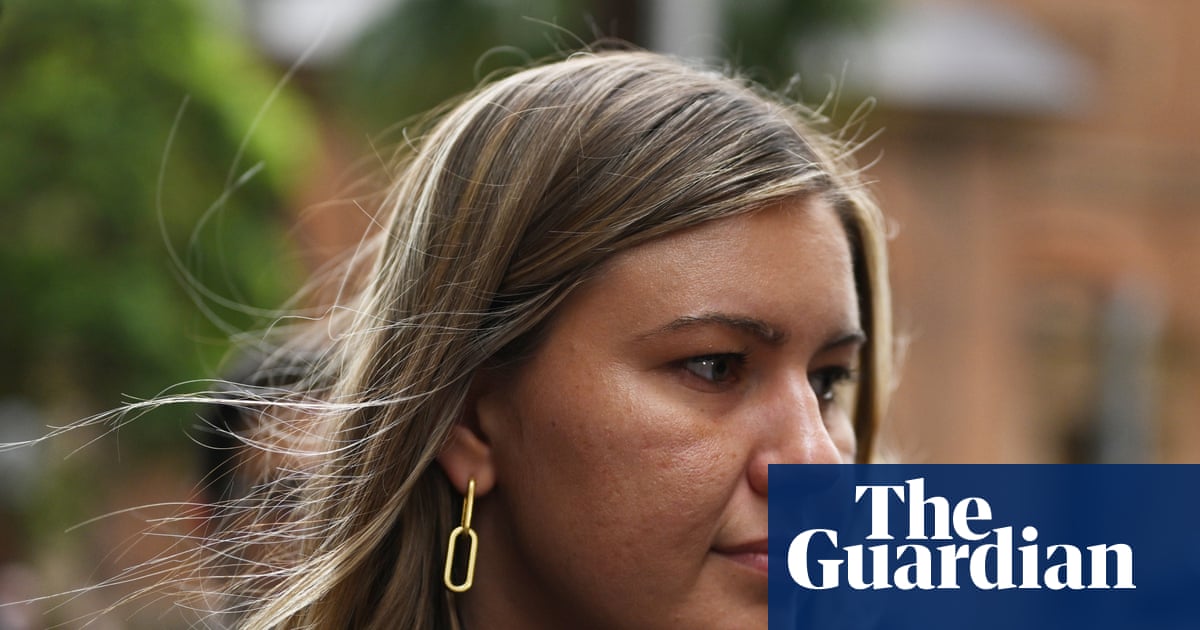
Brittany Higgins says having her counselling records subpoenaed by police ‘felt like such a violation’. Photograph: Dean Lewins/AAPView image in fullscreenBrittany Higgins says having her counselling records subpoenaed by police ‘felt like such a violation’. Photograph: Dean Lewins/AAPBrittany Higgins criticises federal inaction as Victoria moves to protect victim-survivors’ counselling recordsExclusive: State government commits to strengthening laws as Higgins labels Albanese government’s response to women’s safety issues ‘disheartening’
Get our breaking news email, free app or daily news podcast
The Victorian government will strengthen laws regarding the use of victim-survivors’ confidential communications after a push by advocates including Brittany Higgins, who described her experience of having counselling records subpoenaed as a “violation”.
In an interview with Guardian Australia, Higgins was also critical of the federal government’s lack of action following a sweeping review into the justice system’s responses to sexual violence, saying it had “completely fallen off the agenda”.
But she said the issue was “too important to drop the ball on”, which was why she signed an open letter to the Victorian premier, Jacinta Allan, and the attorney general, Sonya Kilkenny, calling for reform at a state level.
The letter, sent to the government on Tuesday and penned by Animal Justice party MP Georgie Purcell, called for greater legislative protections for complainants’ confidential communications – including their counselling, psychiatric and medical records – and asked that all complainants in sexual offence proceedings be given the option to pre-record their evidence.
Following questions from Guardian Australia, Kilkenny confirmed the government would pursue the reforms. She said while Victoria had “some of the strongest legal protections” for victim-survivors, there was “always more to be done”.
“That’s why we will strengthen the laws around use of pre-recorded evidence and counselling note confidentiality – and I’ll continue speaking with victim-survivors and experts on how to do that,” Kilkenny said.
Both issues were considered by the Australian Law Reform Commission (ALRC) review, released by the Albanese government in March 2025, which found “systemic” barriers prevented victim-survivors from accessing justice, with 92% of women choosing not to go to the police after they were sexually assaulted. The ALRC noted Tasmania was the only state that provided absolute privilege, which means victim-survivors’ confidential communications can never be accessed without consent even if they contain relevant evidence.
It made 64 recommendations, which the Albanese government is yet to formally respond to.
“There’s been no indication about where they want to take the review. It’s been tabled, it’s sat there and we’ve had no mention of it. It’s completely fallen off the agenda,” Higgins said.
“For a government that felt like they were representative of women’s safety issues, for them to fall off like this, and to have no follow up, has been disheartening.”
In the 2022 criminal trial of Bruce Lehrmann, Higgins’ counselling records were subpoenaed by police and formed a part of the brief of evidence, which was handed to the defence.
“It felt like such a violation,” Higgins said. “It’s such an intimate, sacred sort of relationship – the one between you and a therapist.
“The violation of knowing the person who perpetrated this violence, that’s caused such great harm to your life, then has access to your innermost thoughts – it’s devastating, it’s hurtful.
“And for the most part, it’s all considered hearsay evidence. It’s not even particularly meaningful evidence in the court of law, and it just completely retraumatises the person at the centre of it.”
Lehrmann has always denied he sexually assaulted Higgins, and the criminal trial was abandoned without any findings due to juror misconduct. A defamation judgment later found that Lehrmann had, on the balance of probabilities, raped Higgins in Parliament House in 2019 after a night out.
Another signatory of the letter is Nicole Meyer, who, along with her two sisters, Dassi Erlich and Elly Sapper, was instrumental in bringing their abuser and former school principal, Malka Leifer, to justice.
Prior to the criminal trial, the defence was given access to Meyer’s counselling and medical reports from a civil proceeding, which was settled out of court about six years earlier.
Meyer said the reports were from “very early on” in her healing journey, when she was still unable to disclose the extent of the abuse she suffered at the hands of Leifer. She said they were used by the defence to “discredit” her account and “put doubt or disbelief in the jurors’ minds”.
“There was no recognition that trauma and memory work differently,” Meyer said.
Rachel Samson, a clinical psychologist and director of the Australian Association of Psychologists, said it takes time and trust for victim-survivors to disclose and it is “incredibly common” for “different fragments of memory to come to them” over the course of treatment.
But Meyer wonders if her outcome – Leifer was found not guilty of the five charges related to her, but guilty of the 18 charges related to her sisters – “would have been different” if the reports weren’t included in the trial.
Samson also noted that challenging a subpoena could be a “time-consuming and costly” exercise for psychologists, who don’t receive specific training to navigate such situations.
Purcell welcomed Kilkenny’s commitment and said it was crucial the government consulted with advocacy groups to “get it right and in place before the parliamentary term is over”.
“This won’t fix the scourge of sexual violence in our state, but what it will do is increase reporting of sexual violence and restore faith in our justice system, which has failed far too many survivors and protected perpetrators,” Purcell said.
A spokesperson for the federal attorney general, Michelle Rowland, said the government had committed an initial $21.4m to strengthen support services after the ALRC review.
They said the government had also delivered funding to enable “robust stakeholder engagement to inform future responses to the ALRC report”, including with people with lived experience.
Information and support for anyone affected by rape or sexual abuse issues is available from the following organisations. In Australia, support is available at 1800Respect (1800 737 732). In the UK, Rape Crisis offers support on 0808 500 2222. In the US, Rainn offers support on 800-656-4673. Other international helplines can be found at ibiblio.org/rcip/internl.html