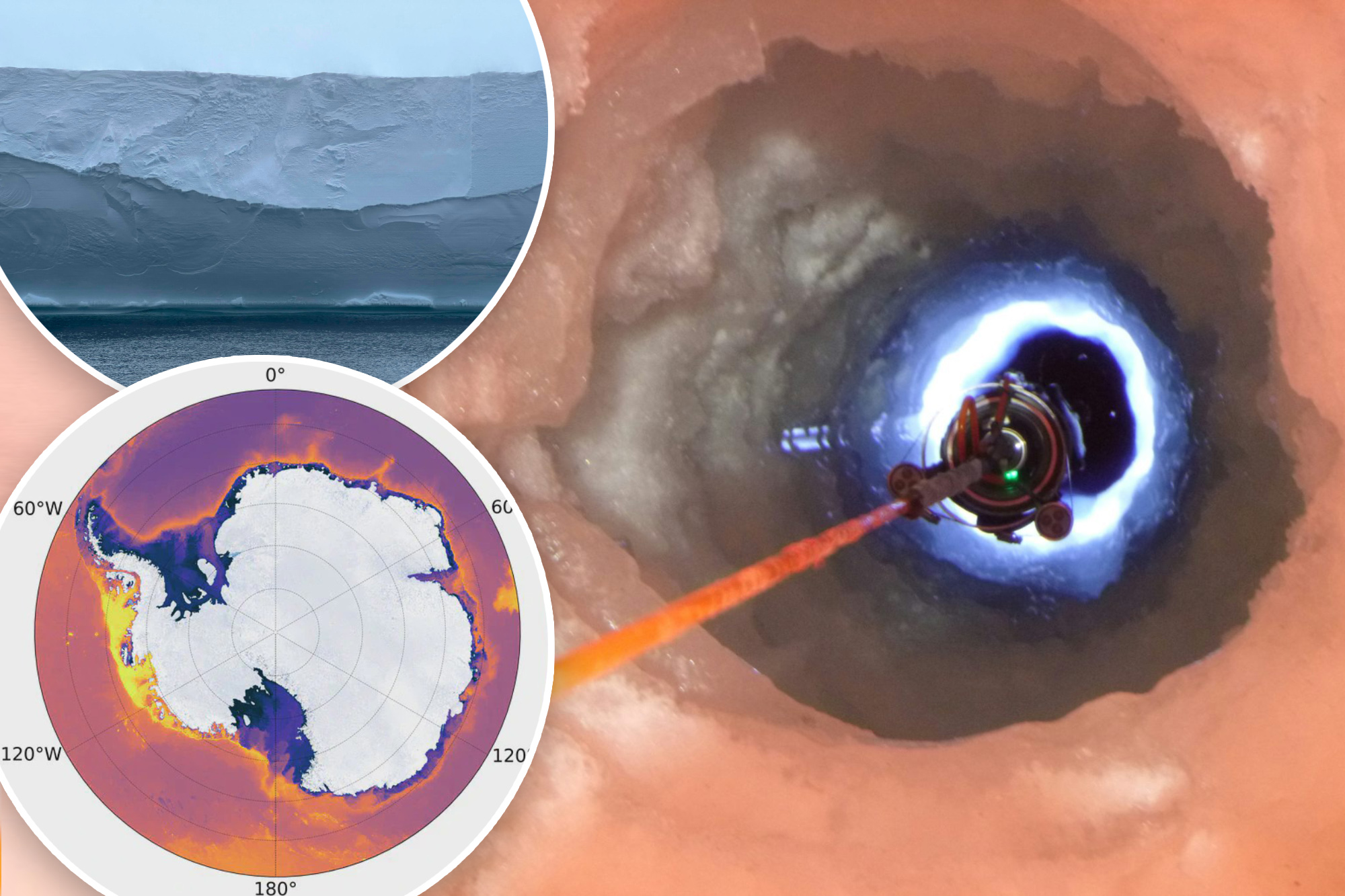
An encroaching ocean hotspot is threatening to melt Antarctic ice shelves from below, potentialy leading to catastrophic sea rise and other effects. Stevens/ESNZ/K872, CC BY-SA Beware the global meltdown.
Antarctica is melting from below due to rising heat from the ocean, threatening the ice shelves, potentially accelerating sea rise and other catastrophic climate effects around the globe, per an alarming new study.
“It’s almost like someone turned on the hot tap and now the bath is getting warmer!” said senior author Prof. Sarah Purkey, from Scripps Institution of Oceanography, in a statement.
The research, which was conducted over decades by researchers at the University of Cambridge in collaboration with the University of California, focused on the movement of a warm salty mass called the “circumpolar deep water” (CDR).
“It’s almost like someone turned on the hot tap and now the bath is getting warmer!” said senior author Prof. Sarah Purkey, from Scripps Institution of Oceanography in a statement. Comprised of a mixture of water from all the world’s oceans, this aquatic hot spot is trapped by the ice sheets over a thousand feet below the surface.
However, researchers have long claimed that over the past 20 years, this undersea heat source has expanded and moved toward the Antarctic continental shelf, threatening to flow under the ice shelves and destabilize them.
This is problematic given that this frozen barrier helps hold back Antarctica’s inland ice sheets and glaciers, which collectively harbor enough water to raise sea levels by an apocalyptic 190 feet.
Unfortunately, scientists didn’t have enough data to detect this troubling trend — until now.
Prior studies of the Southern Ocean, which surrounds the frozen continent, relied on transmissions from passing ships around once a decade. While this form of recon provided intel on temperature, salinity and other info, it failed to capture the long-term changes in heat distribution due to the infrequency of the reports.
To paint a complete picture of the a-thaw-calypse, the researchers combined this intermittent ship data with intel from the Argo, a flotilla of floating probes that drifts about the ocean providing continuous snapshots of the marine environment.
A rare dataset collected by instruments at the point where Antarctica’ s largest ice shelf begins to float reveals ocean processes that drive melting at this critical part of the continent. Craig Stevens/ESNZ/K862, CC BY-SA By combining these methods, researchers were able to construct a record of detailed monthly snapshots over the last 40 years, allowing them to detect shift in warm waters for the first time ever.
They found that the CDR not only contributes to the melting of ice shelves, but also drives back where the ice meets the bedrock, exposing more of it to warm water and thereby accelerating the ice loss.
“In the past, the ice sheets were protected by a bath of cold water, preventing them from melting,” said Purkey, who analogized this change in “ocean circulation” to switching on the hot water.
The cause of the CDR’s Antarctic voyage is yet unclear, but researchers suggest it could be a combination of natural and human-induced climate change.
In any case, this phenomenon could cause catastrophic climate effects around the globe.
“The Southern Ocean plays a key role in regulating global heat and carbon storage, so changes in heat distribution here have wider implications for the global climate system,” warned study author Professor Ali Mashayek from Cambridge Earth Sciences.
Climate models have suggested that the production of cold, dense water will decline in Antarctica, causing the warmer circumpolar deep water to draw toward the continent to occupy the space left by the shrinking cold water.
These changes to deep sea heat-cosystem could also impact key ocean currents. A combination of warmer air temperatures and ice melt runoff are weakening the the already at-risk Atlantic Meridional Overturning Circulation, or AMOC, a “conveyor belt of the ocean” that circulates warm water toward the ocean surface from the tropics to the Northern Hemisphere.
A recent study found that AMOC will slow between 43% and 59% by 2100, marking a 60% greater weakening than past projections estimated.
If it collapses completely, this could cause calamitous effects ranging from surging sea levels in North America to drought in Europe, inevitably disrupting both ecosystems and global food production.