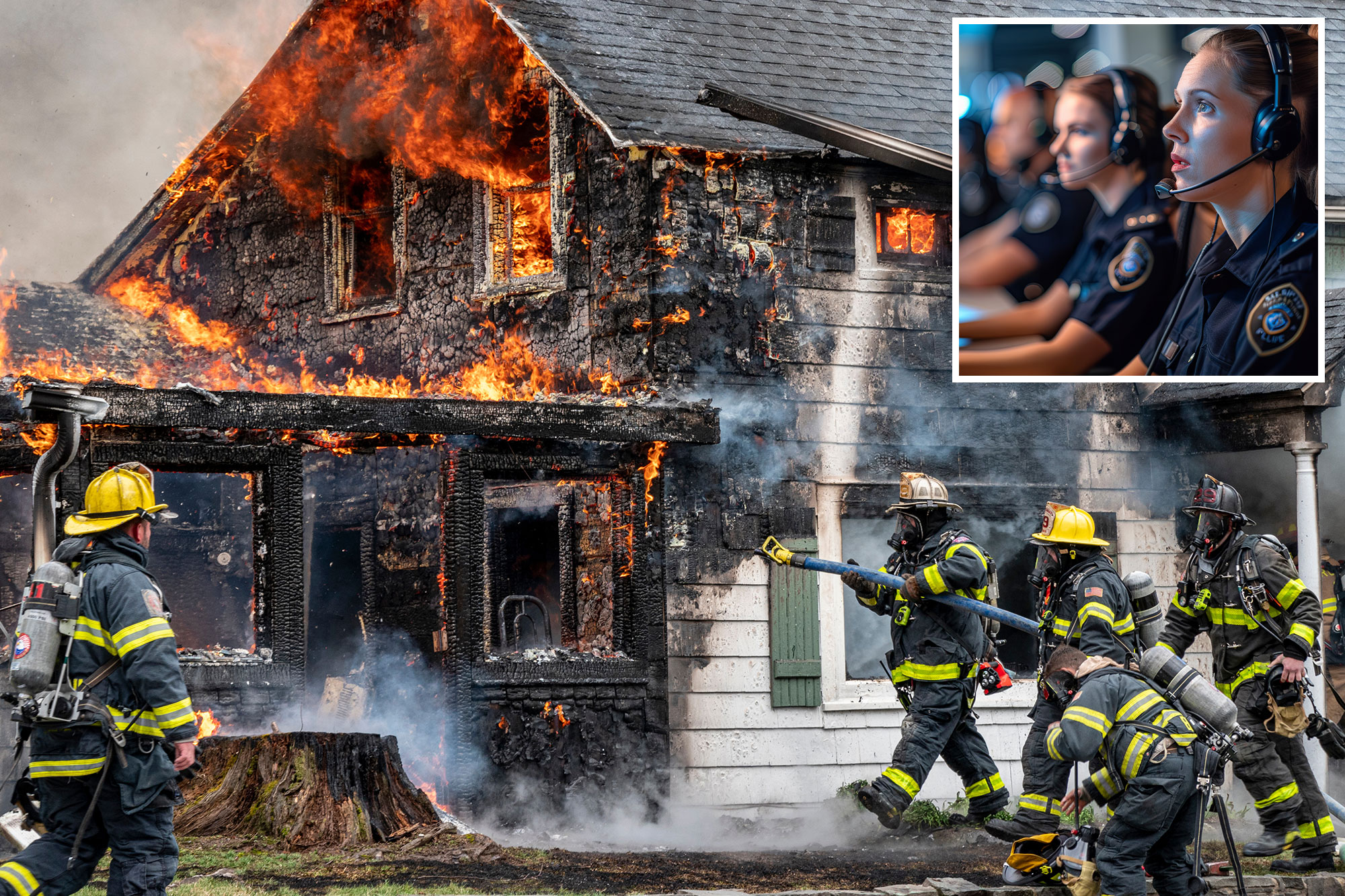
As first responders struggle to answer 911 calls quickly amid staffing shortages, operators are pleading with Los Angeles City Hall for more funding.
As the city continues budget hearings to lock in its 2026–27 spending plan, AFSCME, the civilian union representing dispatchers, had a blunt message during a hearing Monday — fund the jobs that matter, the ones that answer the call for help.
“If nobody’s answering the phone, nobody’s coming,” Larry Gates, president of AFSCME told The California Post.
It’s a warning aimed at a system stretched thin, where every missed call and vacancy adds pressure to a lifeline millions rely on.
In Los Angeles, 911 calls are routed through the LAPD Metropolitan Communications Dispatch Center, where more than 500 civilian dispatchers — known as Police Service Representatives — handle a relentless call volume, often taking 75 to 250 calls per shift.
Staffing shortages have been flagged for years in council motions and internal reports, with officials repeatedly tying delays in answering calls to a lack of trained dispatchers.
The city hired 144 dispatcher trainees in 2024, but just 56 in 2025. At the same time, 75 operators left their positions, leaving the department with fewer experienced workers than it started with.
“Every 30 years, we’re scrambling,” Gates said. “We do a big hiring push, then decades later everyone retires at once.”
In a city of nearly 4 million people, officials say about 100 operators must be on duty across a 24-hour period just to meet minimum standards.
In 2024, Los Angeles answered just over half of its 911 calls within 15 seconds, far short of the state requirement that 90% be picked up that quickly.
“They’re as bad as you would think,” Gates said of emergency calls. “Murders, assaults, you name it. We get those calls.” Those high-stakes emergencies are mixed with a constant flood of lower-level calls, parking disputes, noise complaints, minor crashes, all entering the same system.
Every call first goes through a primary 911 operator, who must quickly determine whether it is a life-threatening situation. If it’s not, it gets pushed to a secondary, non-emergency queue — where a backlog builds.
Non-emergency calls can sit unanswered for long stretches, with average hold times topping three minutes — and far longer in extreme cases — because operators are tied up handling immediate emergencies.
Aaron Peardon, a business representative with District Council 36, said the issue also comes down to how the city values these roles. “The civilian side is the backbone.”
“You’re taking the worst call of someone’s life,” Peardon said. “Then you have to go to the next one.”
Peardon also added that this kind of work should not be automated.
“You want a human being on the line,” Peardon said. “Someone who can react and understand what’s really happening.”
City budget hearings are expected to continue through mid-May, when the Budget and Finance Committee finalizes its recommendations. The full City Council will then vote on a final spending package.
California Post News: Facebook, Instagram, TikTok, X, YouTube, WhatsApp, LinkedInCalifornia Post Sports Facebook, Instagram, TikTok, YouTube, XCalifornia Post Opinion California Post Newsletters: Sign up here!California Post App: Download here!Home delivery: Sign up here!Page Six Hollywood: Sign up here!