California has long been America’s trendsetter. But even as the nation becomes energy self-sufficient, California is now leading the way in sacrificing its economy on the altar of radical climate change ideology.
Once a leading oil producer, the state now imports roughly 75% of its crude. Last year, about a third of California’s energy imports came from the Middle East, up 22% from 2024.
California is moving counter to one of this century’s most important economic and national security developments: the return of American energy independence. A major energy importer as recently as 2005, the U.S. is now an energy export powerhouse. The United States now produces the most oil and gas in the world – roughly 40 percent more per year than either Russia (number 2) or Saudi Arabia (number 3).
The U.S. has ridden the shale revolution and pro-energy policies to become the world’s top producer of oil and natural gas. The dramatic increase in domestic oil and gas supply has kept a lid on consumer inflation, as everything from lipstick and shampoo to swimsuits and household cleaners is made with petroleum products.
Energy dominance has largely insulated the American economy. Bloomberg via Getty Images Affordable energy saved U.S. consumers $800 billion annually from 2011 to 2024, according to energy research consultants Thunder Said Energy (TSE). Even with the recent run-up in gas prices, Americans are still paying more than a dollar less per gallon at the pump than they were in 2011 and 2012 after adjusting for inflation.
Energy dominance has largely insulated the American economy from the direct fallout of the Iran conflict.
The Iran war has caused a greater energy price spike in the Golden State than in any other. Gas is hovering close to $6 a gallon, about $2 higher than the national average. Diesel has surged to a record $7.75 a gallon, and jet fuel prices in Los Angeles, a major airline hub, have jumped nearly 50%.
California’s energy squeeze is no accident. It’s the predictable outcome of anti-energy policies that have hollowed out the state’s refining capacity and throttled production.
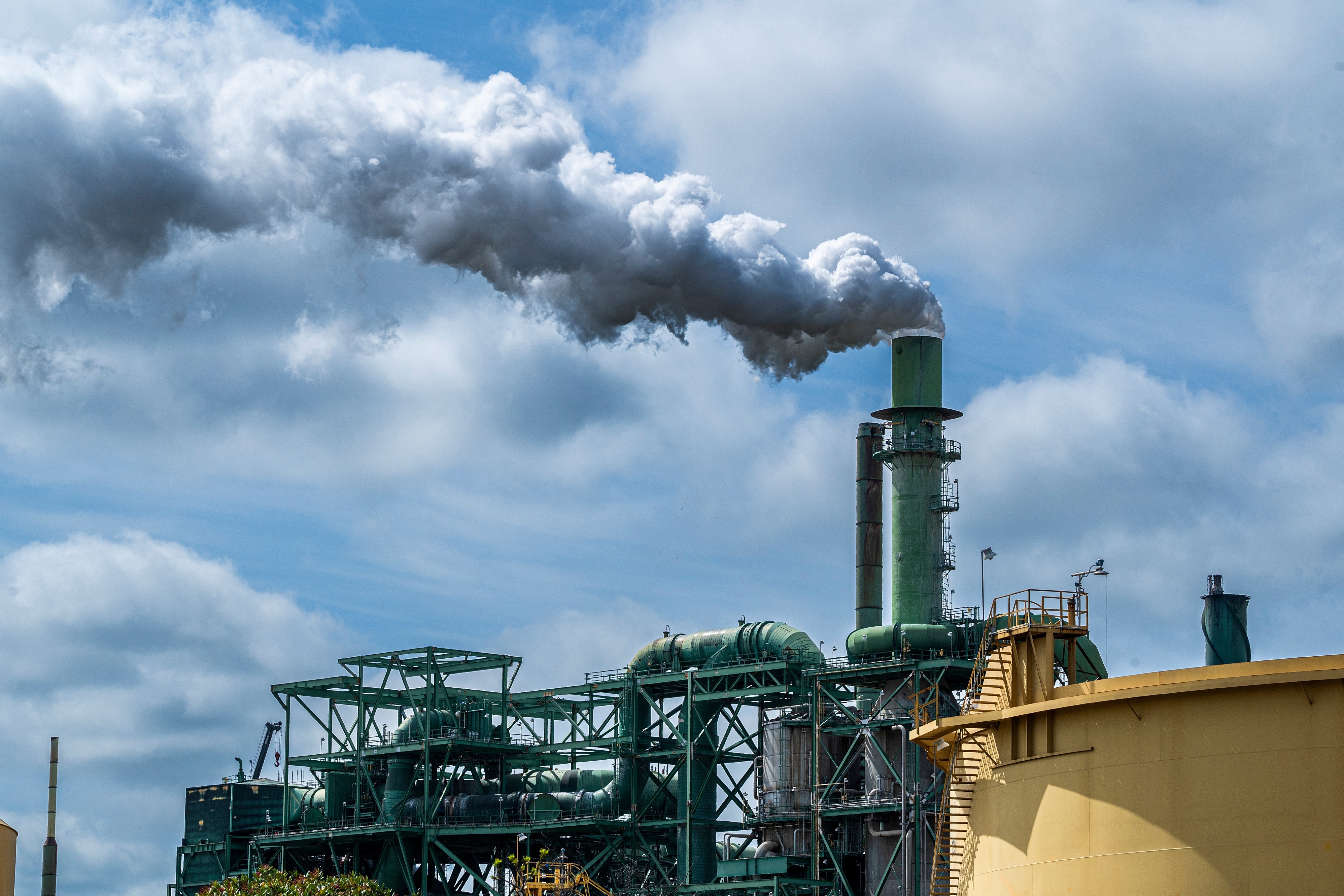
Start with distribution and refining costs, which make up almost 30% of the cost of a gallon of gas. California’s aggressive climate policies have caused one-fifth of the state’s refining capacity to vanish. In the past two years alone, Valero and Phillips 66 have shuttered their operations.
These closures have forced California, which still consumes more gas than any state except Texas, to rely increasingly on fuel imports from the Middle East and Asia.
Last year, nearly one third of California’s jet fuel came from South Korea, which recently implemented fuel export caps in response to the loss of Middle East oil. California’s progressive government has forced its people to suffer from disruptions half a world away.
California’s energy squeeze is no accident. Bloomberg via Getty Images California’s fossil fuel phobia also threatens national security. The few refineries left supply around 50 military bases in California and the West. California’s policies have left these installations vulnerable to foreign supply chain shocks, which forced Energy Secretary Chris Wright to order the restart of the Santa Ynez pipeline under the Defense Production Act.
California’s refusal to accept the necessity of oil and gas makes everyday life in the Golden State even more expensive than it already is. The state’s renewable mandates have contributed to the rise in electricity costs by a staggering 39 percent over the past six years, more than any other state, and 96 percent from 2014 to 2024.
When Gavin Newsom took office, gas prices in California were 90 cents a gallon more than the rest of the country. The gas gap between California and everyone else has nearly doubled since. The state’s Democratic leaders can blame the U.S.-Israeli attacks on Iran all they want. But the reality is that 55% of the cost of gas in California comes from state-imposed costs, according to a recent CBS investigation.
Unfortunately for the state’s residents, there’s little reason to believe that the state’s policymakers are getting the message.
A report from the Alliance for Innovation and Infrastructure recently revealed that when California approved $18 billion for highway repair projects last month, the state’s planners neglected to account for the fact that the pending Valero refinery closure will remove almost half of the asphalt binder and a large part of the diesel needed to complete these projects.
And if proposed changes to the state’s “Cap-and-Invest” program are adopted, California’s remaining seven refineries could soon close, and drivers could see a gallon of gas cost $1.20 more by 2030.
Governor Gavin Newsom boasts that his state is leading the global transition away from fossil fuels. In truth, he’s outsourcing California’s energy needs to nations that burn dirtier crude and answer to regimes hostile to U.S. interests.
What California calls “climate leadership” is strategic self-harm: shuttered refineries, higher prices, and greater dependence on unstable, foreign regimes.
John Yoo is a senior research fellow at the Civitas Institute at the University of Texas at Austin and a professor of law at the University of California at Berkeley. Michael Toth is the director of research at the Civitas Institute.
California Post News: Facebook, Instagram, TikTok, X, YouTube, WhatsApp, LinkedInCalifornia Post Sports Facebook, Instagram, TikTok, YouTube, XCalifornia Post Opinion California Post Newsletters: Sign up here!California Post App: Download here!Home delivery: Sign up here!Page Six Hollywood: Sign up here!