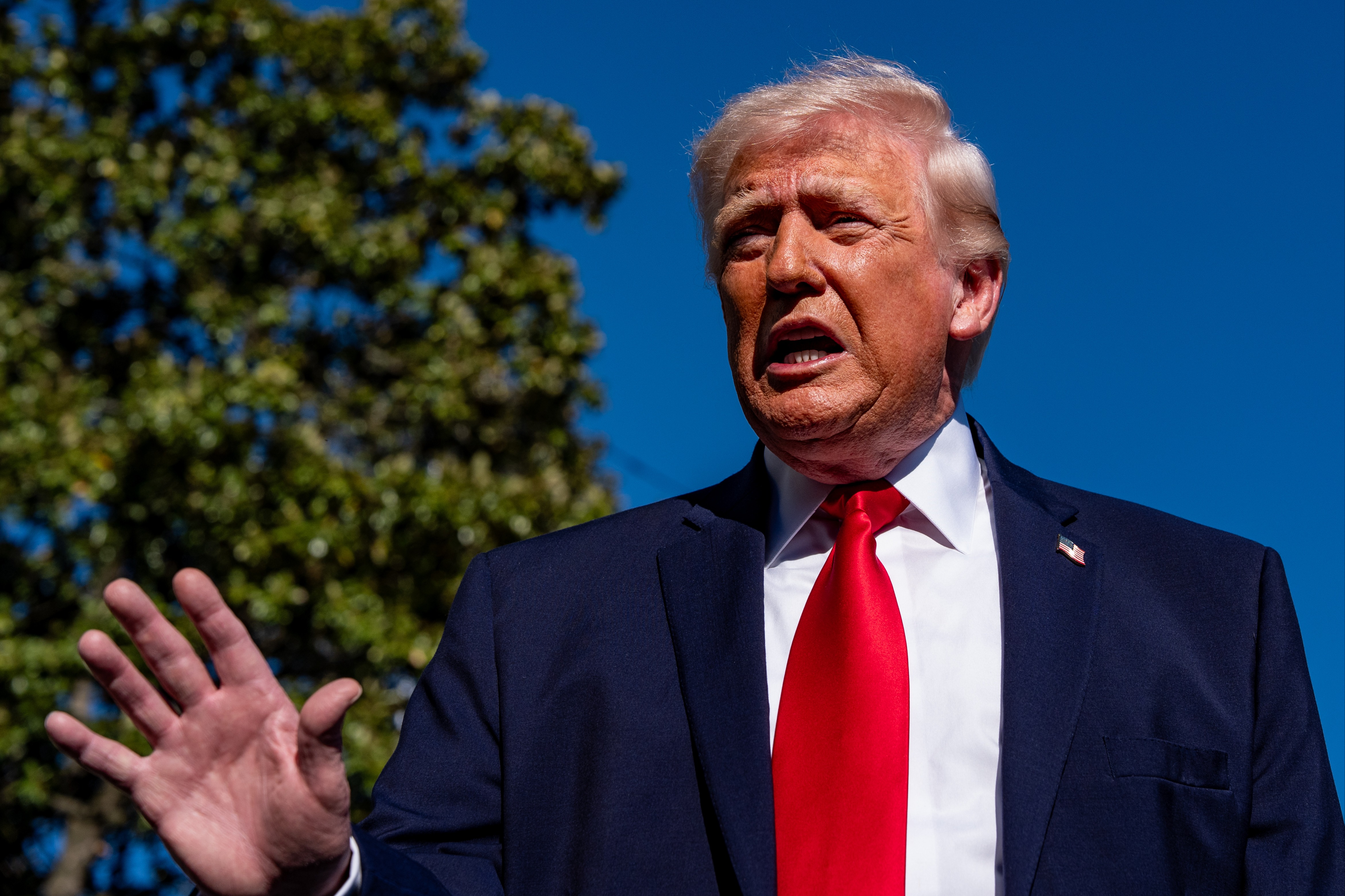
With midterm elections approaching, pressure is building on President Donald Trump -- from the left and the isolationist right -- to wind down the war against Iran. AP The clock is ticking in Washington and Tehran.
With midterm elections approaching, pressure is building on President Donald Trump — from the left and the isolationist right — to wind down the war against Iran.
As Trump has correctly argued, the Islamic Republic is reeling — squeezed by the US blockade of the Strait of Hormuz and battered by the devastating effects of Operation Epic Fury.
Washington can force Tehran to accept permanent nuclear and missile concessions, or confront the growing risk of regime collapse.
Hundreds of senior Iranian commanders and officials are dead.
Iran’s nuclear infrastructure, air defenses, ballistic missile program, navy, and defense industry have all been heavily degraded.
But the economic blow may prove even more dangerous to the regime.
Gulf states are shutting down the sanctions-busting, money-laundering, and financial channels Tehran has relied on for years.
Its steel and petrochemical industries are badly damaged.
Inflation is in triple digits, and the currency is in free fall.
And the pressure is not just financial, but physical too.
Iran’s main oil export hub at Kharg Island, which handles 90% of its crude exports, is days away from hitting its onshore storage limit.
Tehran is already reactivating retired supertankers as emergency floating storage to buy itself a few more days.
But that bridge is short: Once floating capacity fills, Iran will be forced to shut in its own oil wells, causing damage that may be permanent.
Start your day with all you need to know Morning Report delivers the latest news, videos, photos and more.
Before the war, at least a third of Iran’s oil revenue funded military salaries and operations.
The regime squandered the rest on proxies like Hezbollah and Hamas, rather than modernizing its refineries.
That left an oil-rich nation dependent on foreign gasoline imports to meet its own needs.
Iran produces about 26 million gallons of gas daily, but consumes more than 33 million.
For years, it covered the shortfall through imports from Gulf suppliers, especially the United Arab Emirates.
That lifeline is now in doubt after Tehran’s missile and drone attacks.
The cost is staggering: roughly $435 million lost every day — including foregone exports and blocked imports.
Cumulative losses from the war are at least $144 billion, nearly 40% of pre-war GDP, with some estimates even double that.
Soon Tehran must confront a hard question: Is continued war with two of the world’s strongest militaries worth national ruin?
Its problem is not just economic; it is political.
The regime spent decades telling its base the nuclear program was sacred.
In 1988, Ruhollah Khomeini, then the Islamic Republic’s supreme leader, drank what he called the “chalice of poison” to end the war with Iraq.
Today the regime faces an even more bitter cup — and someone still has to drink it.
If Iran refuses to bend, Trump should make clear that far greater military and economic punishment is coming.
America has more leverage today than at any point in the Islamic Republic’s 47-year history.
That means demanding no uranium enrichment, no plutonium reprocessing, no ballistic-missile production, no surviving nuclear infrastructure and no funding for terror proxies.
But Trump has a historic opportunity to go further — and openly back the Iranian people’s demand for a different government.
The weaker the regime becomes, the more likely Iranians return to the streets.
They have done so repeatedly in the past — over fuel shortages, inflation and economic hardship.
The protests that erupted in 2019, when the regime suddenly hiked gas prices by 50%, were among the most violent in the Islamic Republic’s history: Government forces killed an estimated 1,500 people to suppress them.
Now, Iran is once again nearing a gasoline crisis, along with a broader economic one.
If fuel runs short and the economy deteriorates further, fresh unrest is highly likely.
That could become an existential threat to the ruling elite.
Critics will object if Washington openly supports the end of the regime.
After decades of repression and tens of thousands killed by their own government, many Iranians will accept nothing less than the end of clerical rule.
What they need is support from the leader of the free world — weapons, secure communications, labor-strike funding and continued degradation of the regime’s machinery of repression.
Trump is right: America does not need a weak deal with Tehran.
We need strategic patience, moral clarity and steady pressure.
That is how this ends — with victory for both Americans and Iranians.
Mark Dubowitz is chief executive of the Foundation for Defense of Democracies, where Miad Maleki is a senior fellow.