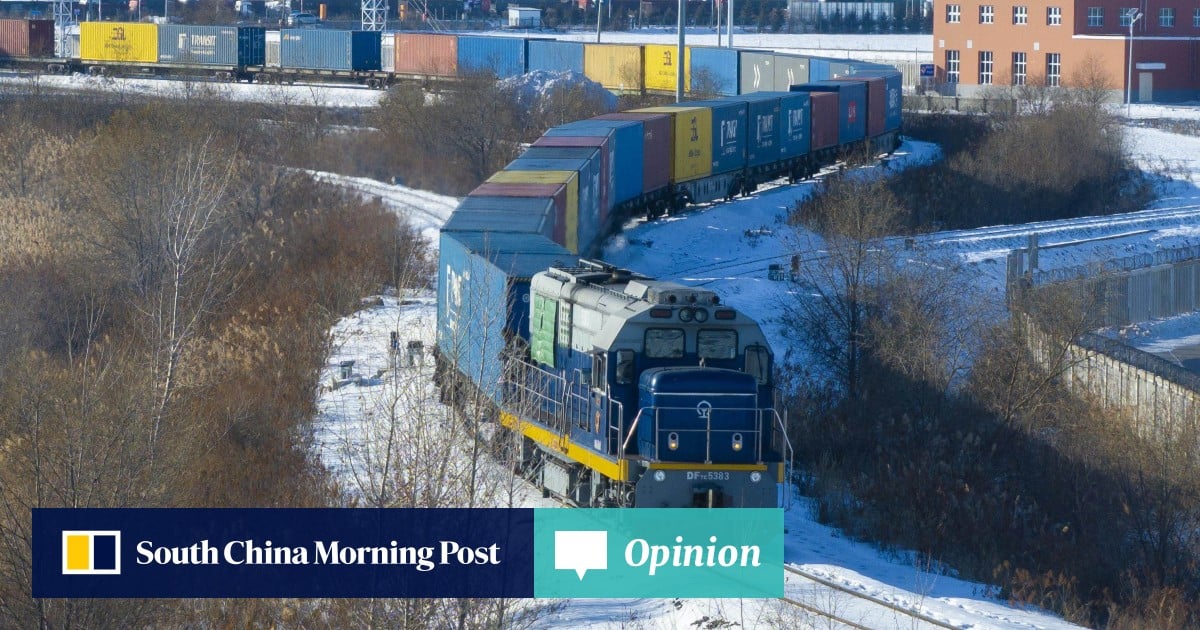
Geopolitical strife has taken the China-Europe railway from an alternative to an essential part of continental connectivity
3-MIN READ3-MIN ListenBob SavicBob Savic is head of international trade at the Global Policy Institute in London and visiting professor of international relations at the University of Nottingham. Published: 8:30pm, 26 Apr 2026The China-Europe railway network has evolved in the past decade from a nascent logistical experiment into a growing commercial alternative to maritime and air freight. In the wake of the US-Israel war on Iran, it might now be assuming an unanticipated role as a key security provider for transcontinental supply chains.
What began as sporadic trial runs has matured into a sprawling web of rail connections that currently links 235 cities across 26 European countries with more than 120 Chinese cities.
Between 2020 and 2023, the number of China-Europe goods train trips doubled, surpassing 17,000 annually. This commercial uptake was supported by bilateral customs agreements, standardised container tracking and coordinated border procedures.