On a state visit to the US, the British monarch is being deployed to help steady increasingly strained US-UK relations. Can King Charles help repair the damaged so-called "special relationship?"
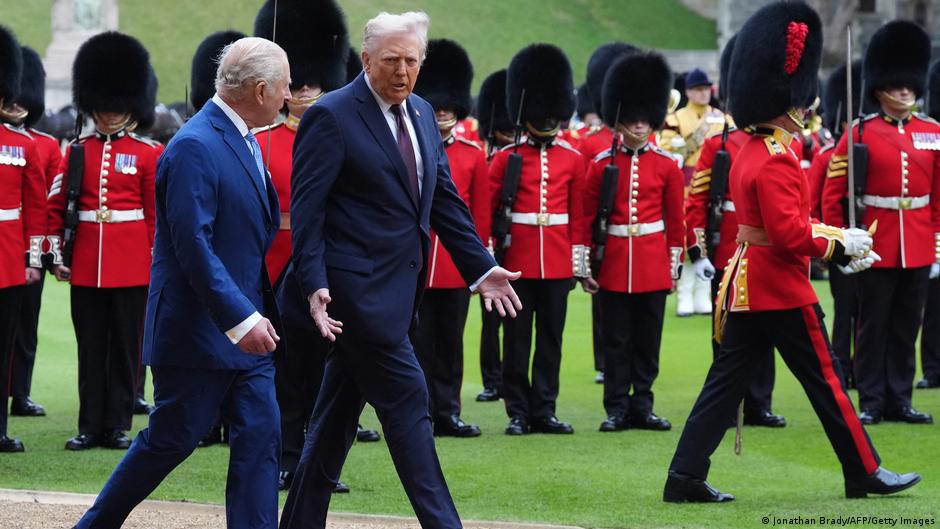
https://p.dw.com/p/5CmjyBritain is looking to shore up ties with Washington as relations with Donald Trump are strainedImage: Jonathan Brady/AFP/Getty ImagesAdvertisementThe "special relationship" between the United States and the United Kingdom has survived a revolution. Now the British government is working to ensure it can withstand Donald Trump.
Despite deep economic and social ties and unparalleled intelligence sharing, the US president has chosen to repeatedly attack the UK and its Prime Minister Keir Starmer. The trigger: London's reluctance to be drawn into Washington's war with Iran.
When Starmer initially refused to allow US troops to use British bases, Trump remarked: "This is not Winston Churchill we are dealing with." He later told The Sun newspaper it was "sad to see the relationship is obviously not what it was," adding the prime minister "has not been helpful."
The contrast to just one year ago is stark. Then, the UK became the first country to sign a post-tariff trade deal with the US. Since then, Trump´s threat to invade Greenland, his sweeping tariff policies — including against allies — his attacks on a "weak" Europe and, above all, the war in Iran have put the relationship under strain.
While Trump's disputes with the EU have focused on trade and defense spending, the rift with London appears more personal. The UK had positioned itself as Washington's closest ally. Securing an early trade deal raised expectations in the White House — likely making Britain's refusal to back the US and Israel in Iran feel, to Trump, like a betrayal.
British governments have long used their monarchs as tools of soft diplomacy. State visits take place on behalf of the UK government, and they carry largely symbolic weight. As a constitutional monarch, King Charles IIIcannot negotiate treaties, set policy or speak freely on political matters. His role is ceremonial, not executive.
As recently as September 2025, Trump and the first lady were treated to anunprecedented second state visit to the UK, with all the glamour, military pomp and royal attention that the Kingdom has to offer. At the state banquet, Trump praised the "bond of kinship and identity" between the two nations as "priceless and eternal ... irreplaceable and unbreakable."
So why deploy the king again, when Trump's positions can shift so quickly?
"The view of the British government will be that it's better to at least make the attempt and to have some chance of winning favor for a brief period of time and having some influence than not," Nigel Fletcher, a political historian and visiting scholar at Kings College London, told DW.
Declining the invitation, likely issued before the Iran war, was hardly an option.
"Donald Trump would have reacted very badly to that. The Foreign Office and the British government will want to avoid doing anything to offend him," Fletcher added.
US and UK praise their special relationshipTo view this video please enable JavaScript, and consider upgrading to a web browser that supports HTML5 video
Public opinion in the UK is less accommodating. In March, an opinion poll showed that almost half of Britons were opposed to the trip, while only a third wanted it to go ahead. More than 80% of Britons view Trump negatively, according to a recent poll.
Critics also question the strategy. Graham Smith of the anti-monarchist group Republic argues that the effort is futile. He believes that Trump is not interested in being diplomatic, and that there is nothing that King Charles could do about it.
"We are just wasting our time ... Trump has advertised the impotence of having a monarch," Smith told DW.
Whether the king and queen draw crowds during their trip to the US, which sees them attending garden parties and state dinners, remains to be seen. The diplomatic highlight of the visit is expected to be an address to Congress — only the second by a British monarch, after Queen Elizabeth IIspoke in the Capitol in 1991. Without doubt, the king will once more stress the everlasting friendship and shared culture between the two nations.
However, there is potential for controversy. Andrew, the king's brother, was closely tied to the late sex offender Jeffrey Epstein. Survivors have asked for a meeting with the king; the Palace has declined, pointing to ongoing police investigations. The requests have been taken up by Congress member Ro Khanna, who has expressed disappointment about the Palace´s decision. With the possibility of protests by women´s right groups, there is a risk the scandal could overshadow the visit.
Then there is Trump's unpredictability. He has previously embarrassed foreign visitors to the Oval Office, such as Ukraine's President Volodymyr Zelenskyy. King Charles, however, is unlikely to face similar treatment. Trump has consistently spoken warmly of the king, calling him a friend and "a fantastic man," and suggesting his visit could "absolutely" help repair relations.
Even so, the two men could not be more different. At the state banquet back in Windsor Castle, the ardent environmentalist spoke about the "precious opportunity" to safeguard "the wonders and beauty of nature for the generations to follow," but did not address the president´s anti-climate policies directly.
"Donald Trump has formed the view that he has this special relationship of his own with King Charles," as he responded well to flattery, says Nigel Fletcher.
Since this appears to be the strongest personal relationship available at the moment, the British government might have concluded that any potential embarrassments during the trip are risks worth taking for the sake of saving the "special relationship."