Scientists are predicting the advent of a super El Niño that could shatter global temperature records, causing ripple effects across the globe. Quardia Inc. - stock.adobe.com This “little boy” isn’t playing around.
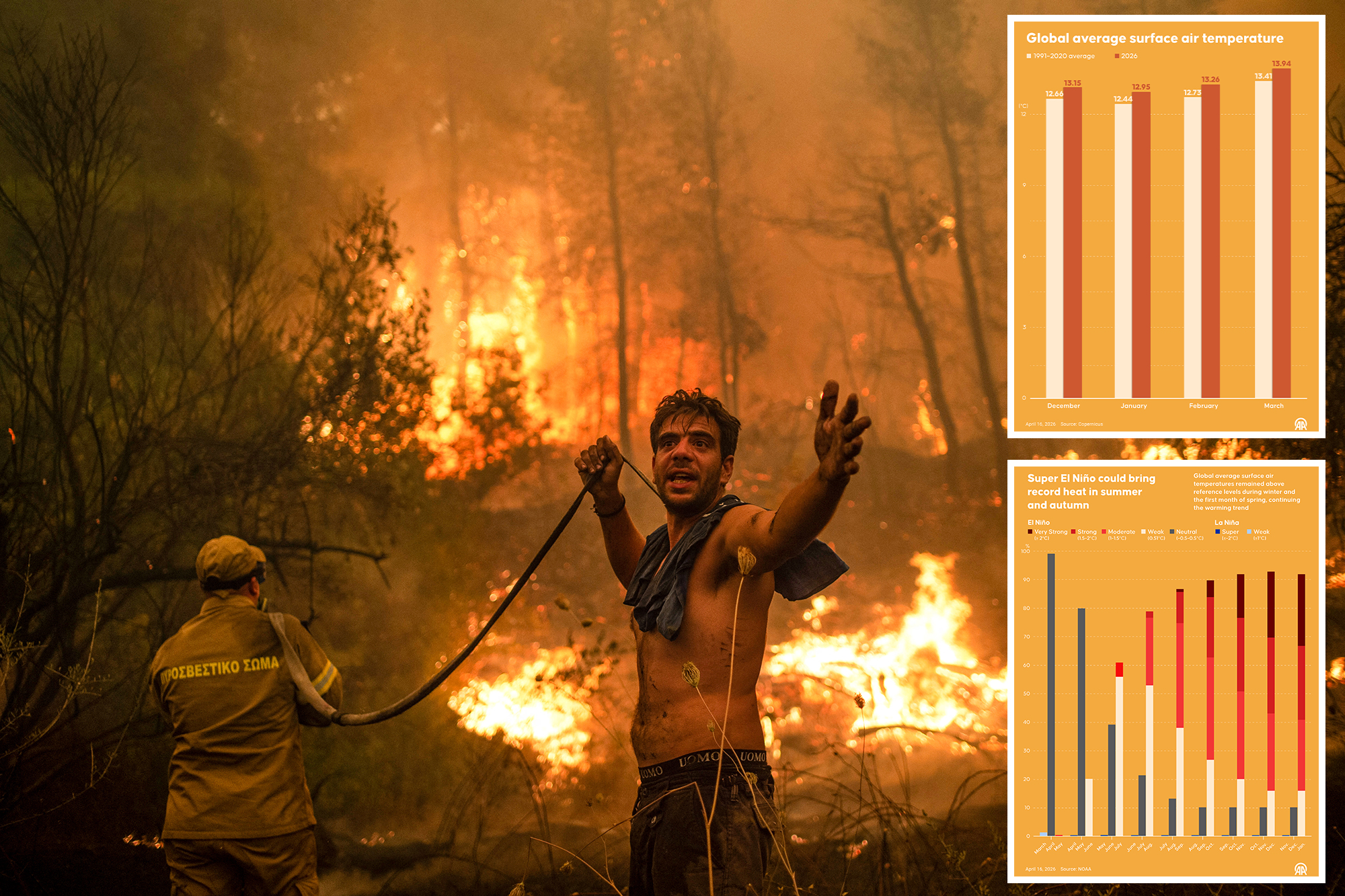
Scientists predict that we could be on track for a super El Niño, a meteorological phenomenon that could send temperatures soaring to record heights next year, potentially causing droughts, flooding and other extreme weather events across the globe.
“El Niño” literally translates to “little boy” in Spanish, and also refers to the baby Jesus in Hispanic cultures — named as such because the weather pattern usually occurs around Christmas.
These potential calamities, effects of which could be felt as early as this summer, were detailed in an alarming new analysis published in the Equation.
“Some climate models, such as those at the National Center for Atmospheric Research (NCAR), are even saying this event could be the strongest El Niño on record,” warned Marc Alessi, a fellow at the Union of Concerned Scientists.
El Niño, for the uninitiated, is defined by preternaturally warm ocean surface temperatures in the eastern Equatorial Pacific caused by the El Niño-Southern Oscillation — a natural climate pattern that cycles between a hot and cold phase every two to seven years.
While the event is quite localized, its ripple effects can be felt the world over, including at home in the US.
Although this cycle has been going on for thousands of years, this latest phenomenon could be the most powerful in “140 years,” meteorologist Paul Roundy posted on X.
Experts predict that, when combined with human-induced warming, this phenomenon could propel global temperatures above the 1.5 degrees Celsius average increase over preindustrial levels — a threshold linked to widespread calamities — as early as next year.
During the hottest year on record, 2024, the temperatures soared to 1.55 degrees Celsius, borne aloft by human activity and a temporary El Niño.
Some models predict that this latest supercharged version could propel temperatures far past that to 2 degrees Celsius — an unprecedented metric.
“While the majority of models predict global monthly temperature anomalies will remain below 2 degrees Celsius, the fact that there’s a nonzero chance of +2 degrees Celsius happening is shocking,” warned Alessi, who predicted that global weather patterns could be pushed to the brink.
Weather patterns are hard to predict during the natural weather transition at this time.
However, the International Research Institute for Climate and Society at Columbia University forecast a 70% chance of El Niño developing by June, and as much as a 94% probability that it would continue through year’s end, the Guardian reported.
However, a typical El Niño year has far-flung impacts from increased precipitation and flooding over South America and the United States to brutal droughts in Australia and Indonesia.
Some even postulated that El Niño may have brought about the fall of several ancient civilizations, including the Moche and the Inca.