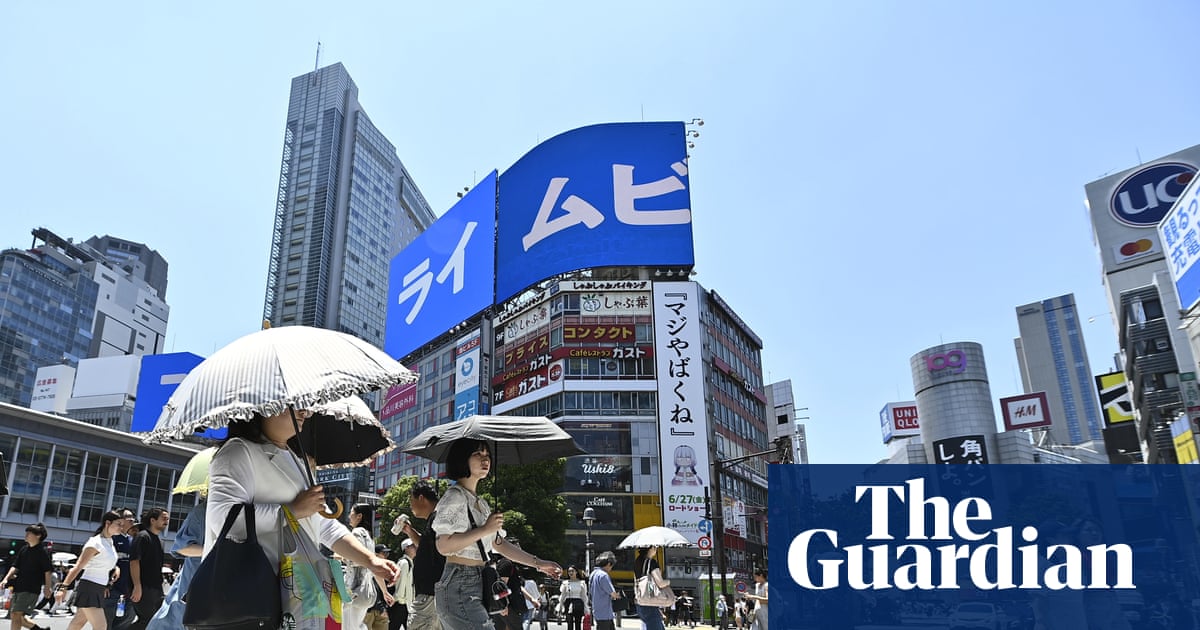
People on the Shibuya crossroad during an intense Tokyo heatwave in June last year. Photograph: Anadolu/Getty ImagesView image in fullscreenPeople on the Shibuya crossroad during an intense Tokyo heatwave in June last year. Photograph: Anadolu/Getty ImagesTokyo workers asked to swap suits for shorts to combat energy costs and heatOfficials hope more casual attire for public servants will save electricity during Iran war as summer approaches
Public servants working for the Tokyo metropolitan government are being encouraged to swap their suits for shorts this summer to combat sweltering heat and rising energy costs caused by the US-Israel war on Iran.
Inspired by the country’s Cool Biz energy-saving initiative, Tokyo officials hope the measure will cut dependence on air conditioning.
Cool Biz, launched by the environment ministry in 2005, initially encouraged bureaucrats to dispense with ties and jackets, but has so far stopped short of allowing them to display their bare legs in front of colleagues.
Japan and other countries in Asia are growing anxious about the economic effects of the conflict in the Middle East, amid rising oil prices and shortages of petroleum products such as jet fuel.
Read moreResource-poor Japan is particularly vulnerable to a prolonged war as it depends on the Middle East for 90% of its oil imports, most of which pass through the strait of Hormuz. About 20% of the natural gas used in South Korea comes via the same route.
Vietnam, South Korea and other countries have taken steps to ration energy use, while other Asian nations have encouraged government officials to work from home or reduced the length of the working week. In Seoul, authorities have urged residents to make short trips on foot or by bicycle.
Japan has already tapped into its large strategic oil reserves, with local media reporting on Friday that it plans to release a further 20 days’ worth from 1 May. It is also sourcing oil imports from suppliers that do not use the strait of Hormuz.
Experts have warned that if shipping in the vital waterway doesn’t return to normal soon, the world’s fourth-biggest economy will eventually face a crude oil shortage. That could force businesses and households to make more drastic cuts in petrol and electricity usage reminiscent of those introduced during the oil shocks of the 1970s.
The threat of an energy crunch had been “one of the factors” in allowing Tokyo government staff to wear casual clothes to work, Agence France-Presse said, adding that some employees had been spotted in shorts, T-shirts and short-sleeved blouses since the initiative’s launch this week to coincide with the start of Japan’s heatstroke warning system.
“I was a bit nervous, but it’s very comfortable, and I feel like it’ll improve my work efficiency,” a metropolitan government official who was wearing shorts to the office for the first time told the Yomiuri Shimbun newspaper. “As it gets even hotter, I’d like to come in earlier and work from home as well.”
Citing “a severe outlook for electricity supply and demand,” Tokyo’s governor, Yuriko Koike, who as environment minister was behind the Cool Biz campaign two decades ago, told reporters: “We encourage cool attire that prioritises comfort, including polo shirts, T-shirts and sneakers and – depending on job responsibilities – shorts”.
War notwithstanding, Japanese employers have been forced to rethink old rules on workplace attire as a result of the climate crisis. Last year, the country endured its hottest summer since records began in 1898, according to the meteorological agency.
Now that it is no longer unheard of for temperatures to rise to 40C or above, the agency last week announced a new extreme weather event: kokusho, or “cruelly hot”.