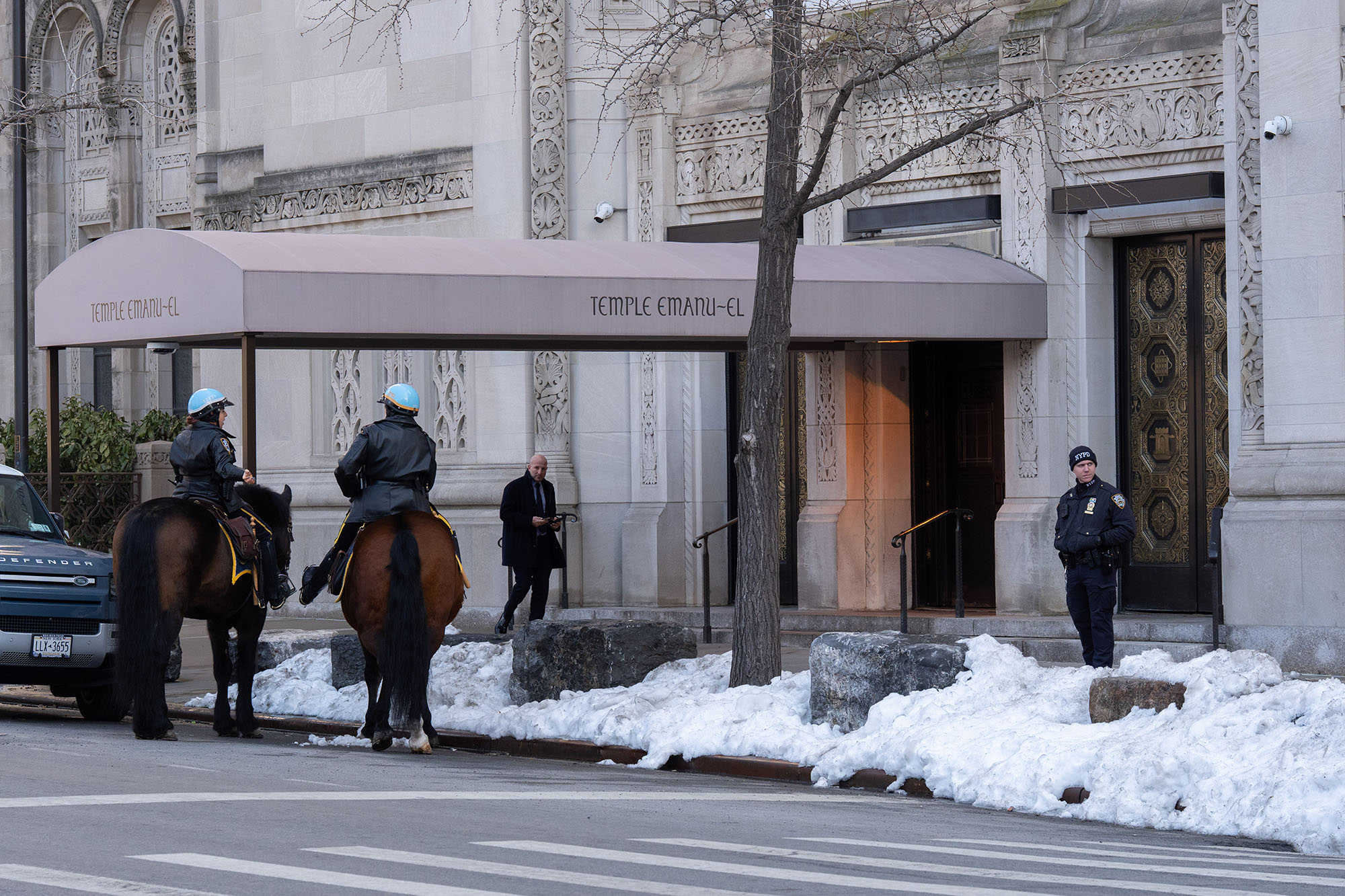
A new bill under consideration in Congress would create 100-foot “buffer zones” around houses of worship — making it a federal crime to interfere with congregants as they practice their religion.
Long Island Democratic Rep. Tom Suozzi and Republican Rep. Max Miller of Ohio officially proposed the bill Friday, which would punish rabble-rousers who come within 8-feet of a congregant with the intent to “intimidate or obstruct” that person’s right to worship within the buffer zone of any religious institution.
A first-time offender could face a maximum of one year in prison and a repeat offender could face up to three years in prison under the “Safeguarding Access to Congregations and Religious Establishments from Disruption Act” (the “SACRED Act”).
For a first-time non-violent offense, the maximum fine for an offender could be $10,000 and six months imprisonment.
The penalty for a second offense could be up to a $25,000 fine and an 18-month prison sentence.
A serious injury or assault of a congregant could result in up to 10 years in prison.
Suozzi, whose district includes Nassau County’s North Shore and parts of neighboring Queens with a considerable population of devout Jews, said something must be done amid the rise in antisemitism and ugly, confrontational protests outside synagogues.
The New York City Council passed a similar measure to protect congregants following an unruly protest outside the Park East Synagogue in Manhattan but Mayor Zohran Mamdani has yet to act on the bill.
“People are really scared,” Suozzi said.
“I hear it from Jews. I hear it from Muslims. I hear it from Sikhs.”
“We’re trying to strike a balance between people’s First Amendment right to protest and people’s First Amendment right to worship,” he added.
“I’m trying to use common sense and be responsible in addressing a serious problem.”
Miller said every American “deserves to practice their faith free from fear, intimidation, or harassment.”
“The SACRED Act ensures that people can access their place of worship safely and without obstruction, while still preserving First Amendment protections for peaceful expression,” he said.
“This commonsense legislation draws a clear line: intimidation and threats have no place in our communities.”
Suozzi believes the bill, which is expected to face opposition from civil libertarians, will pass legal muster because it was drafted in consultation with constitutional experts.
The bill punishes bad conduct, not free speech, he said.
Federal prosecutors and the state attorneys general can initiate civil proceedings against harassers under the bill.
Groups endorsing the bill include: the Anti-Defamation League, American Jewish Committee and the Union of Orthodox Jewish Congregations of America.