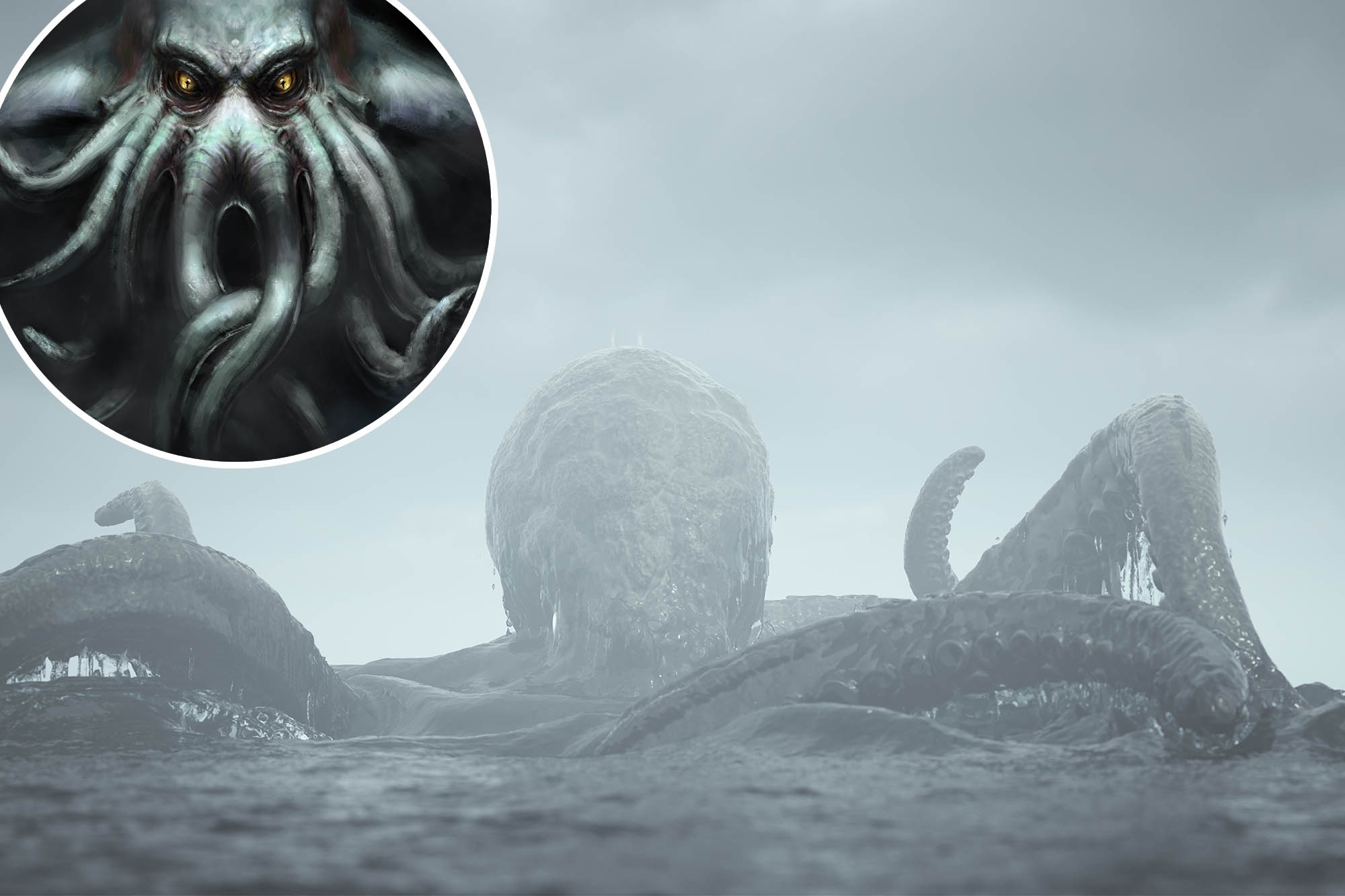
Fossil analysis has revealed that the oceans of the late Cretaceous were ruled by 62-foot octopuses and not marine reptiles as previously thought. paul - stock.adobe.com It was more than it was Kraken-ed up to be.
An octopus the size of the Hollywood Sign might seem like a monster from Greek mythology.
However, new fossil evidence reveals that massive “kraken”-like cephalopods ruled the seas during the Cretaceous period, possibly preying on massive sea reptiles and other so-called apex predators, per a study published Thursday in the American Association for the Advancement of Science.
This massive mollusk “had among the largest body sizes of all organisms in the Cretaceous oceans,” wrote the researchers, who hailed from Hokkaido University.
An artist’s depiction of a tentacled sea monster. The giant octopus from the study might’ve even preyed upon the mighty mosasaur — the so-called apex predator of prehistoric seas. Kalleeck – stock.adobe.com Indeed, at 62-feet-long, this colossal octopus could grow up to six feet longer than the mighty mosasaur, a predatory marine reptile that has long been considered the oceanic alpha-dog in the late Cretaceous between 100 and 60 million years ago.
In the movie “Jurassic World,” this nautical night terror notably dispatches the evil Indominus Rex — essentially a hybrid of the fiercest dinosaurs.
In fact, not only was the octopus bigger, but it was potentially badder as it might’ve even preyed on the aforementioned leviathan.
Rendering of a monster octopus like the ones in the study, which grew to 62 feet long. westwindgraphics – stock.adobe.com This ran contrary to previous scholarship that large vertebrates such as the latter dominated the ocean while invertebrates were their prey.
To shed light on where these mega mollusks sat on the food chain, the team examined patterns of wear on the fossilized jaws of dozens of octopus from the epoch.
They identified two main species of finned octopuses, a species with ear-like flaps on the side of their mantle that aid in propulsion.
These “top-tier predators” were Nanaimoteuthis jeletzkyi and N. haggarti, the latter of which grew to the aforementioned exceptional sizes, potentially making them the largest invertebrates currently described. They were nearly 20 feet longer than the largest specimens of giant squid — the longest cephalopod living today.
Interestingly, the jaws of the specimens boasted the most extensive wear and tear, suggesting that these colossal critters were active carnivores and used their tentacles to ensnare prey while pulverizing it with their beaks — a behavior that has been associated with complex cognition.
This proved these gelatinous giants occupied a niche that was previously only ascribed to large, bone-bearing predators.
In other words, in the contest of “Mega Shark versus Giant Octopus,” the latter would’ve won and not battled to a stalemate as depicted in the infamous SyFy Channel flick.