Sometimes we get nice things — and marsupials get a miraculous, genetically engineered resurrection.
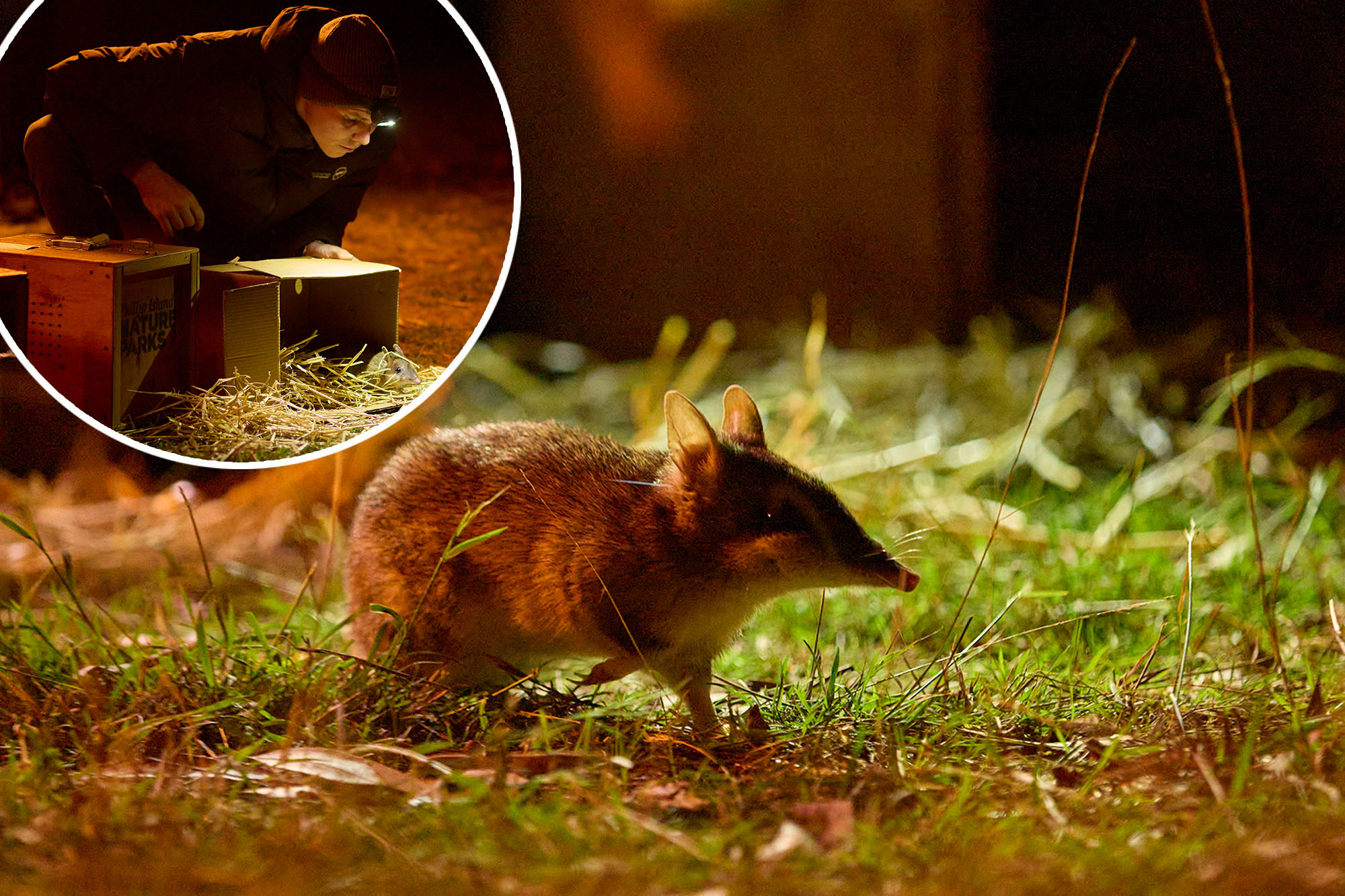
Bandicoots, a group of tiny nocturnal creatures once declared extinct in Australia, are back from the brink and making strides toward life in the wild.
On Tuesday, conservationists released 100 eastern barred bandicoots onto Phillip Island, near Melbourne.
These bandicoots were bred to be better equipped for survival through a world-first genetic rescue program, led by Odonata Foundation, Cesar Australia, and the Eastern Barred Bandicoot Recovery Team.
The recent release and breathless hope are a long time coming.
Conservationists have been carefully breeding the bandicoots since 2004, growing the depleted population to a community of over 2,000.
Their efforts have been supported by Amazon’s Right Now Climate Fund, which invested $1.79 million to help restore populations of endangered species, including the largest-ever reintroduction of eastern barred bandicoots in the wild in Australia.
“Thirty years ago, these bandicoots were gone from mainland Australia. What makes their recovery incredible is the science behind it – a genetic rescue program which is science-backed, scalable, and transformative for conservation,” said Michael Miller, spokesperson for Amazon’s Right Now Climate Fund.
“The same methodology could help save endangered animals all over the world,” he added.
Bandicoots are a veritable boon for the environment. Experts say that each year, a single bandicoot turns over roughly three tons of soil, supporting seed dispersal, water retention, and nutrient cycling, all while building flood and drought resistance in the land upon which they toil.
Once flourishing across southeastern Australia, bandicoot populations have been decimated over the past two centuries by habitat loss, drought, and the introduction of predators such as red foxes and cats.
By the late 1980s, only a scant 60 bandicoots remained in Australia. Discovered in abandoned cars and dumps, these survivors were taken into captivity for breeding while the species was declared extinct in the wild in 1991.
Due to inbreeding, prior attempts to release descendants of these survivors into the wild have failed. Researchers explain that with a narrow mating pool, a genetic defect known as ‘undershot jaw’ emerged in the new population, making digging, grasping, and chewing food more challenging.
To address this failure, the Odonata Foundation began breeding eastern barred bandicoot populations from mainland Australia with those from Tasmania.
Breeding these distinct populations, isolated from one another for over 10,000 years, resulted in a more diverse and robust gene pool and more balanced sex ratios.
Scientists specifically bred females with larger males to increase offspring size.
“The most powerful part of this story is genetic rescue,” said Dr. Andrew Weeks, Director of Cesar Australia and Science Advisor to Odonata.
“Through a world-first gene mixing approach, we’ve built a fit, feisty bandicoot population with far greater genetic health and a much better chance of survival than their inbred predecessors”.
Beyond breeding, this new generation of bandicoots has been relocated to five different sites in Australia. This approach, known as the ‘500-in-5 Species Recovery Model’, ensures that animals are dispersed enough to remove the risk of being completely eliminated by a natural disaster.
Over the next three years, bandicoots will be closely monitored through ongoing genetic testing to assess population stabilization.
“The model itself is a first-of-its-kind in conservation, and we couldn’t have done it without funding from Amazon’s Right Now Climate Fund,” explains Matt Singleton, Chief Operating Officer at the Odonata Foundation.
“Unlike traditional captive breeding programs, our approach produces resilient, fit, and adaptable populations that are genuinely primed for release beyond safe havens into the future.”
In addition to the blessed bandicoots, Amazon’s Right Now Climate Fund is helping to protect and restore nine critically endangered Australian species, including eastern quolls, southern brush-tailed rock-wallabies, bush stone-curlews, and eastern bettongs.
The investment is part of Amazon’s broader efforts to combat climate change and biodiversity loss. Climate Pledge is the company’s commitment to reach net-zero carbon emissions by 2040.
Despite brandishing the banner of betterment, Amazon rejected all shareholder proposals on climate change last year.
Among the rejects were a proposal that would have required additional reporting on Amazon’s overall carbon emissions, another targeting data centers’ climate impact, and one calling for further disclosure about packaging materials, particularly plastic.
Amazon said its existing disclosures are sufficient and that it is working towards reducing its environmental impacts.