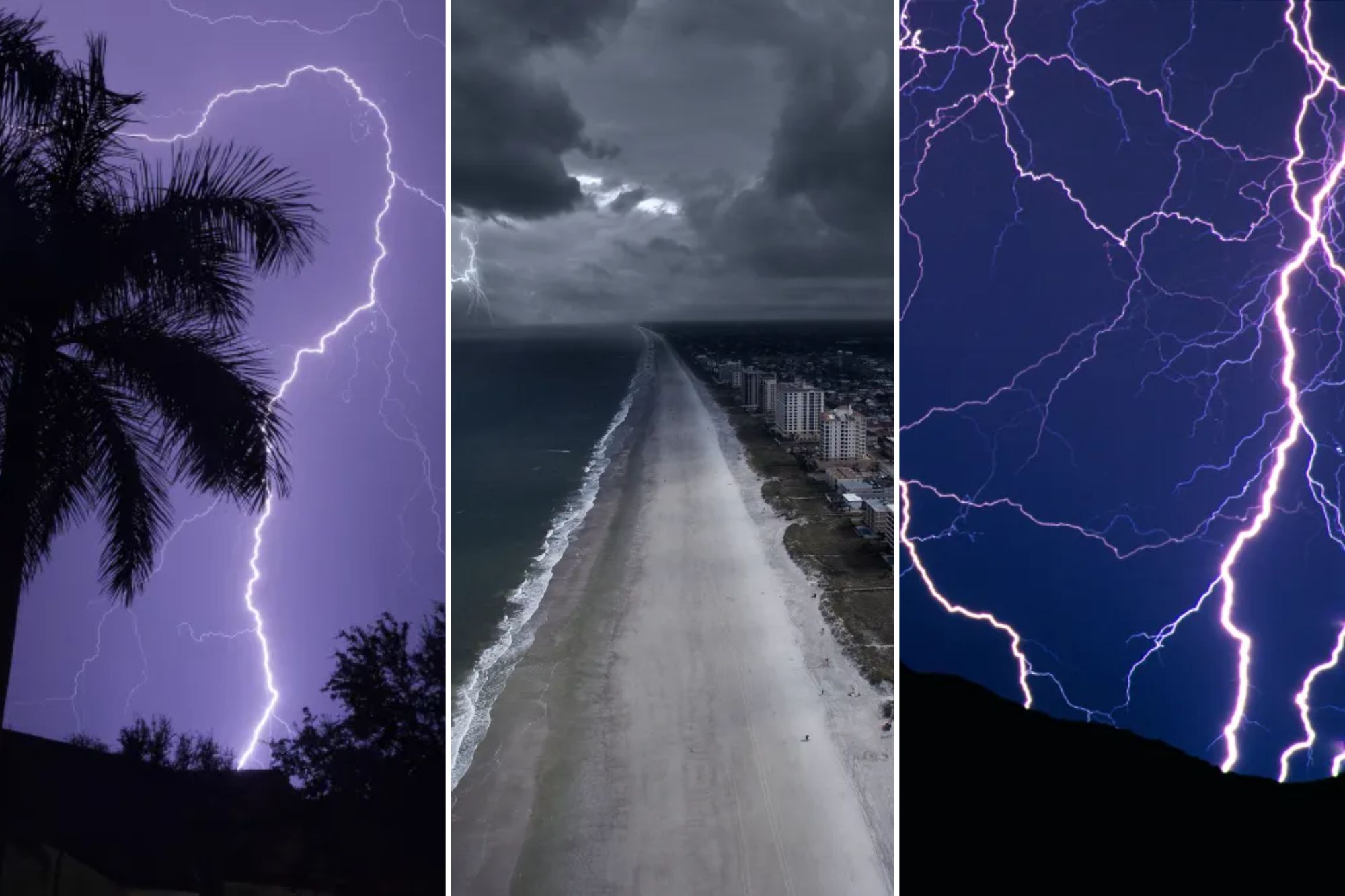
Last week, the United States recorded its first lightning fatality of the year, and as seasonal summer storms loom on the horizon, experts say death by bolt is highly likely in this Southern state.
According to the National Lightning Safety Council (NLSC), which recorded 21 lightning strike fatalities last year, the pattern of where and why lightning strikes is somewhat foreseeable.
And it appears the Sunshine State is the lightning capital of America.
Using data from the National Weather Service and the NLCS, Play Casino tracked lightning deaths by state over the past two decades
Within this time frame, 97 lightning deaths were confirmed in Florida, making it the top spot for being struck down.
Florida experiences more lightning strikes per square mile than any other state, averaging about 1.2 million lightning strikes each year, according to the Florida Department of Health.
In the last nine years alone, Florida has reported 51 deaths by lightning, accounting for roughly 1/4 of all national lightning fatalities in that decade.
Last June, a man was killed by lightning while on his honeymoon in Volusia County.
Florida is a bullseye for bolts due to the unholy trinity of heat, humidity, and the interaction of sea breezes from the Gulf and the Atlantic.
Meanwhile, the flat terrain and year-round outdoor activities amplify the likelihood of lightning striking a person.
Lightning, which can reach temperatures of up to 50,000°F, comes in three varieties: cloud-to-cloud, cloud-to-air, and cloud-to-ground, with the latter being the most deadly.
Florida averages more than 3,000 cloud-to-ground strikes per day and over a million flashes per year.
The runner-up for electrical activity is the Lone Star State, as Texas recorded 42 lightning deaths from 2006 through 2025.
The combination of open plains, a robust agricultural workforce, and the collision of moist Gulf air and dry western air produces powerful thunderstorms and an increased risk of death by lightning.
Colorado takes the bronze for bolts with 27 confirmed deaths over the past two decades. Experts say the prevalence of outdoor recreation and the frequency of afternoon storms along the Front Range make the Centennial State a hotbed for lightning strikes.
Alabama recorded 23 lightning deaths from 2006 through 2025, owing to the high frequency of storms and to rural populations who spend significant time outdoors for work or recreation.
North Carolina also recorded 23 lightning deaths. Experts explain that the state’s diverse geography, which includes exposed coastline and highlands where afternoon storms often gather, makes the population particularly vulnerable to strikes.
However, when the team adjusted fatalities for population size, the rankings shifted: Wyoming records the highest lightning fatality rate in the nation at 5.13 deaths per million residents, followed by Alabama at 4.50 and Montana at 4.41. The combination of outdoor agricultural work, open landscapes, and virtually no natural shelter translates to disproportionate individual risk.
Unsurprisingly, nearly two-thirds of all lightning deaths occurred during outdoor activities such as fishing, boating, camping, and beaching, with danger peaking in the afternoon hours of the summer months.
Historically, July has been the deadliest month of the year for lightning strikes.
Conversely, Alaska, Delaware, Hawaii, New Hampshire, and Washington, bolstered by cooler climes and urban geography, have recorded no lightning fatalities since 2006.
Better forecasting, smartphone storm alerts, and improved public safety messaging have driven the number of lightning deaths from nearly 50 per year in the mid-2000s to the teens and low twenties today.
The odds of being killed by lightning are around one in 1.5 million – and around 90% of lightning victims survive strikes.
To reduce the risk of being struck by lightning, the National Weather Service instructs people to immediately move away from high ground, including hills, mountain ridges or peaks.
The organization says never to lie down to avoid lightning, never to hide under an isolated tree, never to use a cliff or rocky overhang for shelter, and to immediately move away from bodies of water and anything that conducts electricity.