Nearly three-quarters of Americans claim to be “the perfect roommate” on vacation (73%), according to new research on “vacation compatibility.”
Conducted by Talker Research for Club Wyndham, the survey of 2,000 people found that even the most compatible travelers say they still need time and space to themselves.
The average respondent wants two hours a day of “alone time” on vacation.
Although those surveyed look forward to vacationing with their kids and partner (82%), their friends (60%), siblings (55%), and parents (54%), nearly half said sharing space with others on vacation increases the likelihood of arguments (49%).
The findings highlight the difficulty of sharing space while on vacation.
More than half are likely to plan shorter trips when they know they’re sharing smaller spaces (54%).
Similarly, 31% of parents who travel with their kids admit they often put off planning a vacation because it’s too difficult to juggle the needs of all their kids in one shared space.
“Traveling together is all about balancing shared experiences with moments of individual downtime,” said Annie Roberts, senior vice president of Club & Owner Services, Club Wyndham, vacation ownership brand with more than 100 resorts. “Our research shows that a little personal space goes a long way — with 77% saying having some separation eases tension on vacation, and 68% saying time alone helps them feel more connected to the people they’re traveling with.”
Results found that vacation-mates usually clash about what to eat (41%), taking a long time to get ready (37%), and making plans (33%). Choosing something to watch on TV (25%) and snoring (23%) are also common points of contention.
Gen Z also gets frustrated at telling everyone to keep it down (18%), while baby boomers bicker over thermostat temperature (16%).
Across the board, respondents agree that some of the worst squabbles to deal with include aligning on sleep schedules and wake-up times (22%).
For many, having these rows early on can be rewarding. Forty-one percent of those surveyed get first dibs on their bed of choice and dresser space and shower time (42%) — especially baby boomers (45%).
It’s a tighter battle for the TV remote between respondents and their partner (32% vs. 29%), with men winning out here (46% vs. 28%).
Even with their squabbles and desire to have privacy, though, four in five agree that the bigger priority is keeping their group near.
“Having the right space can completely change the way people travel together,” said Roberts. “It’s not surprising that 75% said they’d be willing to stay longer with others in multi-bedroom accommodations. With separate bedrooms and shared living areas, travelers can relax on their own schedule, so everyone can experience the trip in the way that works best for them.”
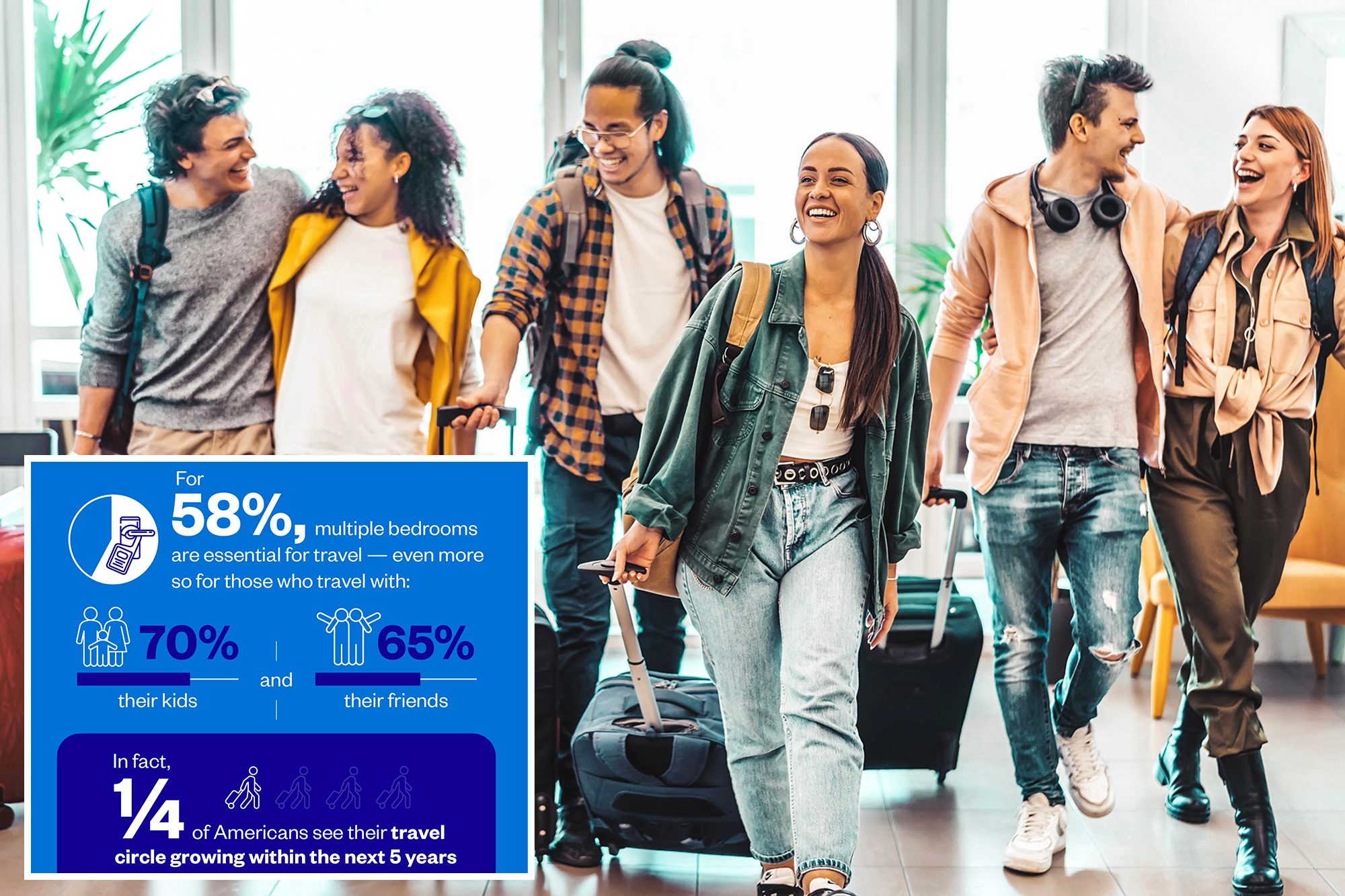
For 58%, multiple bedrooms are essential for travel — even more so for those who travel with their kids (70%) and those who travel with their friends (65%).
In fact, a quarter of Americans see their travel circle growing within the next five years, with Gen Z (43%) and millennials (36%) anticipating this change the most.
According to the research, those surveyed would even spend an extra $406 to have their own space on vacation, with millennials being willing to splurge the most on this ($477).
Having a full-sized kitchen with appliances (53%) and multiple full bathrooms (50%) also proves to be vital for respondents.
When asked what features make group travel more comfortable, respondents said two was the “magic number” for many amenities, including bathrooms, bedrooms, dining areas, desks, lounge areas, and televisions.
Talker Research surveyed 2,000 Americans who travel with loved ones who have access to the internet; the survey was commissioned by Club Wyndham and administered and conducted online by Talker Research between March 5 and March 11, 2026. A link to the questionnaire can be found here.