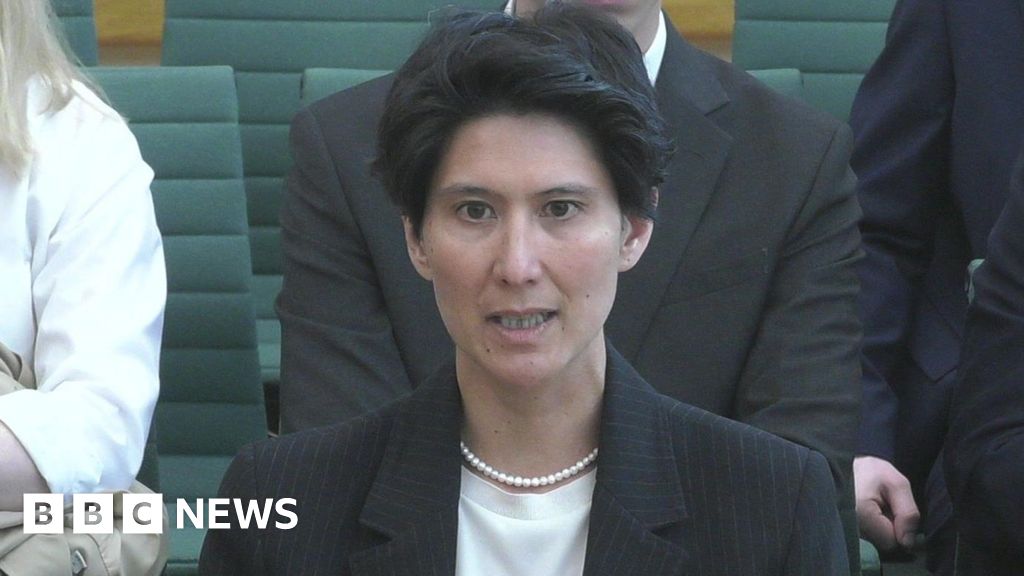
ShareSaveAdd as preferred on GoogleBecky MortonPolitical reporterUK ParliamentCat Little, the most senior civil servant at the Cabinet Office, has been giving evidence to the Commons foreign affairs committee about the vetting of Lord Mandelson.
The peer was given security clearance for the role of UK ambassador to the US, despite concerns being raised by vetting officials.
The prime minister went on to sack him in September last year, after new information came to light about the depth of his relationship with the late convicted sex offender Jeffrey Epstein.
Little's appearance follows evidence from Sir Olly Robbins, who was sacked as the top civil servant at the Foreign Office last week after the department's decision to grant Lord Mandelson clearance emerged.
On 10 September 2025 - the day before Lord Mandelson was sacked - Sir Keir Starmer told the House of Commons three times that "full due process" was followed during the peer's appointment.
The prime minister says that at the time, he was unaware that the Foreign Office had granted him security clearance against the advice of UK Security Vetting (UKSV), a specialist agency within the Cabinet Office.
Opposition parties have said Parliament was misled - but Sir Keir has continued to insist that "full due process" was followed.
This position was echoed by Little, who told MPs: "My view is that due process was followed... because the process as I've outlined to the committee, is that UKSV make a recommendation, and the Foreign Office make a decision as to whether to grant DV [developed vetting]."
This is not surprising, since civil servants are representing ministers when they give evidence at committees.
As former senior civil servant Helen MacNamara explained earlier: "Cat Little can't sit before the committee and say what she thinks, or what her own personal opinion is.
"Her literal job is to sit there and say exactly what she's been told to say by her ministers."
In his evidence to the committee, Sir Olly claimed his department was "under constant pressure" over when the vetting process would be completed, as Downing Street wanted Lord Mandelson in post as quickly as possible.
However, he insisted his team did not bow to that pressure.
Asked about these claims, Little said she could not comment on events she was not involved in, or the atmosphere at the time.
However, she said that in her role of gathering documents to be published about the appointment "I've not seen any documentation that would formally confirm that level of pressure".
As the top civil servant at the Cabinet Office, Little was given responsibility for overseeing the process of releasing documents related to Lord Mandelson's appointment.
MPs demanded the publication of the documents earlier this year through a parliamentary procedure known as a humble address.
It was through this process that she asked Sir Olly if she could see a document summarising the vetting agency's recommendation in relation to Lord Mandelson and the Foreign Office's final decision, as well as any records related to the decision-making process.
"It was made clear to me that that information would not be forthcoming," she told MPs.
As a result, Little said she requested the information directly from security officials, which she received on 25 March.
She did not share the information with the PM until 14 April, saying she first wanted to seek legal advice on how to handle such sensitive documents.
Sir Olly has defended his decision not to share the vetting recommendation more widely, arguing this would undermine the confidentiality of the process.
Before Lord Mandelson was announced as ambassador - and before his in-depth vetting took place - a "due diligence" process was carried out by the Cabinet Office.
This identified reputational risks that may need to be considered - based largely on public information like media reports - including Lord Mandelson's continued relationship with Epstein after his conviction, and his previous resignations as a minister during the last Labour government.
The document also noted there could be risks related to clients of his Global Counsel lobbying firm and their dealings with the UK or US governments.
Repeatedly pressed over whether Lord Mandelson's security vetting file could have included material which was not in the due diligence report, Little said she could not comment specifically on what was in the file.
However, she acknowledged: "It could contain more information, by the nature of this being an exercise to assess different information, for a different purpose."
This is significant, as while Sir Keir went ahead with the appointment after seeing the due diligence report, the PM has insisted he would not have done so if he knew the vetting agency had recommended Lord Mandelson should not get security clearance.
Little suggested it was unusual there was no formal record of the meeting when the prime minister decided to go ahead with Lord Mandelson's appointment.
"It is normal to keep a record of those sorts of decisions," she told MPs.
During his evidence Sir Olly claimed the Cabinet Office had argued there was no need to vet Lord Mandelson.
He told MPs the department had pointed out Lord Mandelson was already a member of the House of Lords and a privy counsellor – the Privy Council is a body including current and former ministers which can advise the King - while the risks of his appointment were already well-known and had been made clear to the PM.
Sir Olly said it was the Foreign Office which "put its foot down" and insisted Lord Mandelson was vetted.
She told the committee there was a "very reasonable discussion between security officials" about whether Lord Mandelson required vetting.
However, she said documents showed it was the Foreign Office security team who approached UKSV and the Cabinet Office for advice on this issue, with a senior official from her department advising that Lord Mandelson should undertake vetting.