play Live Sign upShow navigation menuplay Live Click here to searchsearchSign upNews|US-Israel war on IranMakan Nasiri, the only child still missing from the school bombed in IranAfter nearly seven weeks of search for remains, authorities tell the seven-year-old’s parents his case has been closed.
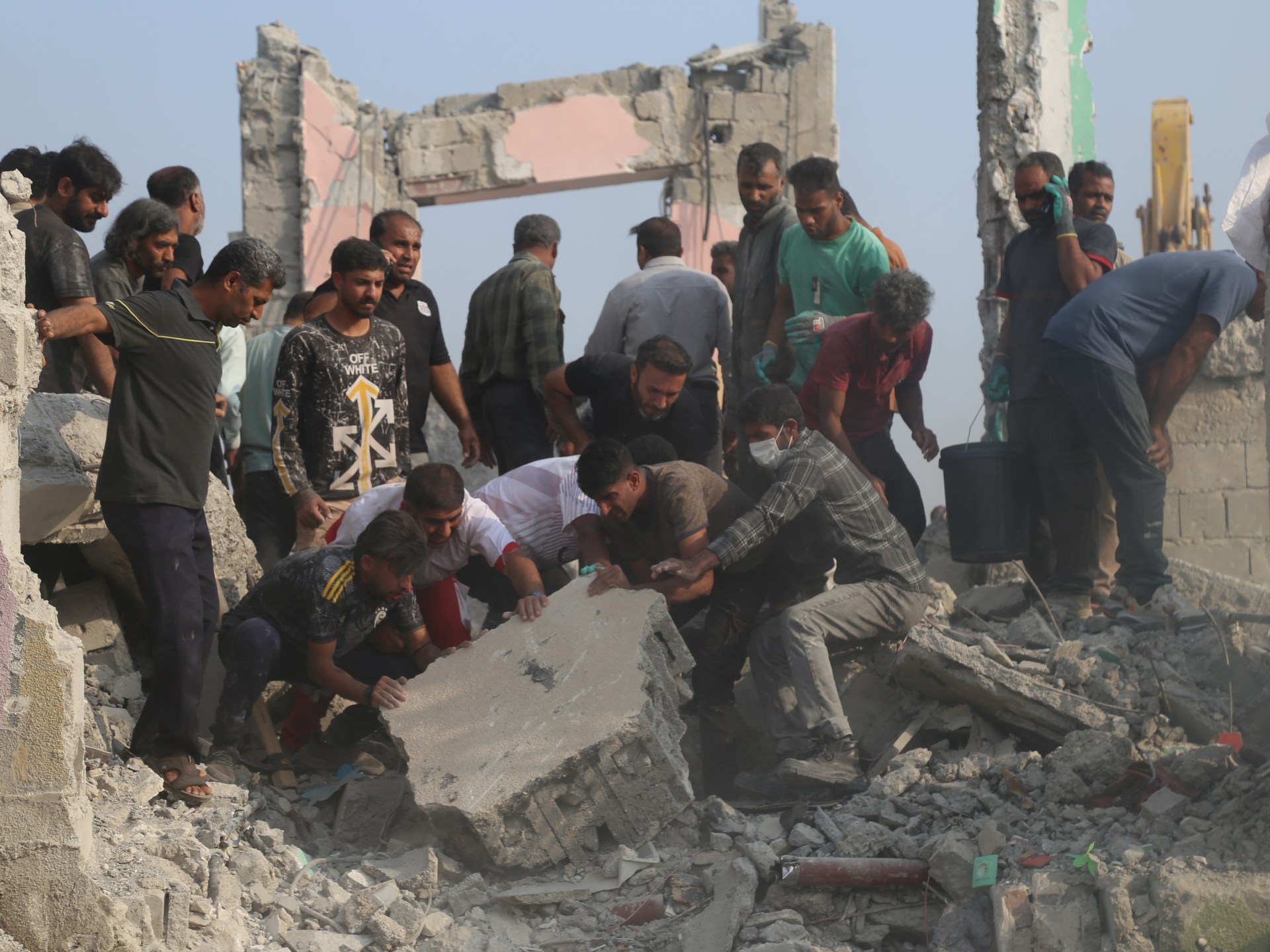
xwhatsapp-strokecopylinkgoogleAdd Al Jazeera on GoogleinfoRescue workers and residents search through the rubble in the aftermath of a strike on an elementary school in Minab, Iran, February 28, 2026 [Abbas Zakeri/Mehr News Agency via AP]By Al Jazeera StaffPublished On 23 Apr 202623 Apr 2026The parents of seven-year-old Makan Nasiri are the only ones who have been unable to bury the remains of their child after his school was bombed on the first day of attacks across Iran by the United States and Israel on February 28.
Washington did not claim responsibility for the devastating attacks on the Shajareh Tayyebeh (The Good Tree) elementary school in Minab, next to an Islamic Revolutionary Guard Corps (IRGC) base in southern Iran’s Hormozgan province.
But evidence suggests that US Tomahawk missiles were likely used in what became the single deadliest incident involving civilians since the start of the war.
Shortly after 11am that Saturday, the first day of the week in Iran, Asieh Rahinejad, the boy’s mother, received a call from a teacher, who said she must pick him up immediately because the school had been attacked.
The mother was reportedly unaware that war had already started with bombings in downtown Tehran and the killing of Iranian leaders. Worried about her child, she called the school bus driver to go collect Makan.
But a second missile struck the school within minutes, leaving no chance of rescue for most people on the premises, which included children, teachers and others in the area.
According to a final tally provided to state media on April 9 by Ebrahim Taheri, the general prosecutor in Minab, the death toll was revised down from 168 people to 156, mostly children.
He said 120 students were killed, 73 boys and 47 girls. Among the other victims were 26 teachers, all women, one of them six months pregnant, as well as seven parents, a school bus driver and a technician at a nearby clinic.
Forensic experts identified all the bodies, many of them torn to pieces by the devastating force of the bombs, but could find no trace of Makan, even after extensive DNA testing.
According to Iran’s top forensic authority, the Legal Medicine Organisation, about 40 percent of all bodies recovered during the war could not be immediately identified due to extensive damage.
Among 3,375 people confirmed killed by the organisation since the start of the war, the remains of four people remain unidentified.
Among them, seven under the age of one, 255 between one and 12 years old, and 121 aged 13 to 18.
After nearly seven weeks of search, Iranian authorities informed Makan’s family that his case was closed without finding any remains.
His father Cyrus, described his son as a kind child who took gymnastics classes and loved sports. He also helped at the local religious centre with his family.
The parents rushed to the school after finding out it had been hit, and got out of the car and ran on foot after encountering heavy traffic.
“When we arrived, the school was destroyed. In this first moments after arriving, we only saw one thing: ruins,” he was quoted as telling Iranian state media.
Cyrus Nasiri said he searched the area from before noon on the day of the attack until 2:30am the next day, but found no trace of his son. In the following weeks, “I would go back even if they found a fingernail”, he said.
All the other children in Makan’s class were killed, but his father hoped against hope that he might have escaped after the first strike.
On the 38th day of the search, Makan’s uncle found a single shoe some distance away from the main building that the family was able to identify as belonging to him. A damaged blue sweater was also reportedly found, but nothing else.
“I was terrified by the idea of having to place Makan in the grave, I couldn’t stand that. I prayed to God for help, and it may explain why we couldn’t find him,” his mother told a crowd at a gathering to honour and remember the boy.
His shoe was placed in a box, and has now reportedly been put in a local mosque to commemorate him.