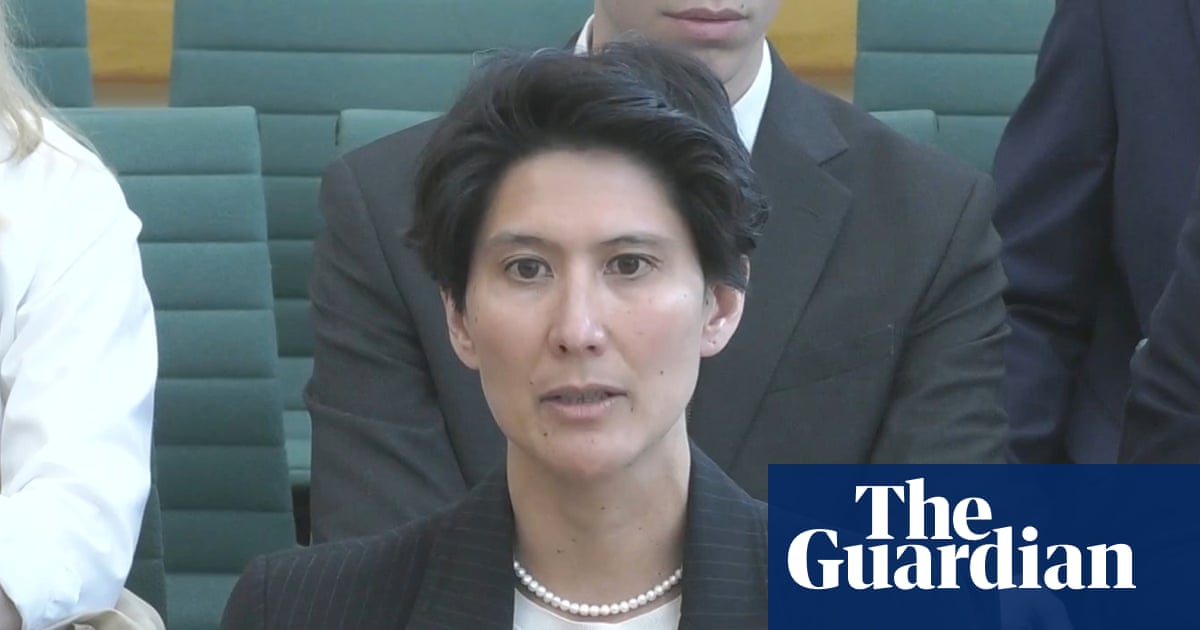
Cat Little said Olly Robbins resisted sending her a summary of why Peter Mandelson was initially refused vetting clearance. Photograph: House of Commons/UK Parliament/PAView image in fullscreenCat Little said Olly Robbins resisted sending her a summary of why Peter Mandelson was initially refused vetting clearance. Photograph: House of Commons/UK Parliament/PAFive things we learned from Cat Little’s evidence to MPs about the Mandelson sagaTop civil servant reveals more details of vetting process and lack of paper trail for approval of Mandelson’s appointment
In more than 90 minutes of evidence to the foreign affairs select committee about the Peter Mandelson scandal, Cat Little, the head civil servant in the Cabinet Office, was low key and often cautious.
But she did reveal several pieces of new information – or at times information different to that given to the same committee by Olly Robbins, the former permanent secretary at the Foreign Office.
Little said her then-Foreign Office counterpart had resisted sending her a summary of why Mandelson was initially refused vetting clearance, which she sought as part of her efforts to gather all relevant documents in line with a Commons “humble address” motion.
“At the time, it was made clear to me that that information would not be forthcoming,” Little said. She thus “took the very unusual judgment” to ask UK Security Vetting (UKSV), which sits within the Cabinet Office, to provide it directly.
While portraying this as “a very reasonable policy conversation” rather than any kind of disagreement, Little went further than Robbins in setting out what he had called a “debate” about whether Mandelson had to be vetted.
A series of emails, Little said, set out that it was a Foreign Office team who contacted UKSV and the Cabinet Office to ask whether, as a member of the House of Lords, Mandelson needed full vetting. The advice was that while it was ultimately up to the Foreign Office, vetting was needed, she added.
When the first tranche of Mandelson documents released under the humble address came out last month, it was notable that boxes on a form where Starmer was supposed to put any comments about the appointment were blank. On Thursday, Little went further, saying that there did not seem to be any official record of the PM approving the job.
It was, she told the Conservative MP John Whittingdale, “normal to keep a record of those sorts of decisions”. Asked if there was not one in this case, Little added: “I have shared with you the information that we have.”
Saying she had “undertaken follow-up inquiries” to see if there was such a document, Little was asked by Whittingdale if she would expect to see some sort of record of the decisionLittle replied: “I would.”
Starmer sacked Mandelson on 11 September last year. Four days later, Little said, the Foreign Office’s security team requested “access to a number of documents relating to the vetting file”, which were sent the same day by UKSV.
Little did not reveal why the request was made, but you can perhaps imagine a sense of panic in the Foreign Office after new details emerged about Mandelson’s links to the late sex offender Jeffrey Epstein.
We had previously been told about the summary of the vetting, which found its way to Little’s department as part of the humble address terms, as a document that contained the key point that Mandelson had initially been turned down, but few details.
Asked about the document, Little said it was “about 10 pages” in length, which is space enough for considerable detail.