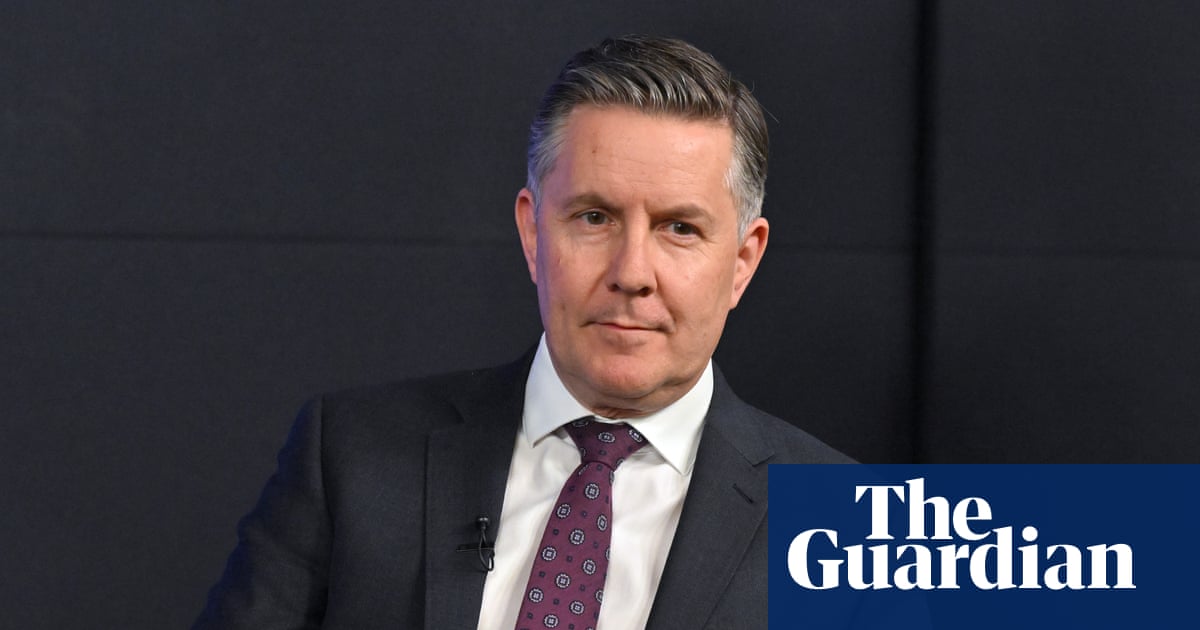
In an interview with Guardian Australia, Mark Butler said specifics of the NDIS overhaul would be finalised with the disability community. Photograph: Mick Tsikas/AAPView image in fullscreenIn an interview with Guardian Australia, Mark Butler said specifics of the NDIS overhaul would be finalised with the disability community. Photograph: Mick Tsikas/AAPAustralians ‘uneasy’ about NDIS cuts amid $53bn in new defence spending, Mark Butler concedes Minister tells Guardian Australia despite substantial changes to disability scheme, it will remain one of best support services ‘anywhere in the world’
Follow our Australia news live blog for latest updates
Get our breaking news email, free app or daily news podcast
Mark Butler has defended the government’s decision to trim the NDIS just days after announcing $53bn in new defence spending, with the health minister conceding Australians may be “uneasy” but insisting it would remain one of the best support services “anywhere in the world”.
The Coalition looks likely to back the proposed changes, despite alarm from the Greens and some in the disability sector about the 160,000 participants expected to be removed by 2030 and changes to who can access the scheme.
In an interview with Guardian Australia, Butler said specifics – including new assessments for every NDIS participant and whether there will be appeal rights – would be finalised with the disability community, saying there were major “flaws” in the support program.
Read more“People are concerned that this scheme, which used to be a source of real national pride because people understand the degree to which it’s transformed hundreds of thousands of lives, is becoming a cause of national concern because people think it’s costing too much,” Butler told the Australian Politics podcast.
“They think it’s riddled with dodgy providers and they want a plan to bring it on track that will secure its future for decades.”
Butler announced a dramatic overhaul of the NDIS on Wednesday, including plans to reduce the annual growth rate to just 2% – below inflation, representing a cut in real terms – and new compliance to dramatically increasethe number of service provider categories required to register on government lists.
The scheme now caters for 760,000 people, with projections by 2030 it could have 900,000 participants, but that number will be cut to 600,000 instead. The remaining people will be shifted on to alternate supports, such as state-based schemes yet to be finalised.
Butler has long warned that the NDIS’s ballooning costs threatened the entire program’s survival, with the reforms expected to save billions of dollars.
Six days before Butler’s National Press Club address, the defence minister, Richard Marles, appeared at the same venue to announce $53bn in new military spending over the next decade.
Asked on the podcast about the contrast between cutting the NDIS at the same time as boosting defence, Butler said: “I get that there’s always a bit of compare and contrast that happens as people look at these choices.”
“But what I will say – with responsibility for the biggest portfolio in spending terms in the government across health, across aged care, across disabilities – is that even with the changes I announced yesterday, which I acknowledge are very significant changes, this will still be the biggest social program the government has outside of the aged pension,” he said.
“Still bigger than Medicare and the PBS combined, and still the centrepiece of the most comprehensive suite of supports for people with disability you will find anywhere in the world.”
The Greens called the changes “cynical and cruel”, pledging to fight the plan.
“Disabled people are now left dreading whether they will be one of the 160,000 people Labor plan to kick off the NDIS – because their disability is too invisible, or because a computer predicts they will be fine without supports,” the senator Jordon Steele-John said.
Read moreOpposition health spokesperson, Anne Ruston, told the ABC the Coalition had long-supported “sensible reforms” to ensure NDIS sustainability, indicating the government will get its support to pass the changes through parliament. But she said participants needed more information about how the scheme would change.
“I think the distress and uncertainty that this is causing those people that are on the NDIS and their families today is something that the minister needs to clear up very, very quickly, because that is probably the most important decision that the government will make now,” she said.
Butler said access to the NDIS would be based on a person’s “functional capacity”, not simply a diagnosis of a disability, which he described as a flaw in the system.
“That was never the intention. Long term, the intention was to have a much more objective assessment system that will look at a person’s functional capacity, not whether they had a diagnosis of schizophrenia or autism or they had Down’s syndrome.
“If this functional capacity was substantially reduced, impacting their day to day living needs, they would be on the scheme,” Butler said.
“So we’ve got hundreds of thousands of people on the scheme who were not intended originally to be on it … It really is a big change. And I get that people are feeling uneasy about how that change will roll out, but it’s a necessary change.”