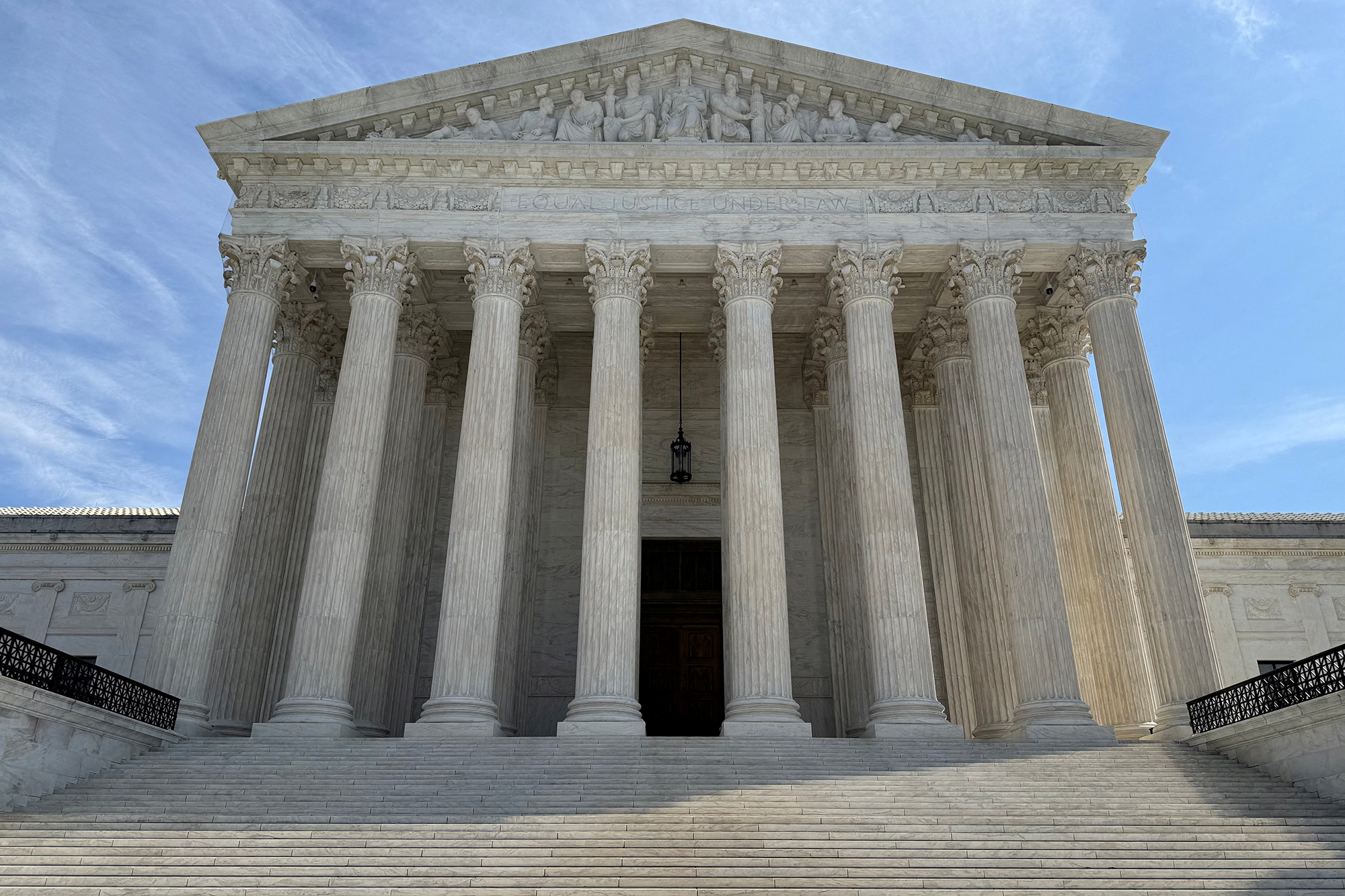
A view of the U.S. Supreme Court building in Washington, D.C., U.S., March 14, 2026 REUTERS For progressives, every institutional norm is sacred until it stands in the way of their political goals.
Such is the case with the left’s latest assault on the Supreme Court.
It’s an ongoing campaign of public pressure, intra-court sniping and conveniently timed leaks — all designed to delegitimize the justices whenever the court refuses to function as a super-legislature for the Democratic Party.
Start with Justice Sonia Sotomayor’s remarkable outburst two weeks ago.
She publicly criticized Justice Brett Kavanaugh by taking a swipe at his “privilege” — as though a justice’s personal background somehow disqualifies him from participating in legal debate.
It was ugly stuff, more at home in a graduate seminar than among members of the nation’s highest court.
Still, Sotomayor then did something vanishingly rare in our public life: She apologized.
The incident seemed to be a reminder that the court, for all its tensions, still functions better and with more civility than our other branches of government.
That should’ve been the end of it — but now it looks like the opening act.
Last week, Justice Ketanji Brown Jackson launched her own attack, this time on the court’s use of what progressives call the “shadow docket” — decisions made about interim relief on an expedited basis.
One need not be an uncritical fan of emergency orders to see the selectivity here.
Would Jackson be delivering lectures on the dangers of expedited relief if the cases in question involved Republican-appointed district judges issuing nationwide injunctions against President Joe Biden’s executive orders?
This approach is pure gaslighting: When lower courts issue sweeping rulings against conservative policies, that’s “judicial independence”; when the Supreme Court steps in, it’s a constitutional crisis.
The principle never changes for progressives, because there is no principle.
A few days after Jackson’s broadside, The New York Times published a story based on leaked internal Supreme Court memoranda, slamming the emergency docket and, not coincidentally, Chief Justice John Roberts.
So let’s review the sequence: public attacks from liberal justices, escalating media criticism of the court’s emergency orders, then a prestige-paper exposé built on confidential documents that just happen to reinforce the same political narrative.
Doesn’t this have all the hallmarks of a left-wing stitch-up?
That doesn’t mean everybody sat in a room and conspired. Politics rarely works that way.
It means that an ideological ecosystem — liberal legal activists, sympathetic journalists, Democratic politicians and institutional allies — predictably converges on the same target, at the same time, for the same purpose: to intimidate the court into behaving differently.
And let’s be clear about what’s most scandalous here.
The worst part of those leaked memos isn’t what they reveal about internal disagreement: Courts are made of human beings who, to do their jobs, must argue, cajole and maneuver.
No, the real outrage is that confidential deliberations were leaked yet again, apparently for partisan purposes.
That should terrify anyone who cares about the judiciary as an institution.
The Supreme Court simply can’t function if private deliberations become just another political weapon.
The justices need space to test arguments, change their minds and write candidly to one another.
Turn every internal memo into future front-page fodder and you corrode the very process by which the court reaches sound judgments.
That’s why legal experts including Will Baude, Josh Blackman, Jack Goldsmith and others are rightly criticizing the Times’ framing.
The reporting strains to depict Roberts, of all people, as some kind of ideological bulldozer, as though forceful legal argument were itself sinister.
Justices are supposed to persuade each other, and chief justices are supposed to lead.
Strongly worded memos aren’t evidence of anything nefarious, but of good-faith jurisprudence.
Like ProPublica’s past attacks on Justices Samuel Alito and Clarence Thomas, this is one big nothingburger.
But it’s evidence of the deeper problem: that too many people on the left refuse to accept the legitimacy of a Supreme Court they don’t control.
So they threaten court-packing, smear the justices, denounce emergency rulings as inherently suspect, and traffic in leaks from inside the marble palace.
They lost the court, so they’re trying to break it.
That should alarm citizens of all political stripes.
Because once judicial confidentiality and institutional legitimacy are treated as expendable, the damage will not stop with one chief justice or one president’s term.
It will spread to the entire constitutional order.
And unlike Justice Sotomayor, the architects of this pressure campaign aren’t about to apologize.
Ilya Shapiro is director of constitutional studies at the Manhattan Institute and author of the Shapiro’s Gavel newsletter.