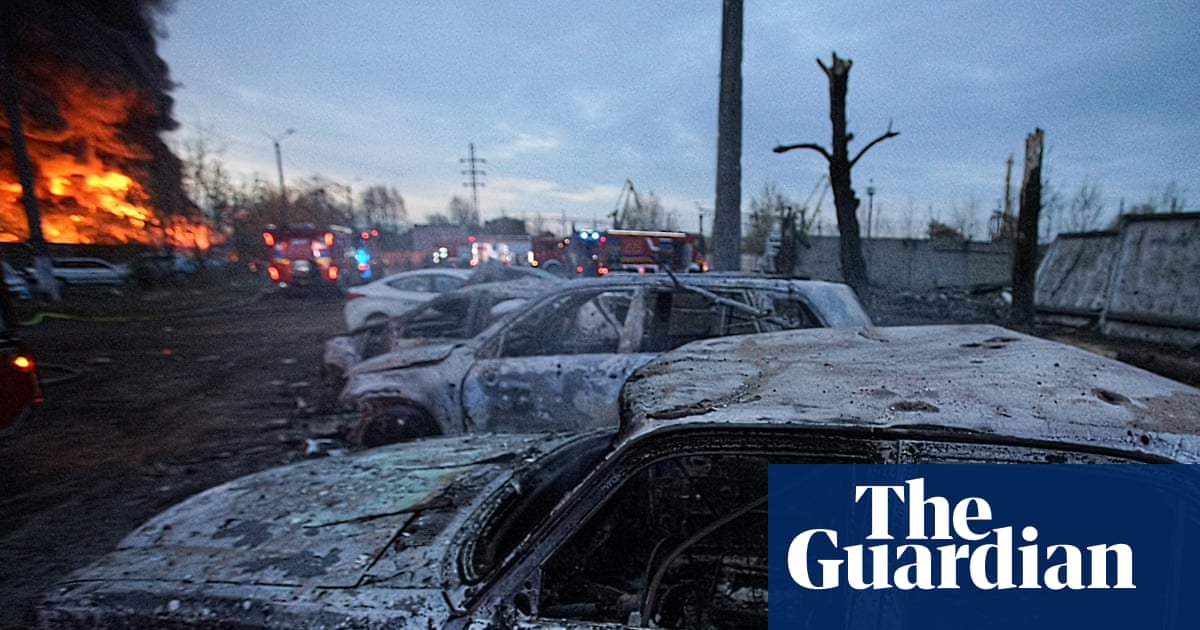
Burned-out vehicles after a Russian strike in Kyiv, Ukraine. Photograph: Global Images Ukraine/Getty ImagesView image in fullscreenBurned-out vehicles after a Russian strike in Kyiv, Ukraine. Photograph: Global Images Ukraine/Getty ImagesUK firms to face tougher checks on export licences to bolster sanctions on RussiaNews follows Guardian report on licence given to British firm exporting machinery to Armenian firm linked to Russian war effort
British firms will face “much tougher” controls to prevent their goods from reaching Russia via other countries, undermining sanctions and aiding Vladimir Putin’s assault on Ukraine.
Under plans to be unveiled on Wednesday, the government will be able to require UK manufacturers to obtain a licence if they want to export to a country suspected of acting as a staging post for exports ultimately destined for Russia.
It comes after the business minister, Chris Bryant, ordered a review of a decision to allow UK carbon fibre equipment to be exported to an Armenian firm with links to Russia’s war machine, after reporting by the Guardian.
Liam Byrne MP, chair of the business select committee, had written to Bryant raising concerns about the planned export of machinery that can be used in the production of military hardware such as drones and missiles.
In a subsequent evidence session with Byrne’s committee, Bryant said the government was planning to strengthen export licensing laws to plug gaps in export controls.
Details of new controls will be set out in a statutory instrument to be laid on Wednesday, outlining measures that Bryant said were “much tougher than what we have at the moment”.
The government was “motivated by concern that our sanctions regime is being undermined by diversion, which is not normally the deliberate intention of the exporter but is certainly the intention of the Russian state”.
Bryant said the new measures were meant to “debilitate the Russian economy so as to debilitate its military capacity in Ukraine … We’re trying to be ahead of the curve because Putin has been successful at getting what he needs to prosper financially.”
At the moment, the UK government can flag up its concerns to an exporter if it thinks that the company may be exporting goods to a country believed to be likely to pass the goods on to Russia. However, it cannot stop them from going ahead anyway.
Under the new system, companies would need to obtain a licence from the Office for Trade Sanctions Implementation if there is any concern among officials about “diversion”, where sanctioned goods are funnelled to Russia via a third-party country.
The new licensing regime means that in such cases, goods could be stopped at the border before leaving the country if no such licence has been obtained.
Had the new controls been in place previously, he said they would have been used on “dozens” of occasions, Bryant said.
Asked if the measures could add costs for businesses, he said: “If they’re profitable from making money out of the war in Ukraine, that is on them.”