Video Paleo diet expert warns supplements may miss key nutrients for long-term health The Paleo Diet CEO Trevor Connor told Fox News Digital why some nutrients tied to long-term health may not be fully understood — and why whole foods remain essential.
Eating too much salt has long been linked to high blood pressure, but new research suggests that it could trick the immune system into prematurely aging the blood vessels.
A preclinical study recently published in the Journal of the American Heart Association has identified a biological chain reaction that links a salty diet to cardiovascular decay.
Scientists at the University of South Alabama observed that mice on a high-salt diet experienced rapid deterioration in their blood vessel function.
HIGH SALT INTAKE LINKED TO FASTER MEMORY DECLINE IN ONE GROUP, STUDY FINDS
After just four weeks of high sodium intake, the small arteries responsible for regulating blood flow lost their ability to relax, as shared in a press release.
The team found that the cells lining these vessels had entered a state of cellular senescence — a form of premature cellular aging in which cells stop dividing and release a mix of inflammatory signals that can damage surrounding tissue.
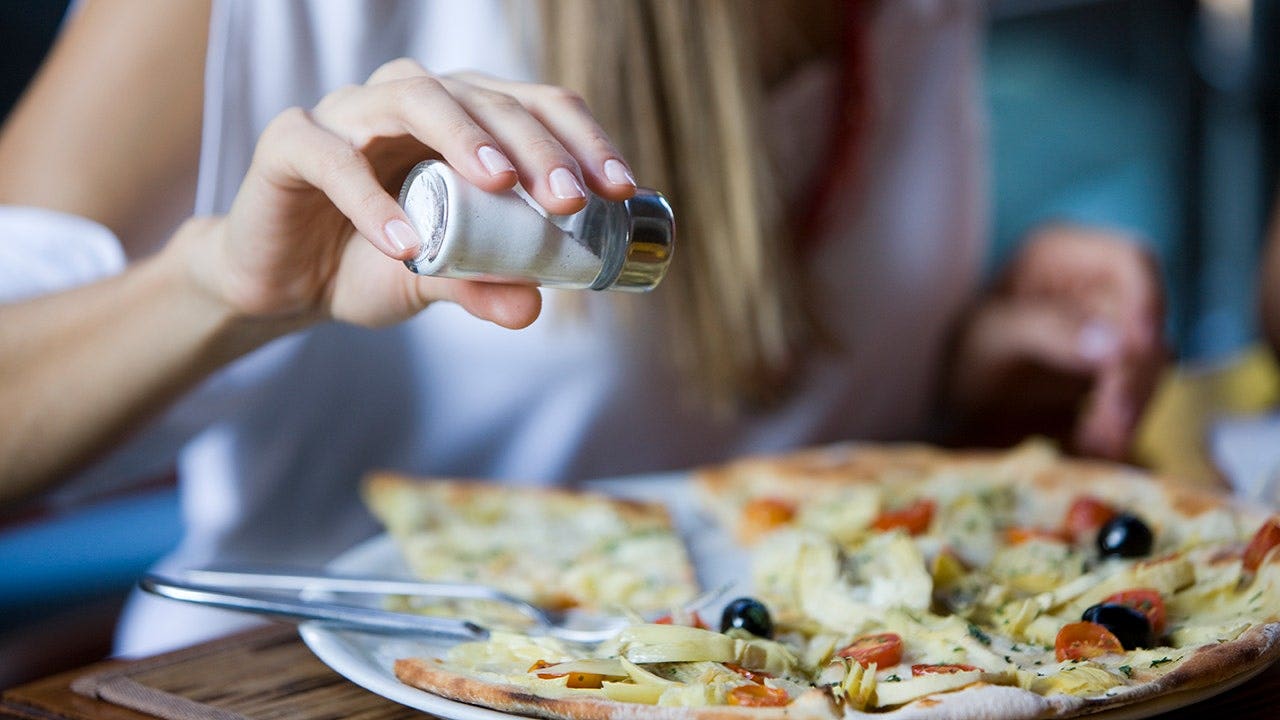
Excess salt has long been linked to high blood pressure, but a new study goes deeper into its effects on the cardiovascular system. (iStock)
The researchers tried to replicate this damage by exposing blood vessel cells directly to salt in a laboratory dish, but the cells showed no harmful effects.
CLICK HERE FOR MORE HEALTH STORIES
This suggests that salt isn’t directly causing damage to the vascular lining, but that the real culprit may be the body’s own defense mechanism, the researchers noted.
Excess salt may trigger the immune system to release a molecule called interleukin-16 (IL-16), which acts as a messenger that instructs blood vessel cells to grow old before their time, according to the study.
Excess salt may trigger the immune system to release a molecule called interleukin-16 (IL-16), which acts as a messenger that instructs blood vessel cells to grow old before their time, according to the study. (iStock)
Once these cells age, they fail to produce nitric oxide, the essential gas that tells arteries to dilate and stay flexible.
To test whether this process could be reversed, the team turned to a class of experimental drugs known as senolytics.
CLICK HERE TO DOWNLOAD THE FOX NEWS APP
Using a cancer medication called navitoclax, which selectively clears out aged and dysfunctional cells, the researchers were able to restore nearly normal blood vessel function in the salt-fed mice, the release stated.
TEST YOURSELF WITH OUR LATEST LIFESTYLE QUIZ.
By removing the decaying cells created by the high-salt diet, the drug allowed the remaining healthy tissue to maintain its elasticity and respond correctly to blood flow demands.
Excess salt may trigger the immune system into stopping the cells from dividing, the study suggests. (iStock)
The study did have some limitations. The transition from mouse models to human treatment remains a significant hurdle, the team cautioned.
CLICK HERE TO SIGN UP FOR OUR HEALTH NEWSLETTER
Senolytic drugs like navitoclax are still being studied for safety, and the team emphasized that previous trials have shown mixed results regarding their impact on artery plaque.
Additionally, the researchers have not yet confirmed whether the same IL-16 pathway is the primary driver of vascular aging in humans.
Khloe Quill is a lifestyle production assistant with Fox News Digital. She and the lifestyle team cover a range of story topics including food and drink, travel, and health.
Stay up-to-date on the biggest health and wellness news with our weekly recap.
By entering your email and clicking the Subscribe button, you agree to the Fox News Privacy Policy and Terms of Use, and agree to receive content and promotional communications from Fox News. You understand that you can opt-out at any time.
You've successfully subscribed to this newsletter!