Lebanon’s healthcare system is under severe strain despite a temporary ceasefire between Israel and Hezbollah. Thousands of displaced pregnant women are struggling to access medical services.
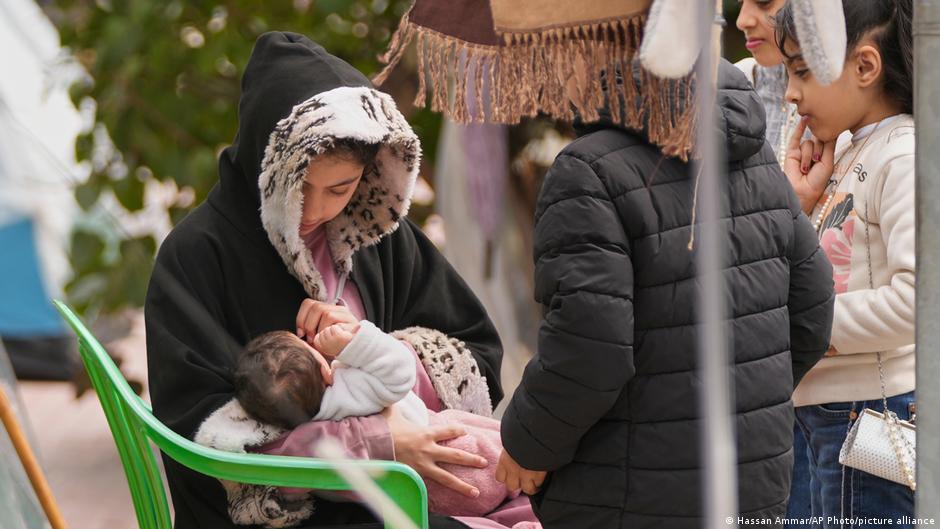
https://p.dw.com/p/5CbB7UN bodies warn that thousands of pregnant women lack adequate healthcare as Lebanon’s health system struggles to cope with the ongoing humanitarian crisisImage: Hassan Ammar/AP Photo/picture allianceAdvertisementWhen 32-year-old Nour fled her home in Beirut, she focused on one thing: staying calm.
"I was breathing slowly and holding my belly the whole time," she told DW, describing the night she escaped intense shelling in her neighborhood while four months pregnant — just days before the 10-day ceasefire between Israel and Hezbollah came into effect on April 17.
"Being pregnant makes everything heavier — not just physically, but emotionally," Nour said, asking for her last name not to published. "I keep asking myself if my baby is safe inside me."
Nour now lives in a collective shelter, one of hundreds set up across the country. Conditions are difficult: a lack of privacy and inadequate sanitation all increase health risks, particularly for expectant mothers.
Public shelters reached maximum capacity when Lebanonwas drawn into the wider Middle East conflict in early March after the Iran-backed Hezbollah militia attacked Israel following the killing of Iran's Supreme Leader, Ayatollah Ali Khamenei as part of the wider US-Israel war in Iran.
Lebanese health authorities say Israeli airstrikes and a limited ground invasion have killed around 2,300 people, injured more than 7,000 and displaced approximately 1.2 million since March. The majority of those displaced have yet to return home, with uncertainly looming as the ceasefire is set to expire in a few days.
Nour’s situation is far from unique. Among the displaced are thousands of women facing pregnancy under extreme conditions. Aid agencies warn the impact on women is especially severe.
"The situation for women and girls in Lebanon is catastrophic," said Anandita Philipose, the Lebanon representative of the United Nations Population Fund (UNFPA). She noted that the UNFPA estimates that of the 1.2 million people displaced since March 2, "over 13,500 are pregnant women and 1,500 are expected to give birth within the next month."
Access to maternal care is deteriorating rapidly, with facilities damaged and resources stretched thin.
"Lebanon's already fragile health system is now on the brink of collapse," Philipose said, pointing to growing barriers to obtaining obstetric services.
The World Health Organization reported this week that at least 51 primary healthcare centers have closed amid the fighting, which has also killed dozens of medical workers.
Hospitals that remain operational are struggling to cope.
"We cannot bring in enough supplies and have to ration medication in case the conflict lasts more than three months," Zeina Khouri Stevens, vice president for health services at Beirut's LAU Medical Center, a central hospital in the capital, said. "This instability further weakens the health system."
Conditions are even more precarious in the south of the country, where access to medical facilities is severely restricted.
UNFPA estimates that around 1,700 pregnant women are among the roughly 150,000 people are cut off from the rest of the country. "These women are at grave risk," Philipose said.
Aid efforts are ongoing but limited by both insecurity and funding shortages. Where possible, Philipose said, mobile medical units have been deployed, along with reproductive health kits. Local midwives and doctors who have stayed behind continue to provide support.
Still, the response is falling short of what is needed. Philipose said the agency’s emergency appeal for March to May sought $12 million (€10.2 million) to reach 225, 000 people, but only a fraction of that has been received so far. Continued escalation has already outpaced those plans.
Lebanon's once strong health system was already under severe pressure before the latest escalation.
"The system first became strained by the massive influx of Syrian refugees beginning in 2013," said Jade Khalife, a Beirut-based public health physician and epidemiologist. "The more acute shock to the system followed in late 2019 with the economic collapse."
Four years into an economic crisis, deepened by the COVID-19 pandemic, the August 2020 Beirut port blast and a prolonged political vacuum, Lebanon launched its national health strategy, 'Vision 2030,' in January 2023. Former minister of public health Firass Abiad said at the time that the plan aimed to modernize the country's health sector.
"Despite considerable efforts by health professionals and institutions across the country, and increased investment by various organizations, the system still remains highly vulnerable," Khalife said.
Today, services are unevenly distributed. Private hospitals provide the majority of care, while public facilities, and those funded by NGOs serve lower-income patients. Hezbollah’s political wing operates an extensive social services network that includes schools, welfare programs and hospitals through a wide web of affiliated organizations. Access often depends on cost, location and personal connections — barriers that have only intensified during the current conflict.
For many women nearing childbirth, the uncertainty is overwhelming.
Yara, a 28-year-old from eastern Beirut, is 33 weeks pregnant and had planned to deliver at a public hospital. Now, she is unsure whether the facility will still be operating once her due date arrives.
"I dream of safety and a home where I can hold my baby without fear," she said, "and without the sound of explosions."
People in Lebanon hope for 'real' ceasefire To view this video please enable JavaScript, and consider upgrading to a web browser that supports HTML5 video