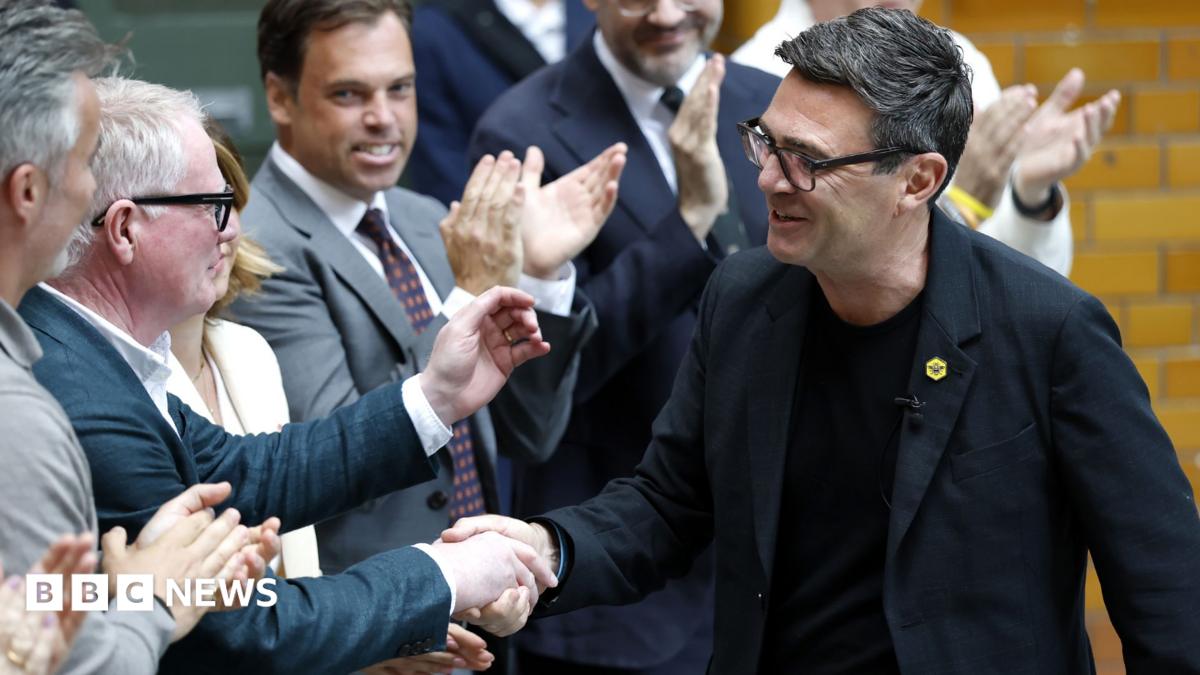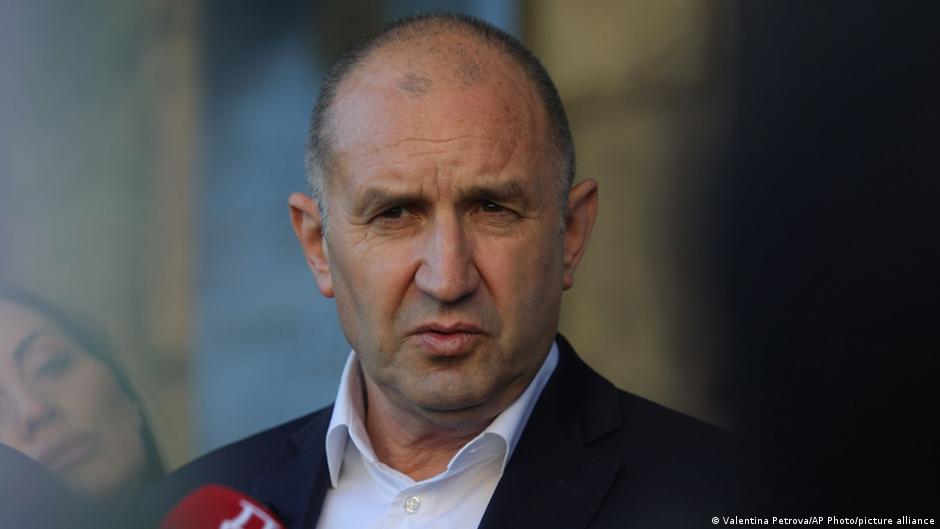
The trained pilot, former general and ex-president says he will crack down on corruption and seek dialogue with Russia. But who is Rumen Radev, the man who swept to victory in Sunday’s election?
https://p.dw.com/p/5CZxiAfter his big win in Sunday's parliamentary election, Bulgaria's former president, Rumen Radev, is set to become the country's next prime ministerImage: Valentina Petrova/AP Photo/picture allianceAdvertisementIs Bulgaria going to be governed by its very own Viktor Orban? Or will the rampant corruption in the country finally be tackled?
These are the questions being asked by the media after Progressive Bulgaria, the new party of former President Rumen Radev, won the parliamentary election on April 19 and is set to have an absolute majority in the new parliament.
Radev avoided giving clear answers in the runup to the election, which meant that for many observers, most of his plans and those of his partners in the alliance of three small parties he put together in a few short weeks, remained nebulous.
Rumen Radev was born in the city of Haskovo near the Bulgarian-Turkish border in 1963. His parents and relatives say that even as a young child, he had set his sights on a career in aviation.
In 1987, when Bulgaria was still a communist dictatorship and a member of the Warsaw Pact, he began training to be a pilot.
In 1992, two years after Bulgaria became a democratic country, Radev completed his training as an officer in the US.
In 2005, a year after Bulgaria joined NATO, he was made Commander of the Bulgarian Air Force.
Rumen Radev first ran for the presidency in 2016. He was nominated by the Bulgarian Socialist Party (BSP), the successor to the Bulgarian Communist Party, which ruled the country from 1944 to 1990.
At the time, it was reported that Radev's candidacy had been discussed with the powers-that-be in Moscow.
A short time later, Leonid Reshetnikov, a long-serving member of the intelligence services of the Soviet Union and later the Russian Federation, who was at the time head of the Russian Institute for Strategic Studies, bragged that he had discussed Radev's candidacy with the leadership of the BSP.
Center-left coalition wins Bulgarian electionTo view this video please enable JavaScript, and consider upgrading to a web browser that supports HTML5 video
Ever since, potential links between Radev — who went on to win the 2016 presidential election — and the Kremlin have been the focus of media and public scrutiny.
This interest grew after the start of Russia's full-scale invasion of Ukraine in 2022.
In 2021, Radev ran for reelection as president. During the only TV debate before the election, Anastas Gerdzhikov, the candidate for the conservative, pro-European GERB party, asked Radev outright: "Who does Crimea belong to?"
Radev replied that it is "currently Russian. What else can it be?" He later toned down his remarks, explaining that "Crimea belongs to Ukraine, but is currently controlled by Russia."
After Russia's all-out invasion of Ukraine, Radev said that Russia should halt its military operations. In the months that followed, however, his rhetoric increasingly targeted Ukraine and the EU.
Radev argued that providing military support to Kyiv only prolonged the war and said that the Ukrainian counteroffensive was a mistake and that politicians who sent weapons and ammunition to Ukraine were "warmongers."
All of this raises serious questions about the extent to which Radev will maintain Bulgaria's pro-European stance on Ukraine, as adopted by the last two governments. It also remains to be seen whether Radev could block common EU decisions on Ukraine, as Hungary's former Prime Minister Viktor Orban did for years.
"I would not compare him with Orban or [Robert] Fico of Slovakia," said Pavol Szalai, Director of the Reporters Without Borders Prague Bureau, who spoke to Radev last fall.
"Russian propaganda is widespread in Bulgaria," Szalai told DW. "It is one of the main problems for citizens and their access to information."
According to Catherine Belton of the US newspaper The Washington Post, the risks caused by Russian disinformation appeared to be so great that "Sofia's Foreign Ministry set up a special unit in coordination with the European Commission to seek to combat potential Russian meddling."
Radev, she added, said that this was an attempt by Brussels to interfere in the vote.
"Radev's campaign was bolstered by a network of former senior Bulgarian military officers who have connections to Russian military intelligence and have backed Radev by promoting his views against support for Ukraine, according to a European intelligence official, who spoke on the condition of anonymity to discuss sensitive matters," wrote Belton.
As far back as 2021, while he was still president, Radev expressed support for the massive anti-corruption and anti-government protests in Bulgaria.
"Let's get rid of the mafia!" he declared to demonstrators, who were extremely critical of Boyko Borissov, former prime minister and leader of the GERB party, and Delyan Peevski, leader of the Movement for Rights and Freedoms (DPS), accusing them of corruption and capture of the judiciary.
The US and UK have since imposed sanctions on Peevski for alleged corruption. For the same reason, the Alliance of Liberals and Democrats for Europe took the decision to exclude his party from the group. The DPS then left the alliance of its own accord.
After the 2021 protests, a new party — the pro-European, liberal, anti-corruption We Continue the Change party — entered the political stage. Its leaders, Kiril Petkov and Asen Vasilev, were part of an interim government appointed by Radev.
There were more mass protests in Bulgaria in December 2025. The trigger this time was the budget, but Borissov and Peevski were once again in the crosshairs.
One of the organizers of the protests was We Continue the Change, which is now in an alliance with another pro-European party, Democratic Bulgaria.
Radev could potentially seek the support of this alliance (PP-DB) for a qualified majority that would allow him to replace people in the judiciary and other key state institutions whom he considers to be linked to Borissov and Peevski.
Radev has not, on the other hand, demonstrated any willingness to enter into any kind of cooperation with the nationalist, pro-Russia Revival party, which will also be part of the next parliament. This article was originally published in German.