The Strait of Hormuz blockade has shaken Tokyo and Seoul, highlighting their dependence on maritime trade for essential goods including food and fuel.
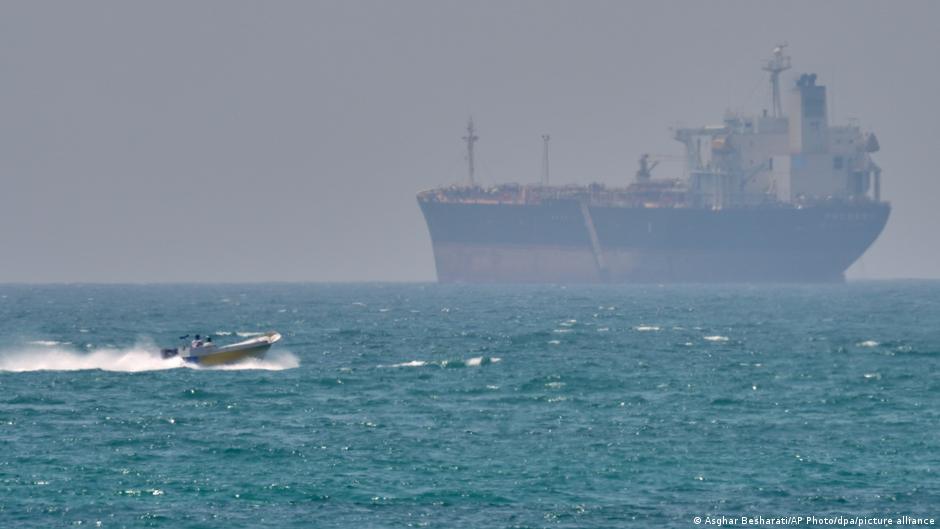
https://p.dw.com/p/5CaNZJapan gets over 90% of its crude oil through the Strait of Hormuz, and South Korea imports 70% via the same routeImage: Asghar Besharati/AP Photo/dpa/picture allianceAdvertisementThe prolonged standoff between the US and Iran has crippled international oil and gas trade, with the impact likely to linger even if the two sides manage to reach a deal on exporting energy through the Strait of Hormuz.
The crisis has also triggered a reckoning among US allies in Asia — Japan relies on shipments through the blocked waterway for 93% of the crude oil it consumes, while 70% of the oil and 20% of the natural gas used in South Korea follows the same route.
Moreover, the two nations are forced to acknowledge that a similar crisis closer to home — possibly in the South China Sea or over Taiwan — would likely be even more catastrophic.
"Sea lanes are absolutely vital to both Japan and South Korea, as they rely on maritime trade for exports and critical imports such as energy, raw materials and food," said Joseph Kristanto, a maritime security analyst at Singapore's S. Rajaratnam School of International Studies.
US seizure of Iranian cargo ship drives tensions, oil pricesTo view this video please enable JavaScript, and consider upgrading to a web browser that supports HTML5 video
"If these sea lanes were blocked for an extended period, the impact would be far more than just shipping delays." he told DW. "Energy prices would rise, factories would struggle to maintain production levels, food and input costs would increase and both economies could face a major strategic shock."
The South China Sea has been identified as the main flashpoint since China started putting troops ashore on disputed islands in 2012 and constructing airfields and defensive installations. An estimated $3.36 trillion (2.86 trillion) worth of global trade passes through the tense waters around these islands every year.
Kristanto warns, however, that "the vulnerability extends beyond a single location."
"The sea lanes serving Japan and South Korea form a continuous corridor, with the South China Sea and Taiwan Strait closely linked," he said. "Even if ships get through the South China Sea safely, they still need to pass through the Luzon or Taiwan approaches to reach Northeast Asia."
In a crisis, particularly one involving Taiwan, these northern routes could become as critical, if not more so, than the South China Sea, he said.
"It is more accurate to view the region as a connected maritime battlespace extending from Southeast Asia to the Taiwan Strait, rather than focusing on a single flashpoint."
There is little doubt that China is attempting to exert greater control over larger areas of the western Pacific. Last week, Beijing issued an official protest after a Japanese destroyer passed through the Taiwan Strait.
Pacifist Japan is rearming — this is whyTo view this video please enable JavaScript, and consider upgrading to a web browser that supports HTML5 video
Tokyo said the transit was to demonstrate "unwavering commitment to the principle of freedom of navigation under international law."
A spokesperson for the Chinese Foreign Ministry countered that the Japanese navy deployment "severely undermines the political foundation of China-Japan relations and threatens China's sovereignty and security."
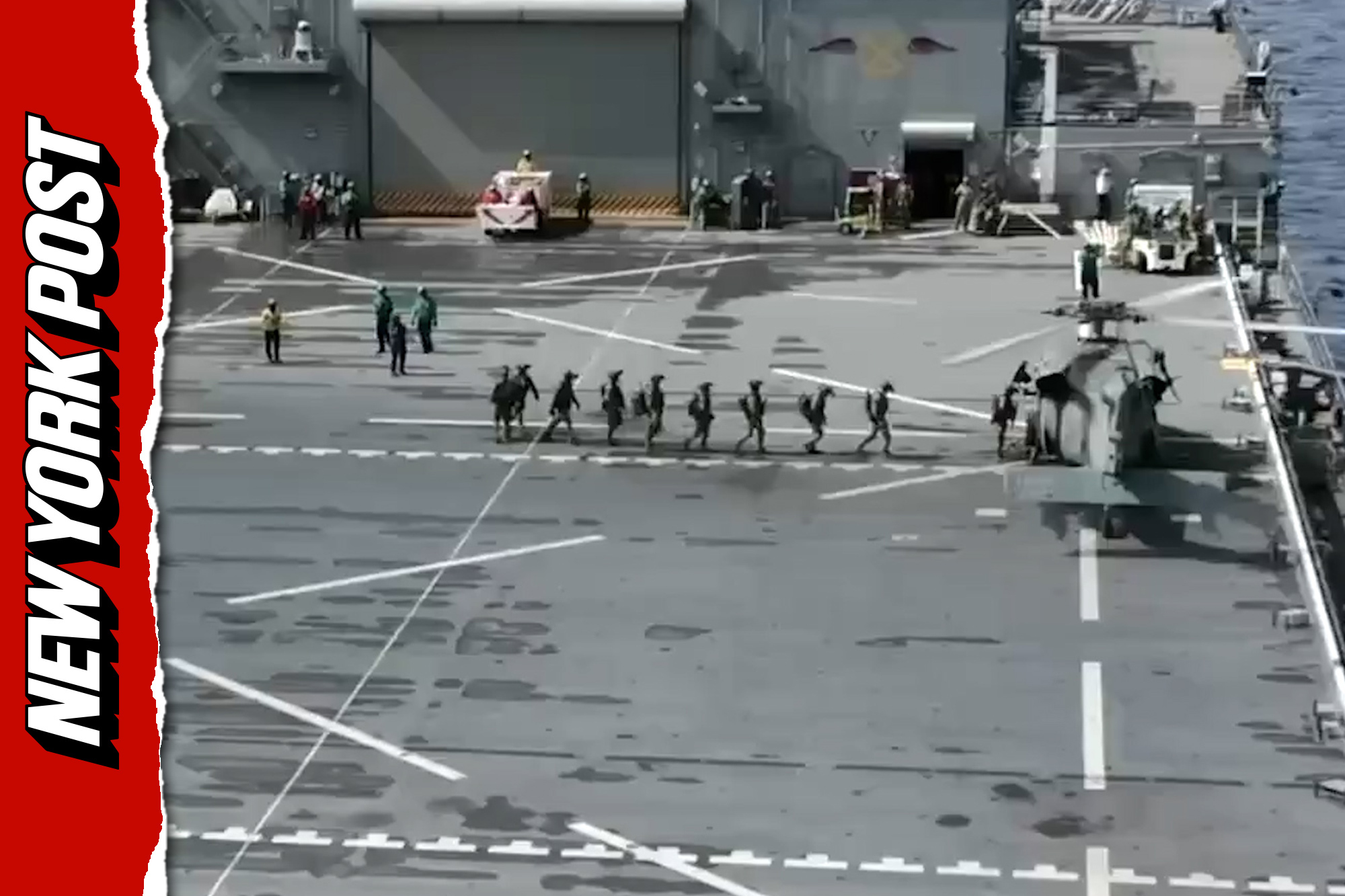
A recent report by the Reuters news agency claimed China had deployed vessels and installed a series of floating barriers at the entrance to an area of the South China Sea that Beijing disputes with the Philippines. The report pointed out that the Chinese action coincides with the US sending all three of its active aircraft carrier groups to the Middle East, as its troops and military materiel move out of the Indo-Pacific region.
"There is obviously anxiety about the dilution of US forces in Asia and we can see that China is making moves that suggest it is taking advantage of this window of opportunity to expand its reach and strengthen its positions in these disputed areas," said William Yang, a Taiwan-based analyst with the International Crisis Group focusing on Chinese foreign policy and geopolitical development.
"Japan and South Korea are completely reliant on sea trade, and any disruptions in the sea lanes or, in a worst-case scenario, loss of control of those sea lanes to a rival, would be a nightmare scenario," he said.
In March, Korea Gas Corporation (KOGAS) and Japan's JERA, the world's largest importers of liquefied natural gas, signed a memo aimed at boosting energy security. This included swapping deliveries in case of a shortage at either company, and analyzing supply and demand to optimize both deliveries and terminal use.
Analysts say there are steps that Japan and South Korea can take to mitigate the risk, including diversifying, stockpiling, shifting to new energy sources, improving efficiency and stepping up domestic food production. However, these measures come with "clear limits."
"These strategies can enhance resilience, but they cannot fundamentally replace their dependence on the maritime domain," Kristanto said. "Both economies will remain highly trade-intensive and reliant on secure sea lines of communication."
And in the same way that Tokyo and Seoul are considering new sources of energy now that the fragility of existing routes from the Middle East has been demonstrated, they are also seeking other delivery routes.
"Alternative routes, such as through the Lombok and Makassar Straits (through Indonesia) or farther east into the Pacific, are theoretically available," said Kristanto. "However, rerouting is costly and only partially mitigates the risk. They add distance, time, and fuel use."
"More importantly, even a Pacific detour does not completely eliminate these countries' strategic vulnerability, as vessels still have to approach Japan and Korea through waters that could become contested in the event of a broader conflict," he pointed out.
How China uses fishing boats for military power To view this video please enable JavaScript, and consider upgrading to a web browser that supports HTML5 video
Beijing has in recent years been deploying its aircraft carrier battle groups and long-range bombers and reconnaissance aircraft beyond the "first island chain" — which includes Japan, Taiwan and Borneo — and further into the Pacific.
Kristanto said the moves were part of Beijing's efforts to control the battlefield in the event of conflict, also known as the "anti-access/area-denial" strategy.
"So, while using different suppliers and routes can reduce risk in some respects, the main vulnerability remains. In the end, ships will still have to 'run the gauntlet' to reach Northeast Asia," he added.