play Live Sign upShow navigation menuplay Live Click here to searchsearchSign upIn Pictures
Pigeon-keeping remains a therapeutic and communal escape for Delhi residents amidst the city’s chaos and demands.
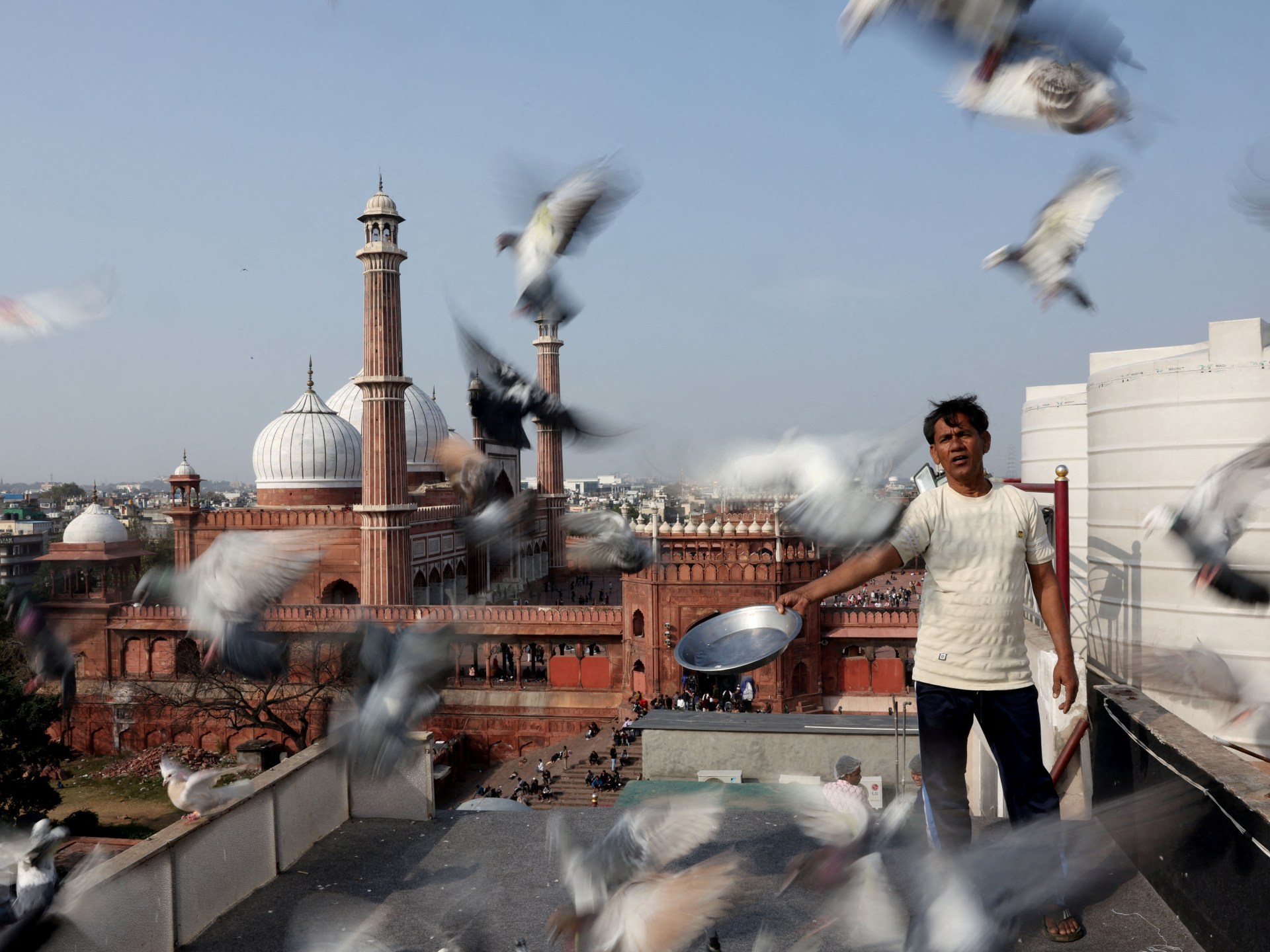
xwhatsapp-strokecopylinkgoogleAdd Al Jazeera on GoogleinfoMohammed Rashid, alias "Rambo", a pigeon keeper, feeds his birds as he trains them, on the rooftop of a restaurant in the old quarters of Delhi, India. [Bhawika Chhabra/Reuters]By ReutersPublished On 21 Apr 202621 Apr 2026In the bustling heart of the Indian capital, a handful of devotees continue the ancient Mughal tradition of pigeon-rearing, known as kabootarbaazi, preserving skills passed down through generations by training birds to navigate vast distances.
Daily, amid the crowded lanes near Jama Masjid in Old Delhi, just kilometres away from the affluent neighbourhoods of New Delhi, 30-year-old Azhar Udeen gathers with his younger brother and friends on his terrace. There, they release more than 120 pigeons of various breeds from their cages.
These birds are fed and trained to fly in precise formations, sometimes participating in races as their keepers enthusiastically cheer them on.
“I saw my grandfather doing this when I was a child, and after I grew up, I watched and learned from my ustad [teacher],” Udeen, a pigeon keeper, told the Reuters news agency.
Kabootarbaazi, derived from the Hindi/Urdu word for pigeon, flourished under the patronage of Mughal rulers who governed India. Men would maintain flocks, teach them formation flying, and employ them as messengers.
Training these birds to fly directly against the wind and return from long distances requires nearly four months of dedicated work. The process involves creating loud noises by striking a whip against hard surfaces, frightening the birds into flying farther away, according to the trainers.
For many practitioners, the rooftop gatherings hold as much significance as the flying itself. They describe kabootarbaazi as a therapeutic practice that creates a sanctuary of peace and fellowship amid the city’s chaos.
“We sit with our friends and students, and all the tensions from our work or homes, all of it disappears, and that’s what the main intention behind pigeon keeping is,” explained Khalifa Mohsin, another dedicated pigeon keeper.