play Live Sign upShow navigation menuplay Live Click here to searchsearchSign upCould the US oil blockade snuff out the Cuban cigar?Since January, the Trump administration has blocked foreign oil to Cuba. Will the island's trademark cigars survive the crisis?
xwhatsapp-strokecopylinkgoogleAdd Al Jazeera on GoogleinfoJust steps away from the bustling chaos of Old Havana, Esteban García stands idly in a silent cigar shop, staring blankly at the empty mahogany shelves that lie behind a heavy glass door.
“We haven’t received a shipment in a month,” says the store manager, who asked to use a pseudonym for fear of retaliation.
Before the COVID-19 pandemic, García’s shop received deliveries of premium Habanos — cigars from brands like Romeo y Julieta, Montecristo and the flagship Cohiba — three times a month.
Over the last few years, though, shipments have slowed to just once a month. And in recent weeks, even that pace isn't guaranteed.
From poor harvests to hurricanes, the Cuban cigar industry has been dogged by years of supply-side problems.
Now, as the United States imposes a de facto oil blockade on the island, the Cuban cigar industry is facing its greatest challenge yet.
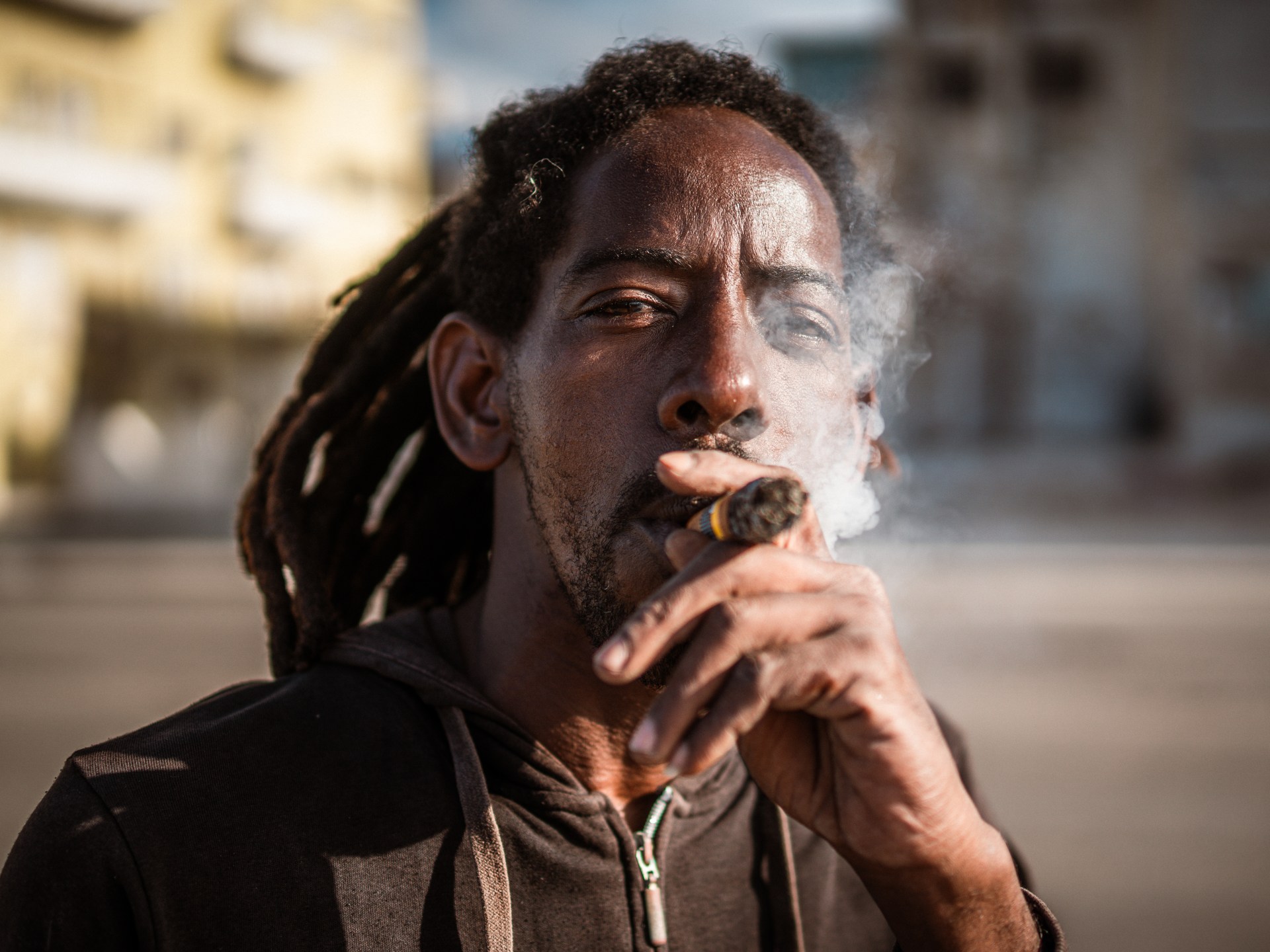
A man smokes a cigar outside Havana’s La Corona cigar factory [Euan Wallace/Al Jazeera]A man smokes a cigar outside Havana’s La Corona cigar factory [Euan Wallace/Al Jazeera]Blockade hits cigar productionSince the start of the year, little oil has entered Cuba. Ordinarily, the country relies on foreign imports for nearly 60 percent of its total crude supply.
But that changed in January, when US President Donald Trump threatened tariffs against any country that supplied the fossil fuel to the island. He also ordered Venezuela to stop oil shipments altogether.
Only a single Russian oil tanker has been permitted to reach Cuba in the months since, offering a brief reprieve in March. But analysts estimated the tanker's 730,000 barrels would power the country for little over a week.
Though designed to weaken Cuba's government, the blockade has had repercussions for the entire population. One of the most visible consequences has been the daily power outages, including three total collapses of the electricity grid this year.
The energy crisis has also complicated the cultivation of tobacco crops. According to the Cuban government, some 50 percent of tobacco fields in Pinar del Rio, the main growing province, rely on electrified irrigation systems.
Manufacturing, too, has taken a hit. Dried tobacco leaves are driven to Havana, where they are hand-rolled in state-run factories.
But the scarce supply of petrol makes transportation difficult, and the lack of electricity to light the factories complicates production.
“Fuel shortages, blackouts, and transport constraints are making it increasingly difficult for factories to operate consistently," said Sheldon Lloyd Smith, the president of the Cigar Association of Canada.
Even the Cuban government has acknowledged the setback.
In February, authorities in Havana announced the suspension of the city's annual cigar festival, citing the oil blockade and the “complex economic situation facing the country".
A Havana resident smokes a cigar on the Malecon, the city’s waterfront area [Euan Wallace/Al Jazeera]A Havana resident smokes a cigar on the Malecon, the city’s waterfront area [Euan Wallace/Al Jazeera]New pressures on a straining industryStill, tobacco remains Cuba's top export, and in 2024, its government reported record revenue from its sale: nearly $827m.
Lloyd Smith explained that the demand is linked to prestige. Around the globe, Habanos are considered a symbol of luxury.
“A lot of people, when they think of the cigar, they automatically think of Cuban cigars,” he said.
That reputation for exclusivity has been bolstered, in part, by the fact that Cuban cigars are illegal in the US due to a longstanding embargo.
The trade restrictions were largely a response to the 1959 Cuban Revolution, which ushered in the island's communist government.
The new regime quickly nationalised the island's industries, much to the ire of US authorities.
Traditional tobacco brands like Montecristo and Romeo y Julieta fell under state control, and new products were launched. They included the premium cigar brand Cohiba, a favourite of the late Cuban revolutionary Fidel Castro.
But experts say the US blockade has exacerbated the woes of a cigar industry that has faced multiple supply-side shocks in recent years.
In September 2022, Hurricane Ian ravaged Pinar del Rio, damaging as many as 90 percent of the province’s tobacco curing barns, where the leaves are dried.
That season saw just 5,150 hectares (13,725 acres) of tobacco planted, the lowest level since records began. Tobacco growth has remained sluggish in the years since.
Just last month, the Cuban government announced it had failed to meet its target for the 2025-2026 growing season, set at 12,152 hectares (30,028 acres). That goal had already been revised down in September due to heavy rains.
Those crises have lowered cigar supplies, both domestically and abroad.
In 2024, the island exported 50 million cigars, little more than half of the 93.9 million shipped abroad in 2018, according to Tabacuba, the state-owned tobacco company.
While Tabacuba has not shared data from the past year, industry insiders say exports have slowed even further in recent months.
Some cigar sellers have not received shipments of Habanos since last year, says Lloyd Smith, while others are getting smaller deliveries less often.
Chetan Seth, the president of India’s only Cuban cigar importer, Cingari, told Al Jazeera that “international logistics have slowed down the delivery of cigars”.
The sun sets over Havana, Cuba, on March 21 during a nationwide blackout [Euan Wallace/Al Jazeera]The sun sets over Havana, Cuba, on March 21 during a nationwide blackout [Euan Wallace/Al Jazeera]Revenues rise as workers struggleStill, experts warn that the full impact of the recent oil blockade remains to be seen.
After all, there is a gap between when premium cigars are produced and when they are sold. Some require three to five years of ageing before they reach the public.
Brooks Whittington, a writer at Halfwheel, a cigar industry blog, also noted that state companies like the exporter Habanos SA have tried to insulate themselves from uncertainty by hiking the costs of their products.
In Spain — one of the main importers of Habanos — a single Cohiba Siglo VI sells for 105 euros ($122) today, up from 37.80 euros ($44) in January 2022, according to Halfwheel. That amounts to a roughly 178 percent increase.
“They have to raise prices in order to get those numbers up because they just don't have the number of cigars that they used to any more,” Whittington said.
But factory workers say they have yet to see the rising revenue reflected in their income.
Elena Herrera, a 56-year-old worker who used a pseudonym to protect her job, has rolled cigars for 16 years. Her wages, she said, have not increased since the COVID-19 pandemic.
She earns just 6,000 Cuban pesos per month, roughly $12 on Havana’s informal currency market. A Cohiba Siglo VI in Havana retails for $116, nearly 10 times Herrera's monthly wage.
As she walked past a derelict bus in Old Havana, she explained that the US oil blockade has added new strains to her everyday life.
Her four-kilometre walk home has become a daily routine, as the fuel shortage paralyses public transport.
“The situation is grave,” said Herrera, exhausted by a long week in the factory, where she works every day except Sunday. “We don’t have electricity, gas, water, food.”
Experts say a lack of skilled workers is also lowering the cigar industry's productivity, with nobody to replace older employees like Herrera.
Already, since the COVID-19 pandemic, Cuba has experienced one of its most dramatic population declines in modern history. As much as a quarter of the population has fled the country.
Whittington credits the “mass exodus” with spurring labour shortages in the tobacco industry. Lloyd Smith, meanwhile, said some cigar factories are operating with just a fifth of their workforce.
For her part, Herrera is not surprised that Cubans are leaving the island. “The young people have no hope," she said. "They don’t have any options.”
A stained glass window in Havana's La Corona cigar factory depicts torecedores, Cuban cigar rollers [Euan Wallace/Al Jazeera]A stained glass window in Havana's La Corona cigar factory depicts torecedores, Cuban cigar rollers [Euan Wallace/Al Jazeera]The end of the Cuban cigar?With the US chokehold on Cuba's oil supply showing little sign of easing, the island’s cigar industry is under unprecedented strain.
Some cigar experts believe that Tabacuba’s strategy of raising prices to offset weak production is unsustainable over the long term.
“I don't know how much further they can push it," Whittington said. "They can increase prices as much as they want, but at some point, people are going to start pushing back."
He added that climate change, labour shortages and chronic crises are only likely to worsen the situation.
Meanwhile, regional competitors are flourishing, with Nicaragua and the Dominican Republic seeing soaring demand for their lower-priced cigars.
But some speculate the US blockade could make Habanos rarer and therefore more valuable, as the Cuban government leverages their scarcity to continue hiking prices.
“There's always going to be someone with the money willing to pay,” said Lloyd Smith, noting “huge demand for the collectors to buy up everything they possibly can".
Workers like Herrera, though, say the blockade is only deepening their hardships.
“I’m 56 years old. I remember the 1990s, the special period, under Fidel," Herrera said, referencing an infamous, decade-long economic depression in Cuba. "This is much worse."