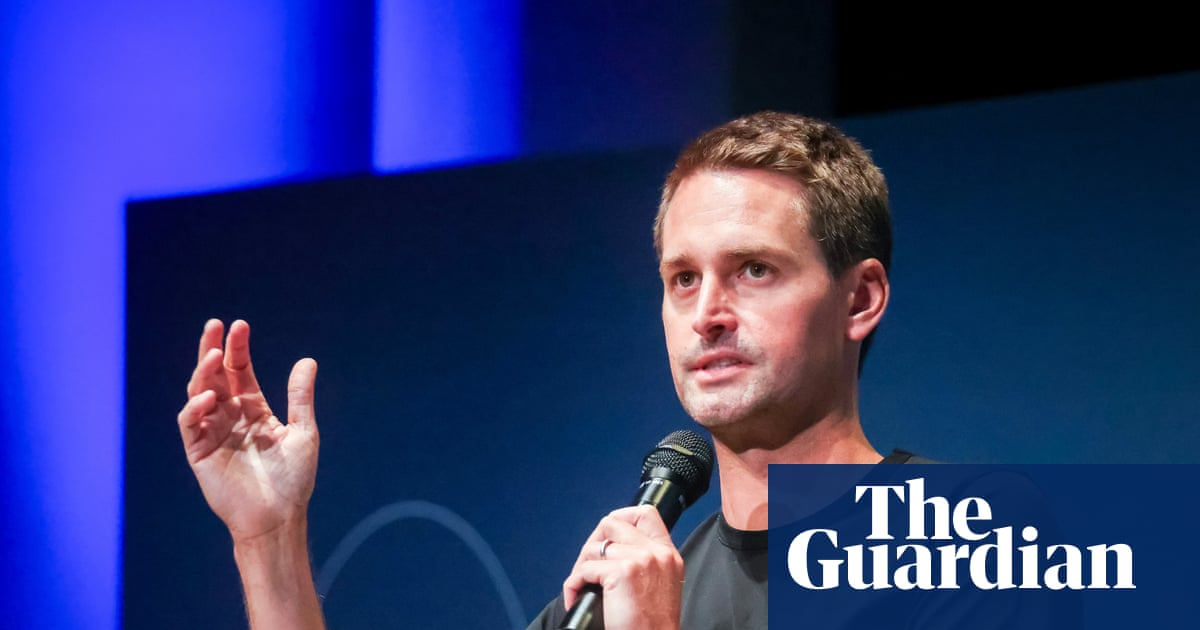
Evan Spiegel, co-founder and CEO of Snap Inc, during the Axios Media Trends Live event in New York on 18 September 2025. Photograph: Michael Nagle/Bloomberg via Getty ImagesView image in fullscreenEvan Spiegel, co-founder and CEO of Snap Inc, during the Axios Media Trends Live event in New York on 18 September 2025. Photograph: Michael Nagle/Bloomberg via Getty ImagesSnap Inc blames AI as it lays off 1,000 workersCuts by Snapchat’s parent company come in response to a declining stock price and pressure from an activist investor
Snapchat’s parent company plans to lay off 16% of its employees, around 1,000 people, citing “rapid advancements in artificial intelligence”, the social media company told staff on Wednesday in an internal memo. The staff reduction is part of a wave of tech industry layoffs in the past year, with many firms blaming AI for the cuts.
Snap Inc’s layoffs follow demands last month from Irenic Capital Management, an activist investor whose portfolio manager wrote a letter to the Snap Inc CEO, Evan Spiegel, calling on him to reduce costs and headcount while criticizing the company’s current strategy. In Spiegel’s memo to staff, he claimed that the layoffs would move Snap towards profitability and suggested that artificial intelligence could fill the lack of human labor.
“While these changes are necessary to realize Snap’s long-term potential, we believe that rapid advancements in artificial intelligence enable our teams to reduce repetitive work, increase velocity, and better support our community, partners, and advertisers,” Spiegel wrote.
Snap, which owns the photo- and video-sharing app Snapchat, joins a host of other tech companies that have carried out mass layoffs amid the AI boom. Microsoft, Amazon, Oracle, Jack Dorsey’s financial services firm Block and others have cut tens of thousands of jobs while embracing a shift towards AI tools and claiming that the technology allows for businesses to do more with less human labor.
Although Spiegel’s memo stated that the company had already seen productivity benefits from AI, many experts and workers believe that the reality of receiving gains from implementing AI is murkier. Former workers and even pro-AI executives have also sometimes accused firms of “AI-washing” layoffs in an attempt to posture for investors and the market. Marc Andreesen, a venture capitalist and AI booster, similarly claimed recently that AI-related cuts were being used as an excuse for firms that had overstaffed.
As discontent with AI and concern over its impact on the labor market grow, however, top AI firms such as OpenAI and Anthropic have become increasingly concerned about their image problem and have mounted a political charm offensive to address AI’s potentially harmful effects on the labor market. OpenAI published a set of policy proposals earlier this month suggesting companies could move to a four-day workweek and that the government could create a public wealth fund to return profits to citizens.
Snap’s stock rose around 6% in the early hours of trading on Wednesday following news of its layoffs – recovering some of its value after dropping in price over 30% in the year to date. The company, which was founded in 2011, employed about 5,200 people as of December of last year, according to regulatory filings. It had posted an additional 300 open roles, which Spiegel told staff will no longer be filled.