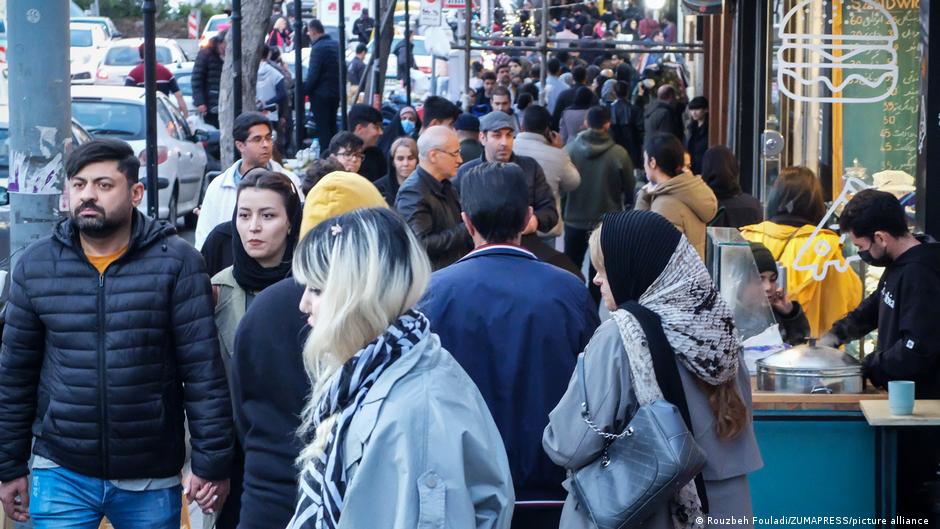
After six weeks of war, job losses are growing in Iran. Destroyed industrial facilities have brought production in many sectors to a standstill, hitting Iranian workers particularly hard.
https://p.dw.com/p/5CDqmThousands of Iranians have lost their jobs since the war broke out [FILE: March 2023]Image: Rouzbeh Fouladi/ZUMAPRESS/picture alliance AdvertisementMore than 93 million people in Iran are living in the shadow of a war that could flare up again at any moment. Many Iranians are now fearing the difficult days that lie ahead.
After the peace talks between the United States and Iran in Pakistan, Washington began blockading Iranian ports and ships in the Strait of Hormuz.
The move is intended to cut Iran's oil export revenues and to prevent Tehran from charging a toll for passage through the strategic sea route. The blockade also means that goods are no longer reaching Iranian ports.
"The continuation of the war — whether at the military level or in the form of blockades and regional tensions — puts the greatest pressure on ordinary people, especially workers, teachers and wage earners," trade unionist Ismail Abdi wrote in response to an inquiry from DW.
Iran war: What's next after Islamabad talks fail?To view this video please enable JavaScript, and consider upgrading to a web browser that supports HTML5 video
The teacher and human rights activist was a member of the executive board of the Iranian Teachers' Association when he came to the attention of Iranian authorities 11 years ago because of his commitment to defending teachers' rights. Accused of "propaganda against the political system," he spent several years in prison.
After international pressure — particularly from trade unions around the world — he was eventually released. Since March 2025, he has been living in exile in Germany, where he continues his work for education rights and freedom of expression.
"In recent weeks, we have received shocking reports about the suffering of the working class under wartime conditions in Iran," he said.
"When factories, workshops or service projects are shut down or scaled back, contract workers, day laborers and those in informal employment are the first to suffer. This process weakens workers' bargaining power and pushes wages further toward an outright collapse."
The war has had devastating consequences for Iran's economy, which has long been plagued by mismanagement, corruption and sanctions.
Tehran has already put the war damage at the equivalent of around €229 billion (about $270 billion), according to a preliminary estimate Iranian government spokesperson Fatemeh Mohadscherani gave in an interview with Russia's state news agency RIA Novosti on April 14.
However, the true extent of the damage to the country's largest industrial facilities, which serve as engines of the economy, is not yet fully known.
The Mobarakeh Steel Company in Isfahan was forced to halt operations entirely after a second US-Israeli attack.
The US and Israel said the strikes had weakened Iran's military capabilities. Steel is a key raw material for the production of military goods such as missiles, drones and ships.
At the same time, it plays a crucial role in civilian industries, including automotive supply chains, the production of household appliances, and the packaging and canning industry. Steel is also indispensable in the construction sector.
The steel industry is considered one of the main driving forces of Iran's economy. According to the World Steel Association, Iran was among the world's 10 largest steel producers in 2025 — alongside countries such as China, the United States and Germany — exporting around 31.8 million tons of steel annually. Between March 2025 and January 2026, export revenues amounted to $860 million (€741 million).
With production suspended, thousands of workers were sent home, but for how long remains unclear. At least 10,000 employees in the steel industry are day laborers.
A production shutdown can also trigger a chain reaction, forcing dozens of other companies that depend on these facilities also to halt their operations.
Attacks on petrochemical plants will also have massive repercussions on the labor market, says Umud Shokri, an energy strategist and senior visiting fellow at George Mason University.
Strikes on major petrochemical hubs in Asaluyeh (South Pars), Mahshahr and Shiraz caused significant damage and brought numerous facilities to a standstill.
In industrial centers such as Mahshahr, where more than 30,000 people are employed, many are now facing sudden job losses and wage cuts, Shokri wrote in response to an inquiry from DW.
"The damage extends far beyond the facilities themselves, affecting supply chains, state revenues and people's livelihoods," he added.
"Even under optimal conditions, assessments based on comparable industrial complexes suggest that restoring a key hub like Mahshahr could take around two years," he said. This would require improved access to foreign technology, capital, spare parts and technical know-how — conditions that are scarcely attainable under the current sanctions regime.
Job losses in the industrial sector have already created widespread insecurity. On April 14, the Iranian Labour News Agency (ILNA) dismissed all of its journalists and shifted their employment to freelance contracts.
Many other companies are also reported to have begun mass layoffs. One example is the digital services sector, including platforms such as Snapp, often described as the "Iranian Uber."
Despite ongoing internet restrictions imposed by the authorities since the start of the war to prevent potential protests, such services continue to operate in the country. However, fewer people are on the move because of the war, and many can no longer afford to use them.
"Due to internet restrictions alone, thousands of freelancers, programmers and content producers have lost their ability to work. They are now being pushed back into the traditional, already fragile labor market," said trade unionist Abdi. "In the short term, this situation leads to falling real incomes and growing poverty among workers. In the long term, there is a risk of an exploited, less skilled and more dependent society emerging."
Iran’s internet shutdown draws condemnation from abroadTo view this video please enable JavaScript, and consider upgrading to a web browser that supports HTML5 video
Trade unionist Ismail Abdi has not given up on the dream of political change in Iran. But he warns that the war is primarily leading to rising poverty and increasing insecurity for disadvantaged segments of the population. "This war must be ended before its human and social costs become irreversible," he said.
However, little attention seems to be paid to the Iranian population, neither by the leadership of the Islamic Republic, whose priority is staying in power, nor by the US president, despite his promises of support.
From the outbreak of the war on February 28 until April 8, when a fragile ceasefire was agreed, 3,636 people were killed in Iran, according to the US‑based human rights organization HRANA. Of those, 1,701 were civilians, including at least 254 children.
This report was originally written in German.