play Live Sign upShow navigation menuplay Live Click here to searchsearchSign upIn Pictures
More than nine million people remain displaced in Sudan, while nearly 29 million face acute hunger.
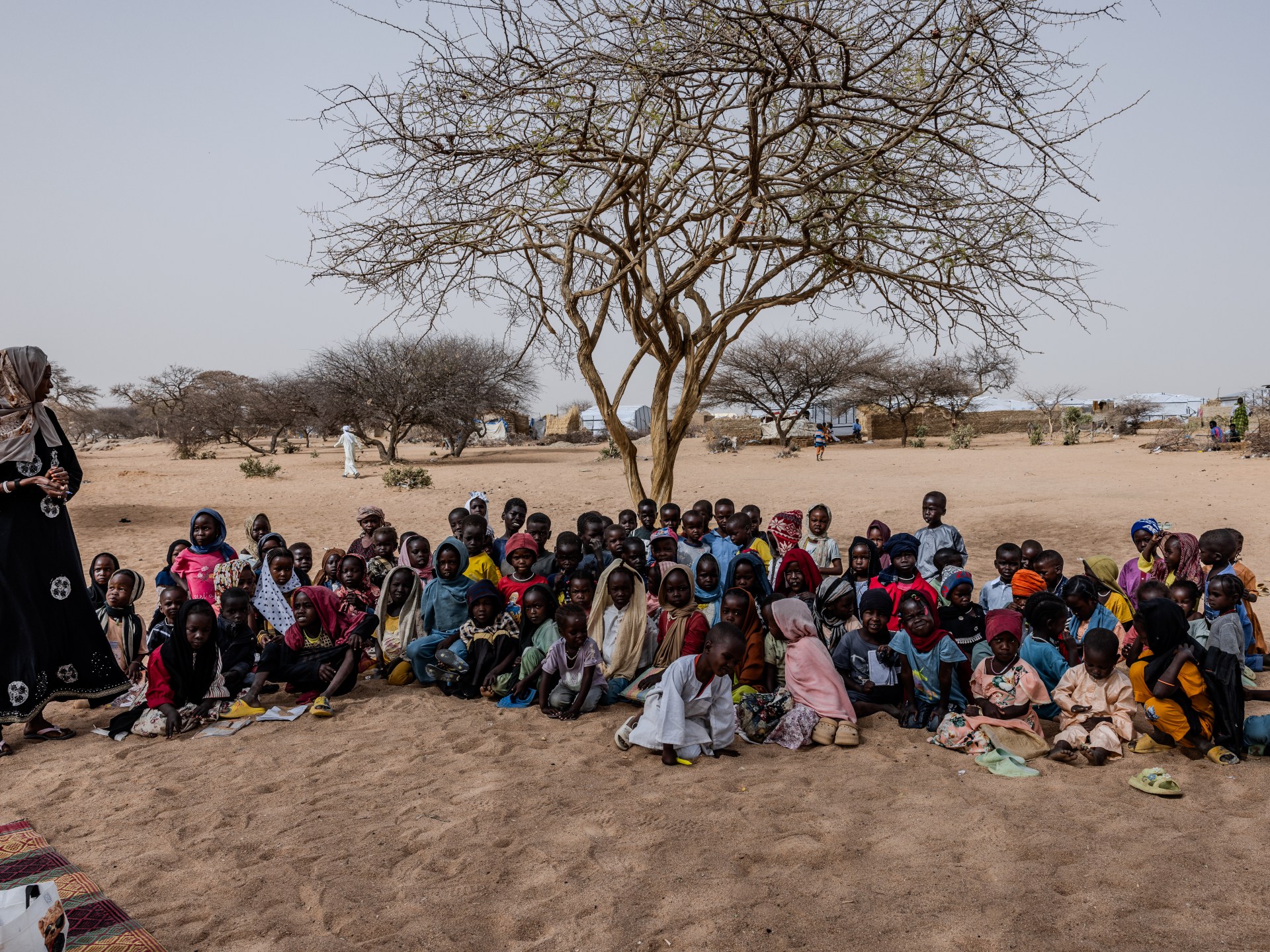
xwhatsapp-strokecopylinkgoogleAdd Al Jazeera on GoogleinfoSudanese teachers who fled to Goudrane refugee camp have set up a school under the trees, offering children education and a break from often deeply traumatic memories. The schools that do exist in the camp run double shifts but still hold 100 to 200 pupils per classroom. Across Sudan, Chad and South Sudan, only 45 percent of displaced children have regular access to education; in Chad, family separation nearly doubles the risk of child labour. Goudrane refugee camp, eastern Chad [Enayatullah Azad/NRC]By Hephzibar BukasuPublished On 15 Apr 202615 Apr 2026Families across Sudan fled their homes, cities, and country after war reached their streets in April 2023.
A recent Norwegian Refugee Council (NRC) survey of 1,293 displaced households across Sudan, Chad, and South Sudan reveals the devastating cycle of loss these families endure. Each forced relocation strips away the remnants of their previous lives.
About 90 percent have lost their homes. Nearly three-quarters have no income. Food shortage has reached critical levels, with more than 80 percent of households in Sudan and nearly all in South Sudan regularly skipping meals.
Inside Sudan, more than nine million people remain displaced, while nearly 29 million face acute hunger.
The cumulative trauma is overwhelming. By their fourth displacement, nearly two-thirds of people report complete exhaustion and depletion of resources. About 65 percent have been separated from family members.
Despite these hardships, remarkable solidarity persists. In Sudan and Chad, about one in three aid recipients continue to share their meagre supplies with neighbours, strangers, and new arrivals with even less.
For three years, this mutual support has served as the invisible backbone of the humanitarian response – yet the survey indicates this lifeline is now stretched to its breaking point.
“In Sudan now, you are always running,” says Amina, who fled Khartoum with four children and the clothes on her back after her husband disappeared in the first days of fighting. “Running from war. Running for food.”
Educational opportunities have collapsed, with only 45 percent of displaced children across the three countries regularly attending school. About 18 percent of households have been forced to send their children to work.
The survey’s conclusion is stark: People have sustained this crisis through resilience and generosity. They are now signalling that they cannot continue shouldering this burden alone much longer.
This photo essay is provided by the Norwegian Refugee Council.