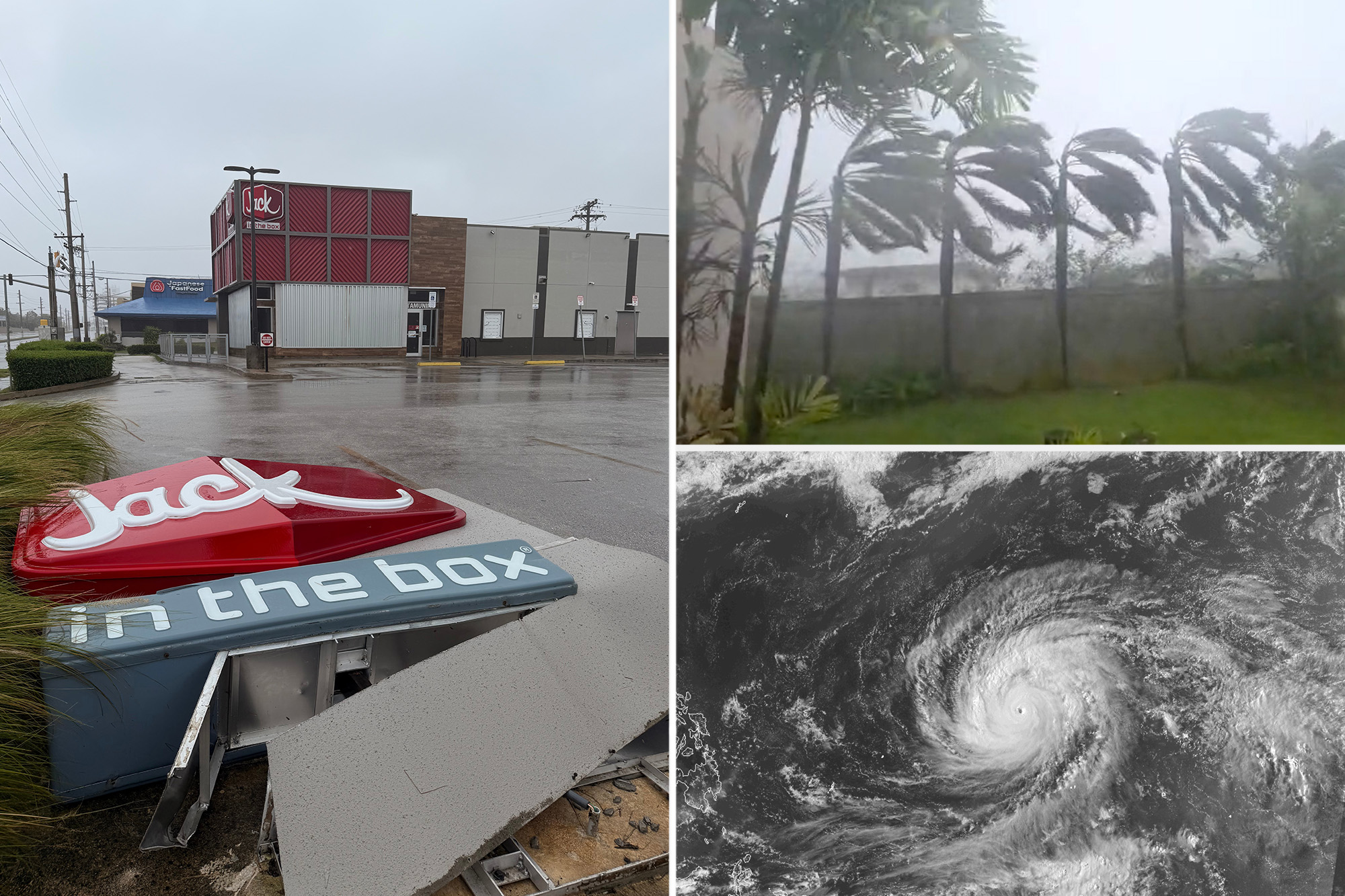
A super typhoon steadily battered a pair of remote U.S. islands in the Pacific Ocean with ferocious winds and relentless rains, shredding tin roofs and forcing residents to take cover from flying tree limbs.
Super Typhoon Sinlaku pounded the Northern Mariana Islands for hours before daybreak Wednesday, slowing just to inflict more damage across the islands of Tinian and Saipan, home to nearly 50,000 people.
In the village of Susupe on Saipan, resident Dong Min Lee said it was still too dangerous to head outside to thoroughly inspect for damage at daybreak Wednesday. From his apartment windows, he could see a car sitting on top of two others in his building’s parking lot below. The winds also tore off part of his balcony railing.
“I hope people will take an interest and help. The damage is really huge here,” Lee said in a Facebook message.
The typhoon — the strongest tropical cyclone on Earth this year — was packing sustained winds of up to 150 mph (240 kph) when it made landfall on the islands, the National Weather Service said.
Tropical force winds and torrential rainfall also led to flash flooding on Guam, a U.S. territory to the south with several U.S. military installations and about 170,000 residents, the weather service said.
“I’m guessing anything that was made of wood and tin did not survive this,” said Glen Hunter, who grew up on Saipan and watched at least three tin roofs fly past his yard.
Hunter, who has weathered numerous typhoons, told The Associated Press this felt like the strongest yet. Rain was seeping into every crevice of his concrete home, he said.
Start your day with all you need to know Morning Report delivers the latest news, videos, photos and more.
“It was a losing battle because the rain was coming through everywhere,” he said. “Every house is just flooded with water, no matter what type of structure you’re in.”
While wind gusts did slow a bit on the Mariana Islands early Wednesday and the storm started tracking to the north, the conditions did not improve right away, the weather service reported.