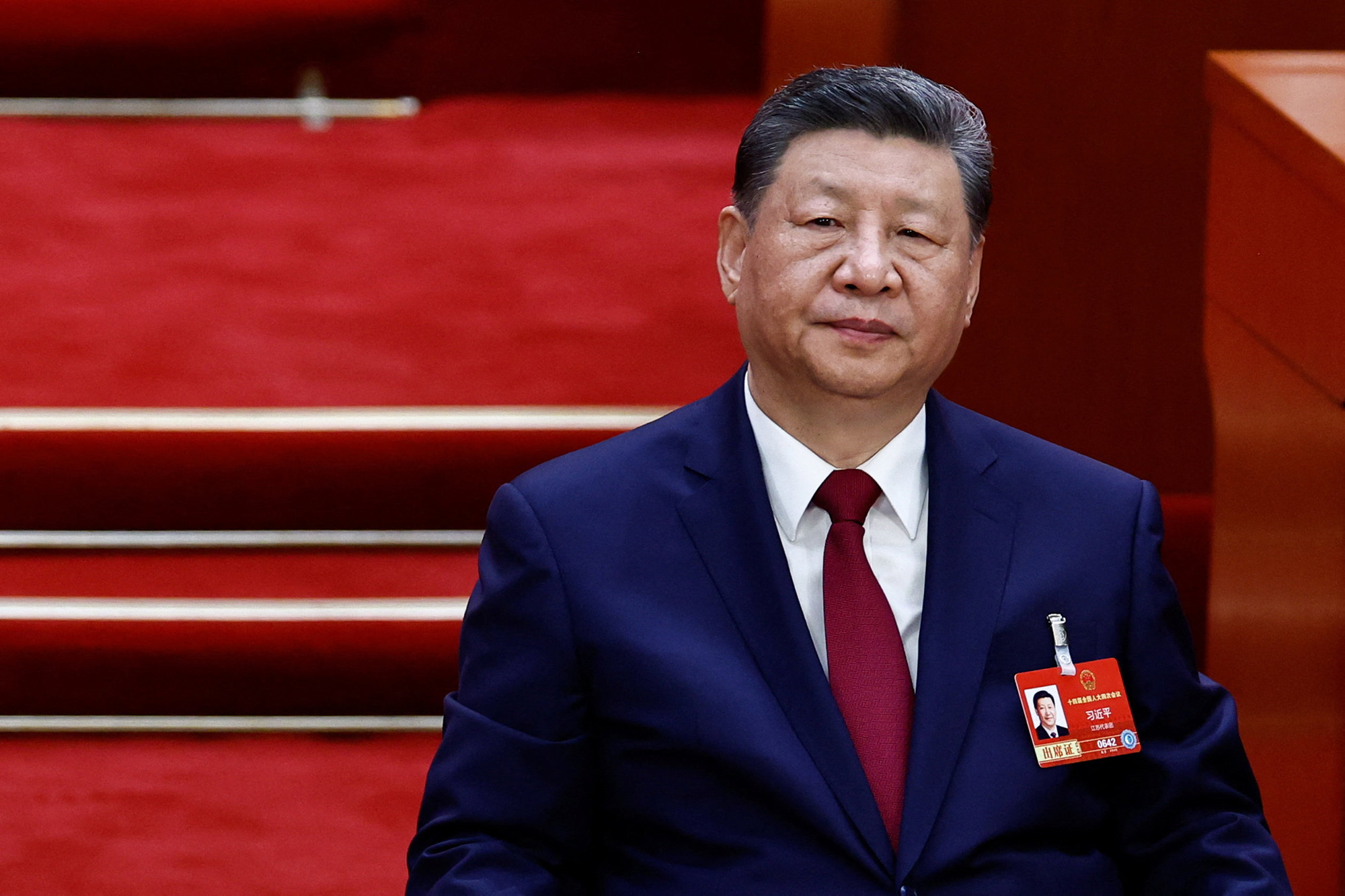
Chinese President Xi Jinping attends the closing session of the National People's Congress (NPC) at the Great Hall of the People in Beijing, China March 12, 2026. REUTERS Congress is behind on yet more crucial work: If the House and Senate don’t renew it by Monday, a key section of the nation’s key foreign-spying law will expire — blowing a major hole in US national security.
A post-9/11 reform, Section 702 of the Foreign Intelligence Surveillance Act, sensibly allows monitoring of a limited number of foreigners, on an individual basis, for limited purposes without requiring a warrant.
That lets US agents collect vital info and respond quickly when they unearth threats.
Over the years, it’s helped agents thwart numerous terrorist plots; locate Chinese sources of fentanyl precursors; ID foreign hackers and ransomware perps; and foil foreign-based spying, kidnapping and assassination schemes — for starters.
Today, with America at war with the No. 1 terror sponsor Iran, and facing threats from other nations like China and Russia, nothing would be more reckless than letting 702 sunset.
Critics charge that the spying risks violating US citizens’ privacy rights unless agents have to get a warrant first.
But, again, 702 is not used to target US citizens.
(And the Obama FBI did get a warrant in one of the worst FISA abuses, the illegal spying on 2016 Trump campaign minion Carter Page, but under under FISA’s Title I, not Section 702.)
Yes, 702 has seen real abuses of the process that lets US agents query the database on foreigner info to identify US citizens the target has been in contact with — but Congress addressed those concerns in 2024 by erecting new guardrails: Supervisers (who are not political appointees) must now sign off; “sensitive” searches (eg., on press or political figures) must be OK’d by the FBI’s deputy director; Congress must be informed when lawmakers are targeted, etc.
Since then, per the Justice Department’s inspector general, the FBI has implemented all the reforms; “noncompliant” queries have fallen dramatically.
Reasonable people may want more safeguards, but extremists (on both sides of the aisle) — Sen. Elizabeth Warren (D-Mass.) and Rep. Lauren Boebert (R-Colo.) — want warrants for every search.
A “clean” extension “leaves the Trump administration in charge of policing its own abuses,” huffs Rep. Jamie Raskin (D-Md.), the very model of a hyperpartisan liar.
Please. Demanding warrants in every case makes sense only if the goal is to render America as vulnerable as before 9/11.
Speaker Mike Johnson and President Donald Trump are right to push for a clean, 18-month extension of 702; the House may vote as early as Thursday.
If critics can muster enough support for added reforms in 18 months, or even before, fine.
But it’s beyond nuts to let 702 expire and leave Americans at risk.