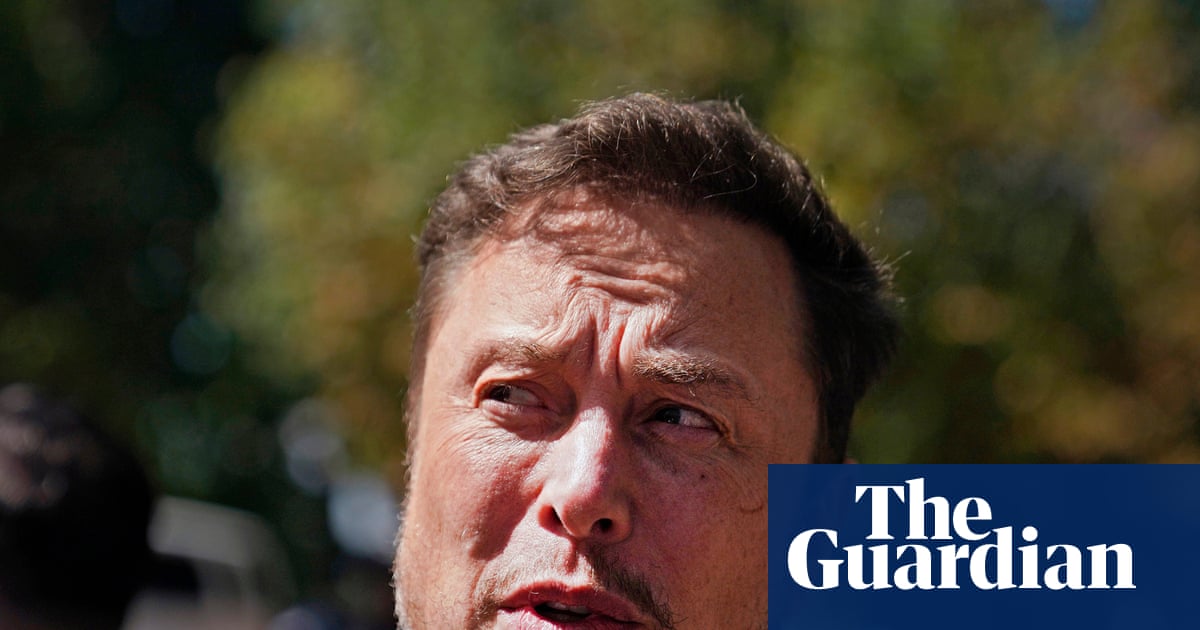
The suit alleges Elon Musk’s xAI is violating the Clean Air Act due to toxic emissions from its datacenter in south-west Memphis. Photograph: Nathan Howard/Getty ImagesView image in fullscreenThe suit alleges Elon Musk’s xAI is violating the Clean Air Act due to toxic emissions from its datacenter in south-west Memphis. Photograph: Nathan Howard/Getty ImagesNAACP lawsuit accuses Elon Musk’s xAI of polluting Black neighborhoods near MemphisSuit alleges the billionaire’s AI company is illegally spewing toxic pollutants from its datacenter in the Memphis area
A new lawsuit accuses Elon Musk’s artificial intelligence company of illegally spewing toxic pollutants into the Black neighborhoods on the border of Tennessee and Mississippi.
The suit, filed Tuesday in Mississippi federal court, alleges xAI is violating the Clean Air Act due to emissions from its enormous datacenter in Southaven, Mississippi. The plaintiff – storied civil rights group the NAACP, represented by the Southern Environmental Law Center – says xAI has been polluting the surrounding historically Black communities by using dozens of methane gas generators without permits. The organization is seeking to force the company to stop operating its unpermitted turbines in Southaven.
“All too often, big corporations like xAI treat our communities and families like obstacles to be pushed aside,” said Derrick Johnson, the president and CEO of the NAACP.
xAI’s Southaven datacenter, nicknamed “Colossus II” by Musk, is a massive facility, occupying one million square feet. xAI’s Memphis facility, “Colossus” is similarly large, roughly the size of 13 football fields. The first Colossus is located in Memphis’s industrial zone and a few miles from residential neighborhoods that have long dealt with harmful pollution, including Boxtown, a neighborhood that was established by formerly enslaved people after emancipation in the 19th century.
The lawsuit alleges xAI illegally installed and operated up to 27 gas turbines to power the Southaven facility, which line the sides of the building. xAI uses these generators, each one the size of a large bus, to supplement the energy the company receives from the local utility. Combined, they have the capacity to emit tons of harmful nitrogen oxides per year, along with toxic chemicals like formaldehyde, according to the Southern Environmental Law Center.
xAI issued a statement in response to the lawsuit: “We take our commitment to the community and environment seriously. The temporary power generation units are operating in compliance with all applicable laws.” The company did not respond to questions about whether it will address the alleged violations listed in the lawsuit.
Black residents still make up a large portion of the Memphis neighborhoods, which have faced higher rates of asthma and respiratory diseases as well as a lower life expectancy than other parts of the city. Studies have likewise shown these neighborhoods have a cancer risk that is four times the national average.
“We cannot afford to normalize this kind of environmental injustice – where billion-dollar companies set up polluting operations in Black neighborhoods without any permits and think they’ll get away with it because the people don’t have the power to fight back,” Johnson said. “We will not allow xAI to get away with this.”
xAI first announced the construction of its Colossus datacenter in Memphis in 2024. Shortly after, the methane gas generators started to appear, according to the Southern Environmental Law Center. By the time Musk said the facility was up and running, 122 days later, there were at least 18 generators going, per aerial photographs the law center took of the facility. By April this year, that number had nearly doubled, photos showed.
xAI applied for a permit from the Shelby county health department for 15 of the Memphis generators in January 2025. The health department awarded the company the permit in July, sparking outcry from the local community over air hazard concerns.
The rapid growth of xAI in Memphis and Southaven has seen fierce opposition from residents, despite support from Memphis mayor Paul Young and the chamber of commerce. After xAI was awarded the permit, local environmental groups appealed against the decision to the county’s air pollution control board, saying the facility is in an “area that has failed to meet EPA’s air quality standard for ozone for years”. They said the permit ignores the remaining unpermitted generators at the site.
Asked about the generators last year, Katie Miller, an xAI spokesperson, said the generators without permits have been decommissioned. In an emailed statement, she said the appeal was “baseless”, “politically driven”, “riddled with factual inaccuracies” and “legal fiction”.
Community members, local politicians and environmental non-profits have held protests and public forums to speak out against the pollution they say xAI is generating.
“Mayor Young and [Shelby county] mayor Lee Harris need to do their jobs to protect our air and protect our lives,” Justin Pearson, a Tennessee state representative from Memphis, said during a hearing in late April. “We deserve clean air, and our lungs are not for sale to xAI or Elon Musk.”
The NAACP is seeking injunctive relief, civil penalties and fees to cover the cost of litigation.