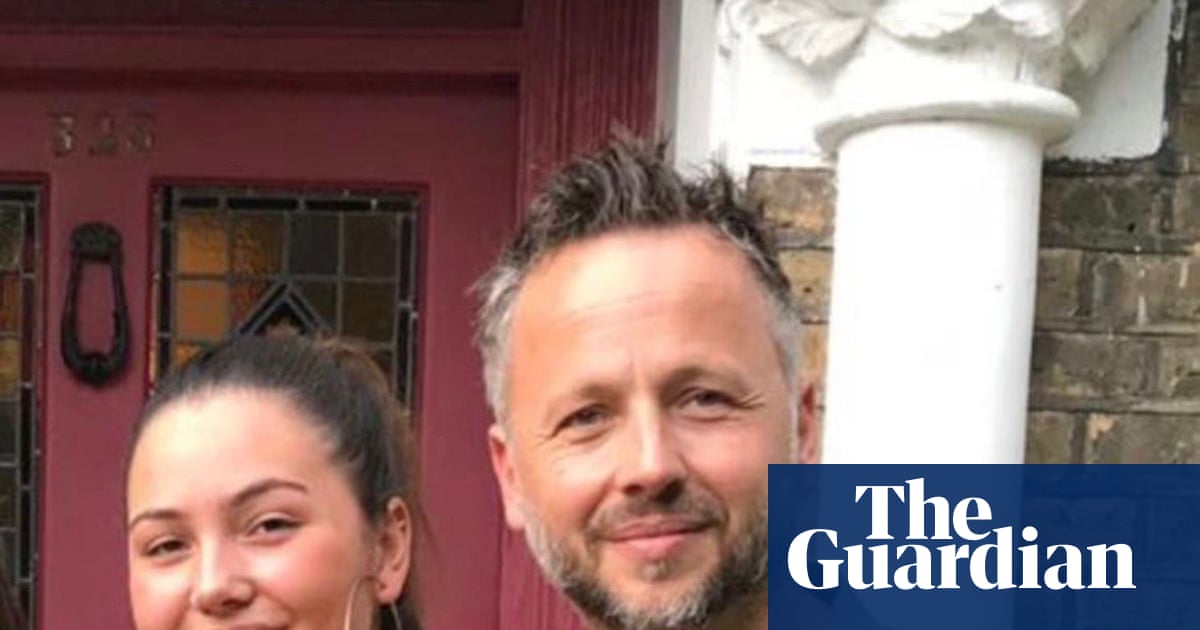
Natasha Cochrane de la Rosa and her father, Nick, in London. Photograph: Nick CochraneView image in fullscreenNatasha Cochrane de la Rosa and her father, Nick, in London. Photograph: Nick CochraneUK woman fears being stranded in Spain over new Home Office border rulesNatasha Cochrane de la Rosa was refused boarding on flight to London because she was not aware of the rule change
A British woman has told how she fears being stranded in Spain for months after being refused boarding a on flight back home to London because she was not aware of new Home Office border rules.
Natasha Cochrane de la Rosa, 26, was born in the UK to a British father and a Spanish mother, but because of archaic laws she was not entitled automatically to British citizenship because her parents were not married. Other women born to unmarried parents have called the rules an “illegitimacy tax”.
Before Brexit, Cochrane de la Rosa could enter and leave the country on her Spanish passport under free movement laws. But she learned that this was no longer the case after taking a short break in the Netherlands, where she was forced to sleep in the airport overnight.
She later booked a flight from there to Spain, where she had relatives, but said the experience had left her “petrified” as a woman travelling alone.
“I had left on 2 April from Luton airport using my Spanish passport, as I had always done throughout my whole life,” said Cochrane de la Rosa. “When it came to the return, I had no problems getting through passport control or security.
“I was at the departure gate when the easyJet worker asked for my documentation, which I was obviously surprised about. I had no idea what she was referring to.”
It was then that she learned of the new border rules that came into force on 26 February requiring British dual nationals to present a British passport before boarding a flight or to buy a “certificate of entitlement” to the right of abode in the UK at a cost of £589.
A member of easyJet’s ground crew contacted the Home Office but she was still refused, despite having access to her British birth certificate and a British driving licence. “It was pure shock,” Cochrane de la Rosa said.
She said the British embassy had refused an application for emergency travel documentation because it “didn’t meet the threshold of what they consider to be an emergency”.
Her father, Nick, said it was “ludicrous” that his daughter was being refused entry to the country of her birth. “How is it that someone can be born in the UK, go to school in the UK and now pay taxes in the UK and be refused entry to their home country?” he said.
“She’s legally allowed to work here but it’s like she’s not legally entitled to travel into the country,” he said. They have written to their local MP, Catherine West, for help.
The government has rejected all calls for a grace period to allow British dual nationals the time to get British passports. Mike Tapp, the immigration minister, told parliament in February it was “absurd” to suggest the Home Office had not communicated the border rule change effectively.
A Home Office spokesperson said: “Since 25 February 2026, all dual British citizens need to present either a valid British passport or certificate of entitlement when travelling to the UK.”
They also said that guidance for dual nationals had been available since October 2024 on the government website.
However, critics have said travellers do not look at gov.uk before they book flights and that the Home Office failed to run media campaigns at airports and ports or to tried to alert dual nationals in other ways.
Cochrane de la Rosa is one of several people who have been left stranded since the rule came into force on 26 February. Hundreds of others have protested that they did not know about it and have missed visits to elderly parents from Canada or Australia, weddings or special birthdays.
One woman in Australia told the Guardian she had missed her father’s funeral because her child, a dual national, did not have a British passport. Another elderly woman in the US told how she and her husband had planned a trip a year ago for a family reunion with hotels booked in the Lake District. They cancelled their trip.