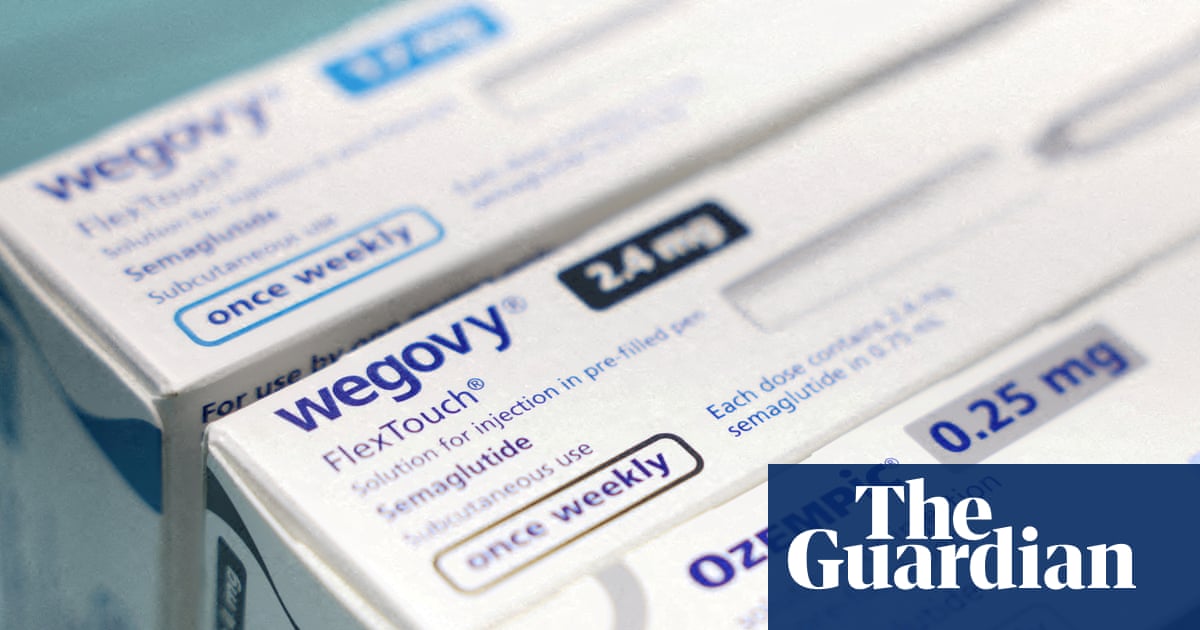
US states have dramatically increased public spending on weight-loss drugs such as Ozempic and Wegovy. Photograph: Hollie Adams/ReutersView image in fullscreenUS states have dramatically increased public spending on weight-loss drugs such as Ozempic and Wegovy. Photograph: Hollie Adams/ReutersUS states drop Medicaid coverage of GLP-1 weight-loss drugs as demand risesExperts say any short-term financial benefit will be outweighed by long-term health costs related to obesity
Faced with high demand for GLP-1 drugs, some American cities and states that previously covered the cost of the weight-loss medication for low-income residents and public employees have now started to restrict or eliminate coverage.
The pullback stems from the dramatic increase in public spending on drugs such as Ozempic and Wegovy in recent years.
Still, some legislators and healthcare providers argue that dropping coverage of the drugs might provide short-term relief for governments but will ultimately harm Medicaid recipients’ health. They argue that cities and states will then have to pay for more health problems related to obesity.
“Patients should have access to these therapies,” said Dr Matthew Klebanoff, a professor of internal medicine at the Perelman School of Medicine who has studied prior authorization policies for GLP-1 drugs. “It’s just very challenging right now for payers to be able to afford covering these medications for everyone who could benefit.”
The obesity rate in the United States among adults was 40% in August 2023, according to the Centers for Disease Control and Prevention. In November 2025, 12% of adults reported that they were taking a GLP-1 drug – a 6% increase from 18 months earlier, KFF reported. Those drugs have contributed to a decrease in the country’s obesity rate, which fell to 37% in 2025, according to a Gallup report.
But that progress has been expensive. In 2018, the country spent $13.7bn on GLP-1 drugs. In 2023, that number was $71.7bn, a 500% increase, according to a report in the medical journal Jama.
Sixteen state Medicaid programs – the federal and state initiative that provides free health insurance to low-income people – covered the drugs for obesity in October 2025 (though, notably, most states cover GLP-1 drugs for diabetes). As of January this year, California, New Hampshire, Pennsylvania and South Carolina ended Medicaid GLP-1 drug coverage for weight loss, and Michigan started restricting coverage to people classified as morbidly obese, meaning they have a body mass index above 40. Rhode Island’s governor has also proposed ending coverage of the drugs.
New York City’s health insurer stopped covering GLP-1 drugs for city employees in 2025 while Boston’s leaders are considering limiting such coverage for city employees because of an insurance rate hike largely driven by the GLP-1 drug cost.
Many states are also facing a budget crunch due to Donald Trump’s One Big Beautiful Bill Act, which will cut state Medicaid funding by $665bn over the next decade.
“I imagine any state that is covering these medications is having conversations about whether they will be able to continue,” Klebanoff said.
For context, Medicaid spending on GLP-1 drugs in Pennsylvania was $1.3bn in 2025 - a whopping twice as much as the previous year.
During budget discussions last year, the state department of human services secretary, Val Arkoosh, said Pennsylvania was considering the cuts “to ensure the medications are used appropriately by those who need it most, while considering cost effectiveness by limiting access based on body mass index or other health factors”.
A spokesperson for the department stated in an email to the Guardian that the state had cut some coverage because of an “unsustainable rise in costs from GLP-1s”.
The Medicaid program now in Pennsylvania only covers GLP-1 drugs for people with diabetes or those who meet a narrower set of criteria, such as those with sleep apnea or a body mass index of at least 35.
The Pennsylvania state representative Arvind Venkat, a physician, said the state was “essentially allowing people to be much sicker than they should be before we allow them to have access to a medication which has been shown to be safe”.
Alexa Canciello, a 23-year-old with autism, lives with her parents outside Pittsburgh and had a weight problem for years because her brain doesn’t “know when to shut off the hunger drive”, her father Rich said.
About a year ago, Canciello, a Medicaid recipient, started taking the GLP-1 drug Zepbound. Rich said his daughter lost almost 30lb, noting: “These GLP-1s, they are miracle workers.”
But the state stopped covering Zepbound for Canciello in January. Without insurance, injections of it cost more than $400 each month, Rich said. Her doctor instead prescribed a pill form of Wegovy, which costs less but has not been as effective for Canciello, who has regained weight, Rich said.
“There are a lot of people out there that could probably lose weight without GLP-1 drugs if they just discipline themselves and exercise more, but there is a segment of the population that cannot lose weight, and my daughter Alexa unfortunately falls within that category,” Rich said.
Venkat, a Democrat, has introduced legislation to create a subscription model for GLP-1 drugs in which the state could enter “value-based arrangements with drug manufacturers through supplemental rebate agreements”.
This would be similar to an agreement Louisiana made in 2019 with a hepatitis C drug manufacturer to create a “Netflix model”, in which the state paid a flat fee for unlimited access to the medication for five years, the Associated Press reported.
“Whether the drug makers will agree to it or not is a question of, do you want your product to be marketed in Pennsylvania to the Medicaid population or not?” Venkat said.
But drug manufacturers do not have much incentive to make such a deal because “demand is already enormous for GLP-1s”, Klebanoff said.
The human services department spokesperson also stated that manufacturers had not expressed interest in making such a deal.
Klebanoff believes the cost of the drugs will ultimately decrease as the market becomes more competitive.
“When the hepatitis C treatments came out in the 2010s, we had similar conversations about how we could afford those very expensive, highly effective medications, and eventually there was enough competition that prices came down,” Klebanoff said.
In the meantime, Medicaid recipients will have to find ways to access the drug. Klebanoff suspects more people could sign up for sleep studies to determine if they qualify for GLP-1 drugs because of sleep apnea.
Venkat thinks finding a way for the state to cover the drug is a matter of political will.
“If all we are trying to accomplish is to save money on a single year budget basis, the state is doing that,” Venkat said. “But our goal should be more than that. It should be to keep people healthy.”