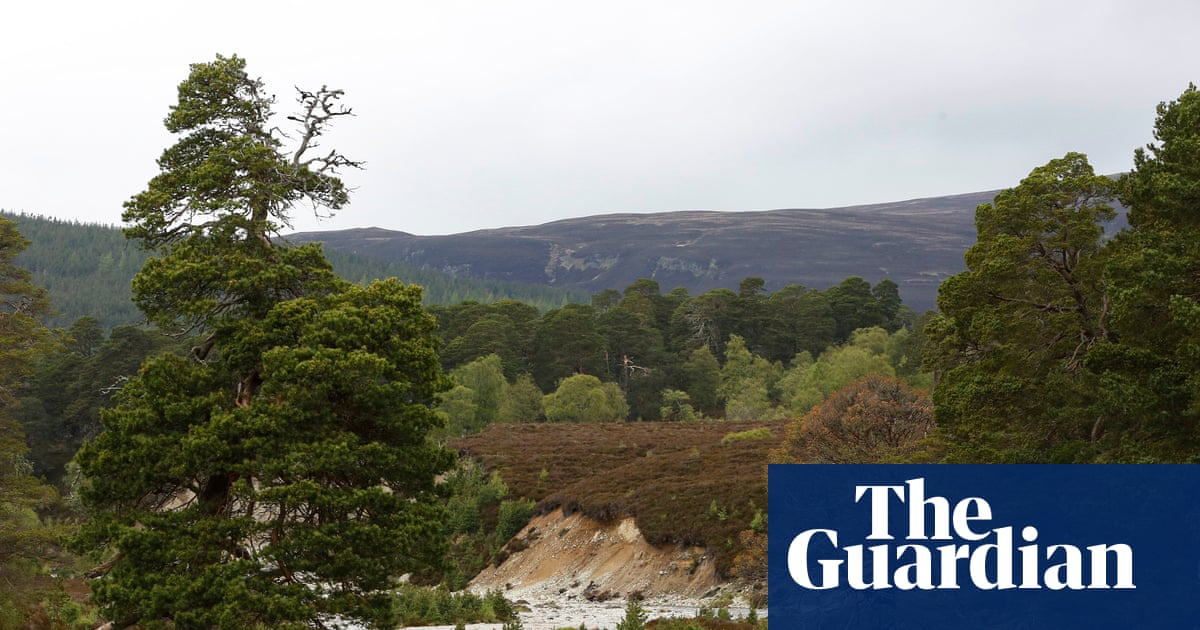
NatureScot’s model is based on private funders meeting the costs of planting new forests not covered by public subsidies. Photograph: Murdo MacLeod/The GuardianView image in fullscreenNatureScot’s model is based on private funders meeting the costs of planting new forests not covered by public subsidies. Photograph: Murdo MacLeod/The GuardianMSPs not told about collapse of funding deal for Scottish nature restorationExclusive: Ministers accused of trying to keep investment firm’s withdrawal from partnership with NatureScot under wraps
A funding deal to raise £100m from private investors for urgently needed nature restoration in Scotland has fallen through without the Scottish parliament being told.
The Guardian has learned that Aberdeen, the investment firm, decided to withdraw from a partnership with the agency NatureScot to raise at least £100m for conservation projects from commercial and private investors late last year.
Scottish government ministers did not disclose that when the Highlands Labour MSP Rhoda Grant tabled a question at Holyrood asking for an update on what was known as the nature investment partnership.
Jim Fairlie, the Scottish National party agriculture minister, said only that NatureScot “continues to engage with a range of investors” and that “no private finance has yet been directed through the partnership into on-the-ground projects”.
Sources with direct knowledge of the issue said it became clear by December last year that Aberdeen was pulling out because it felt the investments would make insufficient returns. In February, NatureScot briefed stakeholders it had withdrawn.
NatureScot and Aberdeen refused to confirm or deny it had done so, citing the civil service rules that prevent public bodies from commenting during an election campaign on policies or decisions that were not in the public domain.
NatureScot’s webpage for the partnership still lists Aberdeen as a member.
Jackie Baillie, Scottish Labour’s deputy leader, said an urgent explanation was needed. “It looks a lot like Jim Fairlie and the SNP kept the collapse of this project under wraps to spare their government embarrassment ahead of an election,” she said.
“Scotland deserves to know what went wrong and what the consequences will be for the important work of nature restoration.”
An SNP spokesperson did not deny Aberdeen had withdrawn, or whether Fairlie knew that in March, but said the question tabled by Grant was “generic” and did not name Aberdeen.
“The nature investment partnership continues to be an important part of delivering private investment into nature restoration,” he said.
“The SNP will continue to support responsible private investment in natural capital – our focus is on ensuring that new approaches to nature finance will deliver responsible, high-integrity investment into nature restoration projects that work for rural communities and businesses.”
This is the second time NatureScot’s efforts to bring in private investors to fund the multibillion pound cost of nature restoration has collapsed.
First unveiled in early 2023 by the then Scottish Greens minister, Lorna Slater, who is standing again in May’s Holyrood election, the programme originally aimed to generate up to £2bn in private financing to plant millions of native trees and restore degraded peatland.
Slater signed a deal with a small private bank called Hampden & Co and the investment companies Palladium and Lombard Odier. NatureScot said £2bn could fund 185,000 hectares (457,000 acres) of new woodland, which would store about 28m tonnes of CO2 over the next 30 years.
Amid considerable scepticism from conservation and financing experts, that arrangement soon fell apart. Very few pension funds, banks or private investors are prepared to sink money into nature recovery because the returns are too low, too long term and too uncertain.
NatureScot’s model is based on private funders meeting the costs of planting new forests not covered by public subsidies, while paying landowners rent for using their land. In return they share the profits from the carbon credits sold once the woodland matured.
Aberdeen then stepped in but with the much more modest goal of raising £100m. By September last year, only the UK government’s national wealth fund had offered money but it has now withdrawn its £50m offer because Aberdeen is no longer in place to provide match-funding.
Tom Gegg, a nature finance expert who worked for Palladium until October last year, said this situation exposed the weaknesses of a funding model that relied on private financing rather than government investment.
In a blog for the thinktank Future Economy Scotland, Gegg estimated the gap between available public funding and the cost of nature restoration for Scotland by 2040 was about £6.6bn. The UK’s state-owned investment banks should take over funding it, he said.
“Growing trees is a very slow way to make money. [If] they invested instead in, say, a windfarm, then once the turbines are built revenues from electricity sales start to roll in fairly quickly,” he said.
Laurie Macfarlane, a codirector of Future Economy Scotland, said: “While it’s welcome that policymakers are finally waking up to reality, the lack of transparency surrounding this is deeply concerning. Restoring woodlands and peatlands is crucial to Scotland’s net zero pathway, yet there is no credible plan for how targets will be delivered.
“It is time to face the facts: nature is a public good, and meeting targets will require coordinated public investment. We can’t afford to waste any more time waiting for private finance that simply isn’t going to materialise.”