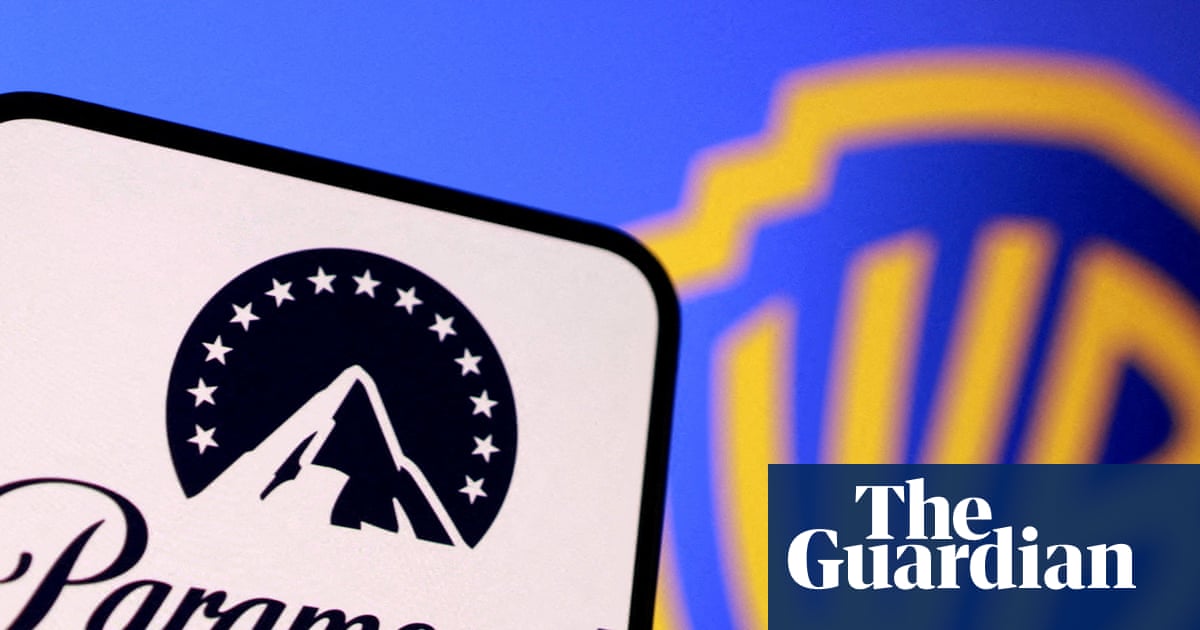
Hollywood stars have signed an open letter protesting against Paramount’s pending acquisition of Warner Bros Discovery. Photograph: Dado Ruvić/ReutersView image in fullscreenHollywood stars have signed an open letter protesting against Paramount’s pending acquisition of Warner Bros Discovery. Photograph: Dado Ruvić/ReutersMark Ruffalo and Emma Thompson among 1,000+ signatories on open letter opposing Paramount’s Warner buyoutMerger will ‘prioritise the interests of a small group of powerful stakeholders over the broader public good’, letter states
Joaquin Phoenix, Ben Stiller, Mark Ruffalo, Yorgos Lanthimos and Kristen Stewart are among more than 1,000 film and TV industry professionals who have signed an open letter protesting against Paramount’s pending acquisition of Warner Bros Discovery, the parent group that owns HBO, HBO Max, CNN, TBS and Food Network, as well as the Warner Bros TV and film studios.
“We are deeply concerned by indications of support for this merger that prioritise the interests of a small group of powerful stakeholders over the broader public good,” states the letter, which was published on Monday on BlocktheMerger.com.
“The integrity, independence and diversity of our industry would be grievously compromised. Competition is essential for a healthy economy and a healthy democracy. So is thoughtful regulation and enforcement.”
The letter argues that “media consolidation has already weakened one of America’s most vital global industries – one that has long shaped culture and connected people around the world” and concludes that a “vibrant future” must be ensured for the US’s “single most significant export”.
Other signatories to the letter include Jane Fonda, Javier Bardem, Glenn Close, Sandra Hüller, Rose Byrne, Lin-Manuel Miranda, Mary Steenburgen, Lily Gladstone and the documentarian Laura Poitras.
Denis Villeneuve, Boots Riley, Mimi Leder and Nicole Holofcener are among the directors who have put their name to the letter. Emma Thompson is among the Britons on the list, as is James Wilson, the longtime producer of Jonathan Glazer’s films.
Read moreAlso registering their disapproval are a number of significant names from TV, including David Chase, Noah Wyle, Ramy Youssef, Rob Delaney, Jason Bateman and Ted Danson.
Stiller’s criticism is particularly significant as the Zoolander films and Madagascar series were distributed by Paramount. Steenburgen’s recent Book Club films were also made by the studio, while Danson’s big break was in Paramount’s Cheers.
Both Ruffalo and Phoenix, meanwhile, have longstanding relationships with Warner Bros Discovery. Phoenix won his leading actor Oscar for his role in Joker, which – like its sequel – was made by Warner Bros. Inherent Vice and Her were also made by the studio.
Ruffalo recently starred in two HBO productions – I Know This Much Is True and This Normal Heart – as well as in last year’s Mickey 17, which was made by Warner Bros. His most recent work with Paramount was 2010’s Shutter Island; three years before that, he and David Fincher – who also signed the letter – worked with Paramount on Zodiac.
Thompson played Professor Trelawney in the original Harry Potter films made by Warner Bros, while Chase is best known for showrunning HBO’s The Sopranos.
The deal, worth some $111bn, is awaiting approval by regulators. If successful, it would consolidate two of Hollywood’s most significant studios, which many believe would result in diminishing quality and significant job losses.
Paramount chief executive David Ellison, who beat Netflix to become the key bidder for Warner Bros, has asserted the deal would be good for the creative community and has pledged investment in both studios. Yet his promise to release 30 films in cinemas each year has been met with scepticism by many across the industry.
The close ties of Ellison and his father, Larry, to Donald Trump, have prompted fears that the merger would mean fewer films that engage with politics would be greenlit.
Films made by Warner Bros – including Sinners and One Battle After Another – won a record 11 Oscars in March. Movies made by Paramount failed to score a single nomination.
As film-makers, documentarians and professionals across the movie and television industry, we write to express our unequivocal opposition to the proposed Paramount-Warner Bros Discovery merger.
This transaction would further consolidate an already concentrated media landscape, reducing competition at a moment when our industries – and the audiences we serve – can least afford it. The result will be fewer opportunities for creators, fewer jobs across the production ecosystem, higher costs and less choice for audiences in the United States and around the world. Alarmingly, this merger would reduce the number of major US film studios to just four.
Our industry is already under severe strain, in large part due to prior waves of consolidation. We have witnessed a steep decline in the number of films produced and released, alongside a narrowing of the kinds of stories that are financed and distributed. Increasingly, a small number of powerful entities determine what gets made – and on what terms – leaving creators and independent businesses with fewer viable paths to sustain their work.
Media consolidation has accelerated the disappearance of the mid-budget film, the erosion of independent distribution, the collapse of the international sales market, the elimination of meaningful profit participation and the weakening of screen credit integrity.
Together, these factors threaten the sustainability of the entire creative community. That includes endangering the professional lives of the tens of thousands of workers who help make up that community in predominantly small businesses and independent companies embedded in local economies and communities nationwide.
We are deeply concerned by indications of support for this merger that prioritise the interests of a small group of powerful stakeholders over the broader public good. The integrity, independence and diversity of our industry would be grievously compromised.
Competition is essential for a healthy economy and a healthy democracy. So is thoughtful regulation and enforcement. Media consolidation has already weakened one of America’s most vital global industries – one that has long shaped culture and connected people around the world.
Fortunately, someone is doing something about all this. California attorney general Rob Bonta and his colleagues in other states are reportedly scrutinising the merger and considering legal action to block it. We are grateful for their leadership, and stand ready to support all efforts to preserve competition, protect jobs and ensure a vibrant future for our industry, for American culture, and for our single most significant export.